Introduction to Growing Guava in Pots
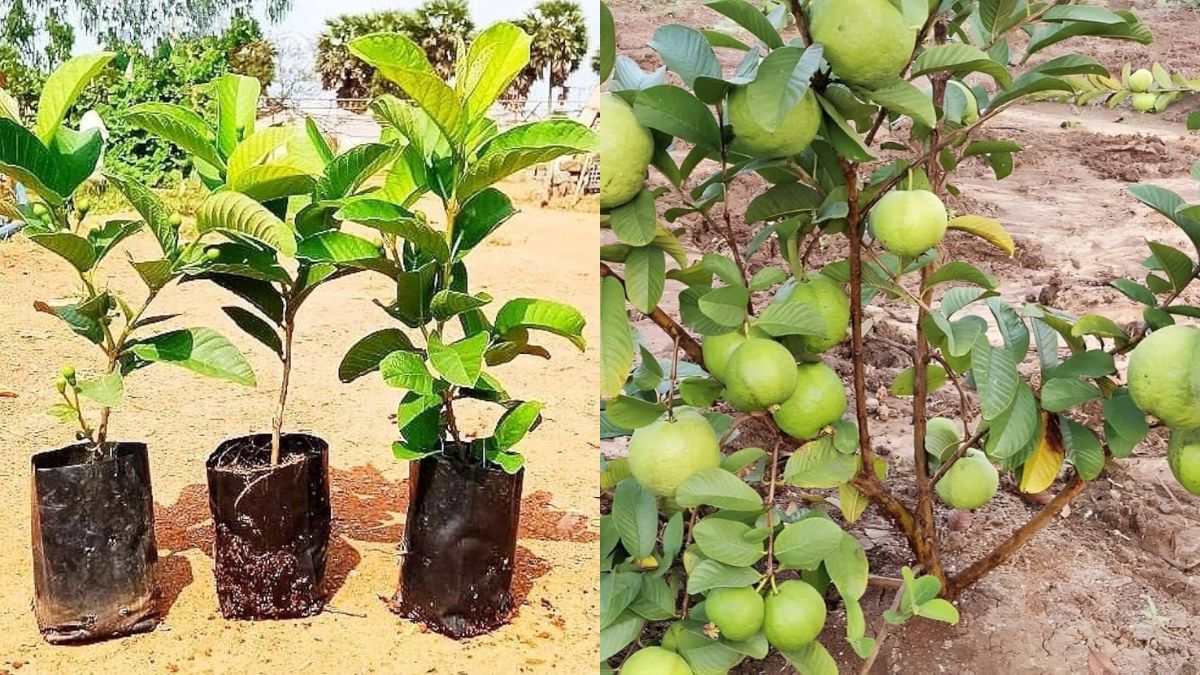
Growing guava in a pot from seed to harvest is a rewarding experience for home gardeners. Guava is a hardy tropical fruit that adapts very well to container gardening. Many people believe fruit trees need large land, but guava proves otherwise. With the right pot size and care, it produces excellent yield. This guide explains the complete two-year growth journey. From seed selection to harvesting fruits, every step matters. Guava trees grow fast compared to other fruits. Even beginners can achieve success.
Understanding the Guava Tree Growth Habit
Guava is a small fruit tree with strong branches and shallow roots. It naturally adapts to pots and containers. The tree responds well to pruning and training. Guava plants grow quickly in warm climates. They can flower within one to two years. The tree prefers open sunlight and good airflow. Understanding growth habit helps in shaping the plant. Proper structure increases fruit production.
Selecting Healthy Guava Seeds
Seed selection plays a key role in healthy growth. Always choose seeds from fully ripe guava fruits. Fresh seeds germinate faster and stronger. Wash seeds thoroughly to remove pulp. Avoid using damaged or dried seeds. Healthy seeds are cream colored and firm. Using good seeds improves success rate. Seed quality decides future growth.
Preparing Guava Seeds for Germination
After cleaning, seeds should be soaked in water for twelve to twenty-four hours. Soaking softens the seed coat and improves sprouting speed. Do not soak for too long. Drain water properly before planting. This preparation activates internal growth. Seeds become ready to absorb nutrients. Proper preparation ensures uniform germination. Skipping this step slows growth.
Best Soil Mix for Growing Guava in Pot
Guava prefers loose and well-draining soil. A mix of garden soil, sand, and organic compost works best. Soil should retain moisture without becoming sticky. Heavy soil causes root problems. Compost improves fertility and microbial activity. Good soil supports flowering and fruiting. Drainage holes are essential in pots. Healthy soil ensures long-term success.
Planting Guava Seeds in Pot
Plant seeds half an inch deep in moist soil. Cover lightly and water gently. Do not press soil tightly. Place the pot in a warm and bright location. Avoid direct harsh sunlight initially. Germination usually occurs within two to three weeks. Keep soil moist but not wet. Patience is important during early stages.
Sunlight Requirements for Guava Plants
Guava plants love sunlight and warmth. Six to eight hours of direct sunlight is ideal. Young seedlings should be introduced gradually. Strong sunlight promotes flowering and fruiting. Lack of light results in weak branches. Indoor plants should be kept near windows. Sunlight improves sugar content in fruits. Consistent exposure boosts yield.
Watering Schedule for Potted Guava
Watering should be regular but controlled. Overwatering causes root rot. Allow the topsoil to dry slightly before watering again. Summer requires frequent watering. Winter watering should be reduced. Use room-temperature water. Good drainage prevents waterlogging. Balanced watering improves plant health.
Fertilizing Guava for Fast Growth
Guava responds well to organic fertilizers. Compost, vermicompost, and cow manure are excellent choices. Fertilize once every four weeks. During flowering, add potassium-rich fertilizer. Avoid excess nitrogen. Balanced nutrition promotes fruit size. Overfeeding can reduce flowering. Consistent feeding ensures strong growth.
Pruning and Training the Guava Tree
Pruning helps maintain shape and size. Remove weak and crossing branches. Pruning encourages new growth and flowers. Train the plant to grow outward. Regular pruning improves air circulation. It also helps control plant height. Proper training increases fruit load. Do pruning after harvesting.
Repotting and Pot Size Management
Guava needs larger pots as it grows. Start with a medium pot and upgrade gradually. Final pot size should be deep and wide. Repot every one to two years. Handle roots carefully during repotting. Use fresh soil each time. Repotting refreshes nutrients. This step supports long-term fruiting.
Flowering Stage of Guava Plant
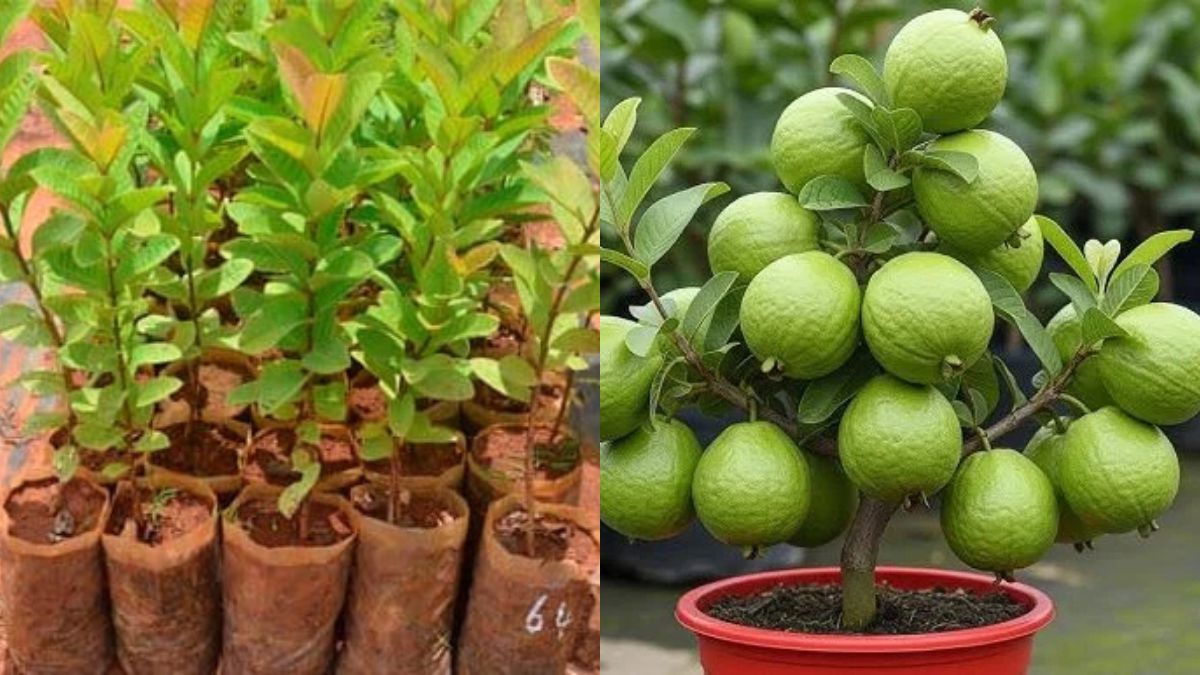
Guava flowers appear within one to two years. Flowers are white and fragrant. Proper sunlight triggers flowering. Stress-free plants flower better. Avoid excess nitrogen at this stage. Pollination occurs naturally. Healthy flowers lead to better fruit set. Flower drop indicates care issues.
Fruit Development and Growth
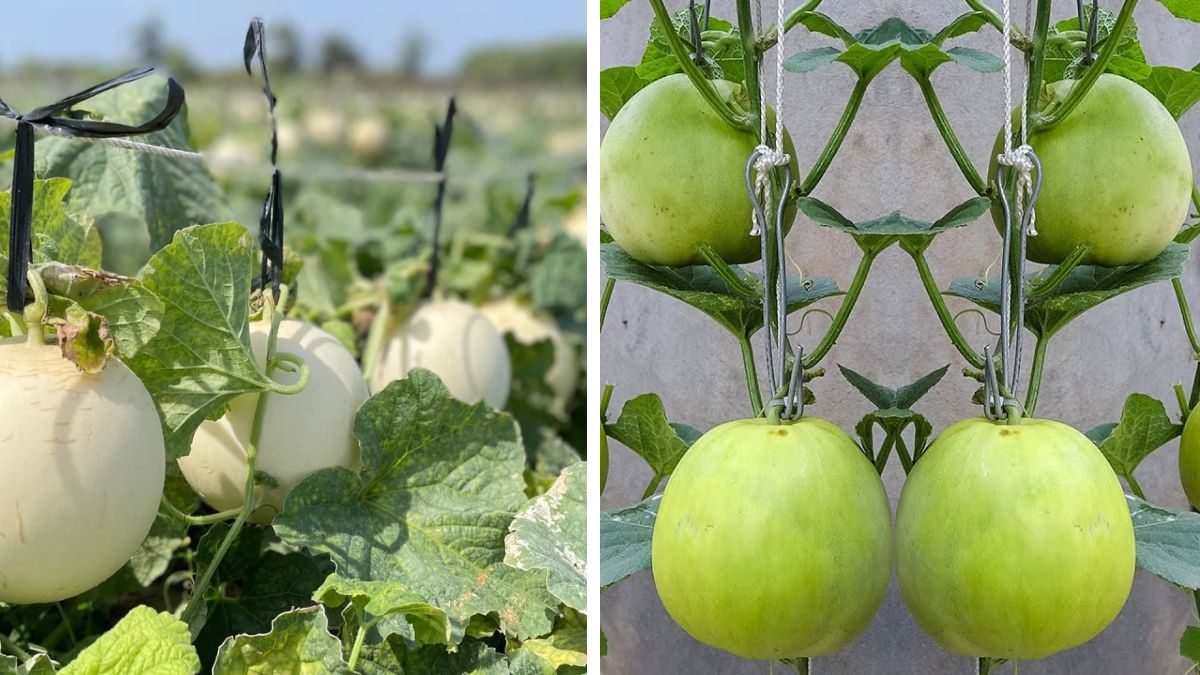
After pollination, fruits begin to form. Fruits grow gradually over several weeks. Consistent watering is important during fruiting. Nutrient deficiency affects fruit size. Avoid sudden stress during this stage. Fruits gain weight steadily. Proper care results in sweet guavas. Patience brings quality harvest.
Harvesting Guava from Pot
Guava fruits are ready when they change color slightly. Aroma becomes stronger near ripening. Harvest carefully to avoid branch damage. Do not pull fruits forcefully. Use clean tools if needed. Harvesting time depends on variety. Homegrown guavas taste better. Fresh harvest is rewarding.
Two Years Growth Timeline Explained
First year focuses on plant growth and structure. Second year brings flowering and fruiting. Proper pruning improves yield in second year. Pot size matters during growth stages. Nutrient management becomes important. Each stage needs different care. Understanding timeline avoids frustration. Consistency ensures success.
Common Problems and Solutions
Yellow leaves indicate watering issues. Poor fruiting results from low sunlight. Pest attacks are rare but manageable. Neem oil works effectively. Fungal problems occur due to poor drainage. Early detection prevents damage. Healthy care reduces problems. Observation is essential.
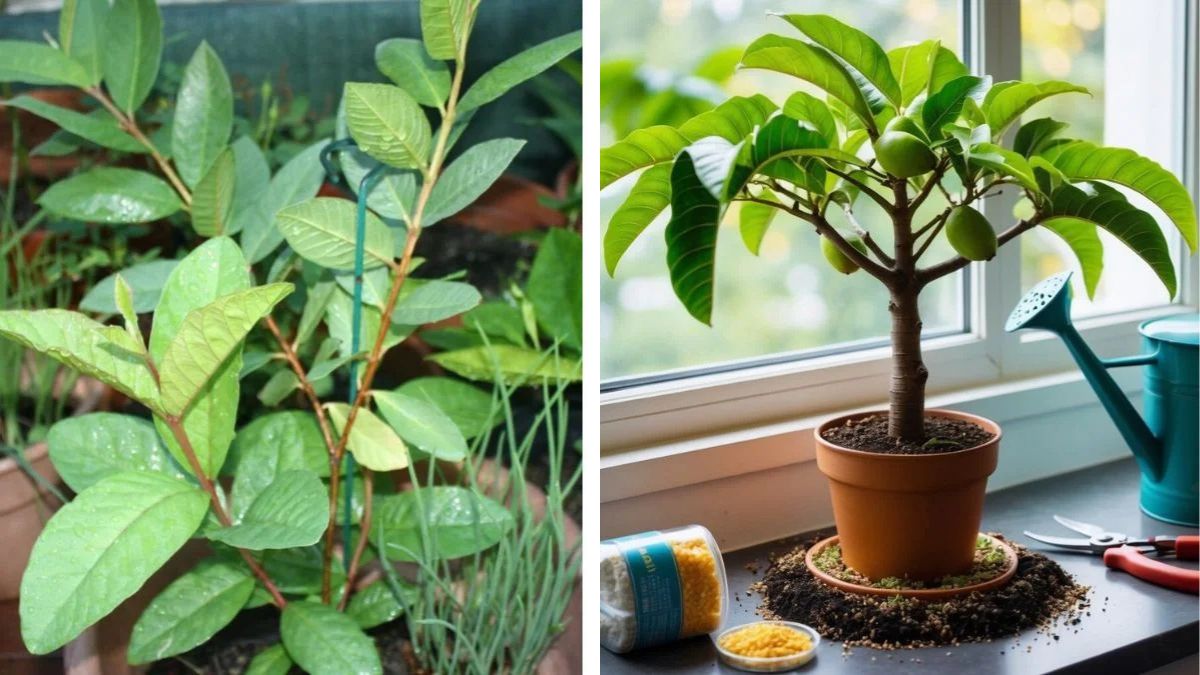
Table: Guava in Pot Care Guide
| Aspect | Requirement |
|---|---|
| Sunlight | Full sunlight |
| Soil | Loose and fertile |
| Pot Size | Large and deep |
| Watering | Moderate |
| Harvest Time | One to two years |
Benefits of Growing Guava in Pots
Container gardening saves space. Homegrown fruits are chemical-free. Guava trees improve air quality. Gardening reduces stress. Guava is rich in nutrients. Growing fruit at home saves money. Potted trees are easy to manage. It promotes sustainable living.
Long-Term Maintenance Tips
Prune annually for better yield. Refresh soil periodically. Fertilize seasonally. Monitor pests regularly. Protect from extreme cold. Maintain proper pot drainage. Long-term care ensures productivity. Healthy trees last many years.
Conclusion
Growing guava in a pot from seed to harvest is completely achievable. With proper care, guava trees produce excellent yield even in containers. Focus on sunlight, soil, and pruning. Avoid common mistakes. Be patient during growth stages. Home gardening brings satisfaction. Start growing guava today.