Introduction to Growing Cacao from Seed
Growing a cacao tree from seed is a fascinating and rewarding journey for gardeners who love tropical plants. The cacao tree is the source of chocolate, making it one of the most valuable plants in the world. Watching its growth through a 30-day time-lapse reveals how life slowly emerges from a simple seed. Cacao trees require patience, warmth, and consistent care. This guide explains every step from seed selection to early seedling development. Understanding its growth pattern helps avoid common mistakes. With proper attention, cacao can thrive even in controlled environments. This article breaks down the full process clearly and practically.
Understanding the Cacao Tree Growth Cycle
Cacao trees naturally grow in tropical rainforest environments. They prefer warm temperatures, high humidity, and filtered sunlight. From seed to seedling, cacao follows a slow but steady growth pattern. Germination typically begins within one to two weeks. The first month is crucial for root establishment. During this phase, the plant focuses more on underground growth than visible leaves. Understanding this cycle helps gardeners remain patient. Each stage builds the foundation for future flowering and pod production. A 30-day time-lapse captures these subtle yet important changes.
Selecting Fresh and Viable Cacao Seeds
Seed quality plays a major role in successful cacao growth. Fresh seeds must be planted quickly because they lose viability when dried. Seeds should be taken directly from ripe cacao pods. Healthy seeds appear plump, moist, and free from damage. Avoid seeds that are cracked or moldy. Washing off the pulp before planting prevents fungal growth. Freshness ensures faster and stronger germination. High-quality seeds lead to healthier seedlings. This step determines the success of the entire growing process.
Preparing the Ideal Soil Mix
Cacao requires rich, well-draining soil to thrive. A mix of compost, loamy soil, and sand works well. Organic matter provides essential nutrients for early growth. Good drainage prevents root rot, which is a common problem. The soil should retain moisture without becoming soggy. Slightly acidic soil is ideal for cacao seedlings. Sterilizing the soil reduces disease risk. Proper soil preparation ensures healthy root development. Strong roots are essential for visible growth in the first month.
Planting the Cacao Seed Correctly
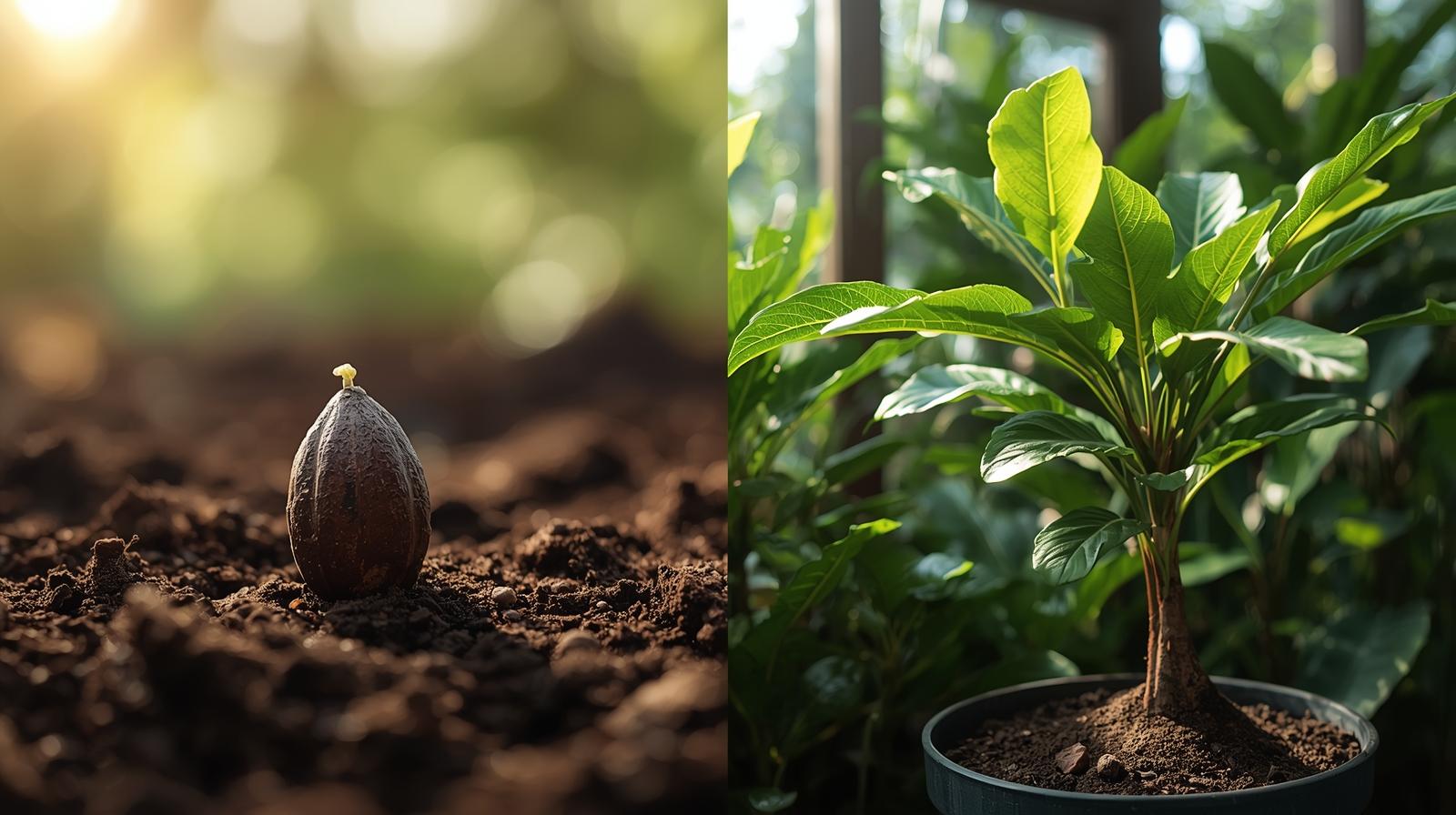
Planting depth and orientation matter when sowing cacao seeds. Seeds should be planted horizontally or with the pointed end facing down. Cover the seed lightly with soil, about one inch deep. Press the soil gently to remove air pockets. Water immediately after planting to settle the soil. Keep the planting container warm and shaded. Avoid direct sunlight at this stage. Correct planting technique encourages uniform germination. This step sets the stage for a successful time-lapse result.
Watering During the First 30 Days
Consistent moisture is essential during the early growth stage. The soil should remain moist but never waterlogged. Overwatering can cause seed rot or fungal issues. Underwatering slows germination and weakens seedlings. Light watering once or twice daily works well in warm climates. Use room-temperature water to avoid shock. Proper drainage helps maintain balance. Monitoring moisture daily is important. Balanced watering supports steady growth during the first month.
Light Requirements for Young Cacao Seedlings
Cacao seedlings prefer indirect sunlight during early growth. Direct sunlight can scorch delicate leaves. Place seedlings near a bright window or under shade cloth. Filtered light mimics natural rainforest conditions. Too little light causes weak and leggy growth. Gradual light exposure helps strengthen stems. Artificial grow lights can also be used indoors. Maintain consistent light conditions throughout the first 30 days. Proper lighting improves leaf development and color.
Temperature and Humidity Control
Cacao thrives in warm temperatures between twenty to thirty degrees Celsius. Cold conditions slow germination and growth. High humidity supports healthy leaf formation. Dry air can cause leaf curling and stress. Mist seedlings lightly to maintain humidity. Indoor growers may use humidity trays. Avoid sudden temperature changes. Stable conditions improve overall plant health. Temperature and humidity directly affect time-lapse growth results.
Observing Germination in Time-Lapse
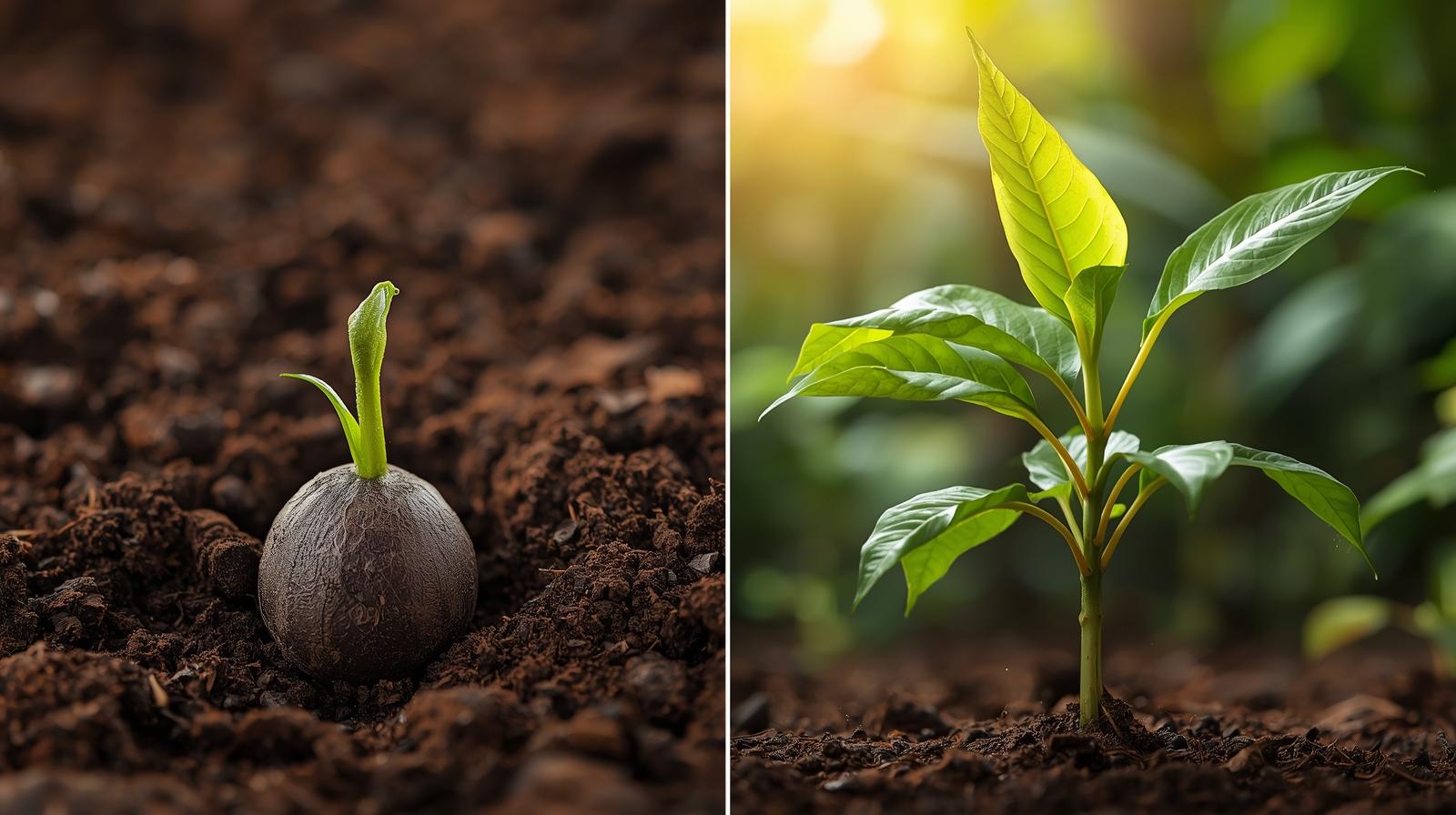
Within seven to fourteen days, the seed begins to sprout. The root emerges first, anchoring the plant. Shortly after, the stem pushes upward. Watching this process through time-lapse highlights slow daily progress. Each day brings subtle changes. The seed coat gradually sheds. Early leaves begin to form by the third or fourth week. This visual progression is educational and rewarding. Time-lapse footage reveals details not noticeable daily. Patience is key during this phase.
Leaf Development in the First Month
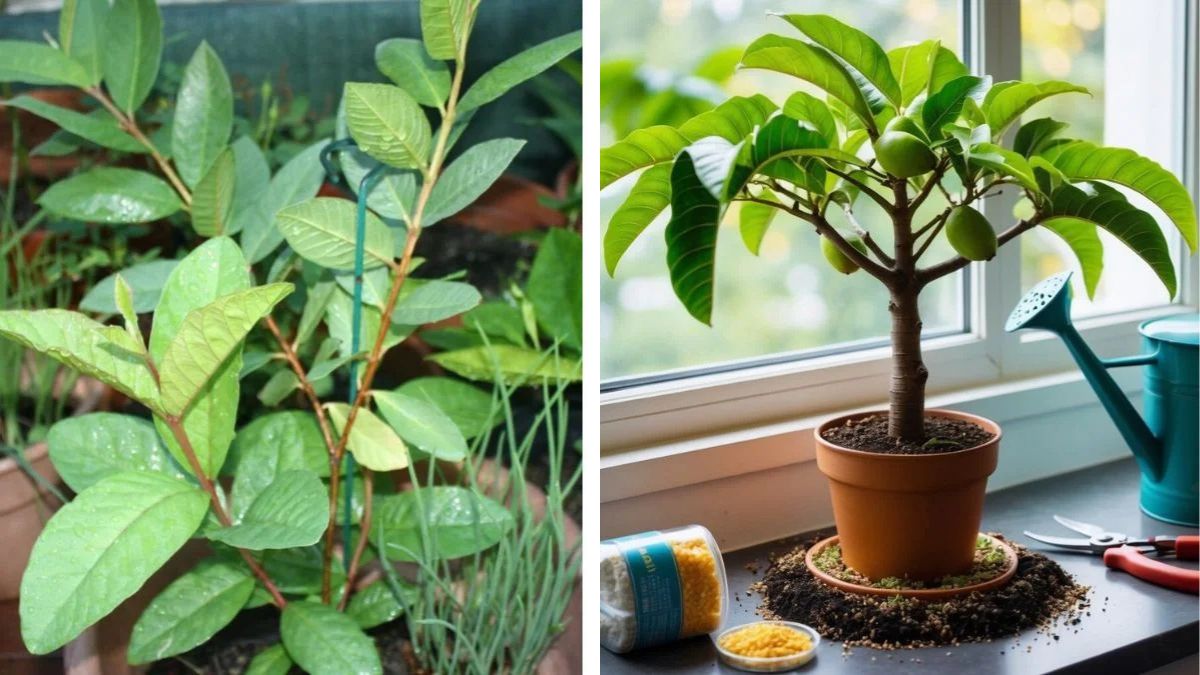
Cacao seedlings produce large, tender leaves early on. These leaves often appear reddish or bronze at first. Color changes to green as the plant matures. Leaves are thin and sensitive to stress. Avoid touching them frequently. Healthy leaves indicate good growing conditions. Leaf size increases steadily during the first month. Proper nutrition supports leaf expansion. Observing leaf changes helps diagnose problems early. Strong leaves mean strong future growth.
Root Growth Beneath the Soil
While leaves grow slowly, roots develop rapidly underground. Strong root systems anchor the plant and absorb nutrients. Root growth often exceeds visible growth during early stages. This is why patience is necessary. Disturbing roots can slow development. Transparent containers can help observe root progress. Healthy roots appear white and firm. Poor roots indicate water or soil issues. Root health determines long-term cacao success. Focus on soil care to support roots.
Fertilization in Early Growth
Young cacao seedlings do not require heavy fertilization. Excess fertilizer can burn tender roots. Light organic compost provides sufficient nutrients. Liquid organic fertilizer can be diluted and applied sparingly. Fertilize only after true leaves appear. Avoid synthetic fertilizers during the first month. Natural feeding encourages balanced growth. Observing plant response helps adjust feeding. Proper nutrition supports steady development. Less is more during early stages.
Common Problems in First 30 Days
Seed rot, mold, and damping-off disease are common issues. Overwatering is the primary cause. Poor airflow encourages fungal growth. Yellowing leaves may indicate nutrient imbalance. Wilting often signals water stress. Early detection prevents permanent damage. Adjust watering and lighting as needed. Remove affected seedlings promptly. Clean tools reduce contamination. Prevention is easier than cure during early growth.
Benefits of Time-Lapse Observation
Time-lapse videos help gardeners understand plant behavior. Small daily changes become clearly visible. Growth patterns reveal environmental effects. Time-lapse also helps identify mistakes. It encourages patience and observation skills. Educational content is valuable for learning and sharing. Watching cacao grow builds appreciation for chocolate production. Time-lapse projects inspire gardeners. This method improves future planting success. Visual learning strengthens gardening knowledge.
Transition After 30 Days
After one month, cacao seedlings become more resilient. Leaves thicken and stems strengthen. Gradual exposure to brighter light is possible. Transplanting may be considered if roots fill the container. Continue consistent care routines. Avoid sudden changes. The plant enters a steady growth phase. Early care determines future health. The first month builds the foundation. Proper transition ensures long-term success.
Indoor vs Outdoor Growing Considerations
Cacao can be grown indoors in cooler regions. Outdoor growing requires tropical conditions. Indoor growers must manage humidity and light. Outdoor plants benefit from natural conditions. Both methods require protection from harsh sunlight. Container growing offers flexibility. Climate determines the best approach. Choose based on environment and space. Adapt care techniques accordingly. Proper planning prevents setbacks.
Long-Term Growth Expectations
Cacao trees take several years to produce pods. Early growth is slow but steady. Strong seedlings develop into productive trees. Consistent care over time is essential. Pruning and feeding become important later. Understanding long-term commitment helps gardeners stay motivated. Early success encourages patience. Growing cacao is a rewarding journey. Chocolate production begins with careful planting. Long-term dedication pays off.
Table: 30-Day Cacao Seed Growth Timeline
Day Range
Seed planted and soil kept moist
Day Range
Root emergence begins underground
Day Range
Stem breaks through soil surface
Day Range
First leaf formation starts
Day Range
Leaf color transitions to green
Day Range
Root system strengthens
Day Range
Seedling stabilizes and grows steadily