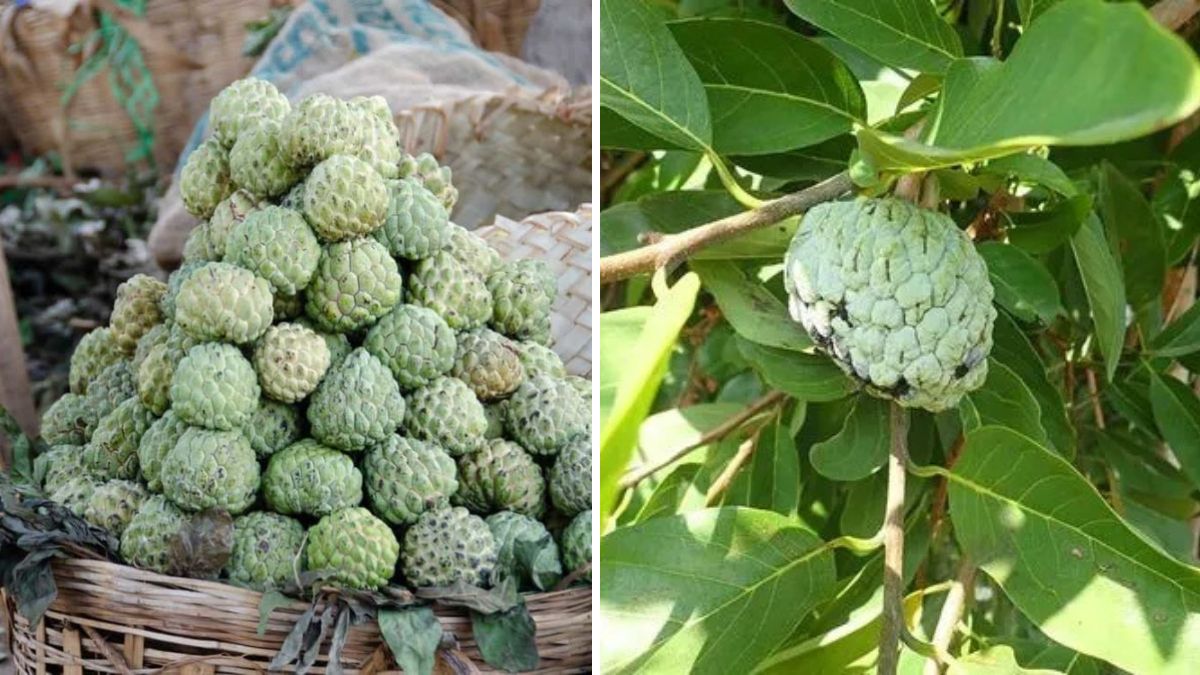
Custard apple—also known as sitaphal, sugar apple, or Annona—is one of the most beloved tropical fruits in the world. With its sweet, creamy flesh and irresistible aroma, this fruit is fast becoming a favorite for home gardeners. The good news? Propagating custard apple trees is easier than you think, and with the right techniques, you can produce strong, productive, and early-fruiting trees in your backyard or farm.
In this detailed guide, you’ll learn the best propagation methods, how to care for young seedlings, and the secrets to boosting fruiting—perfect for beginners and experts alike.
⭐ Why Propagate Custard Apple Trees?
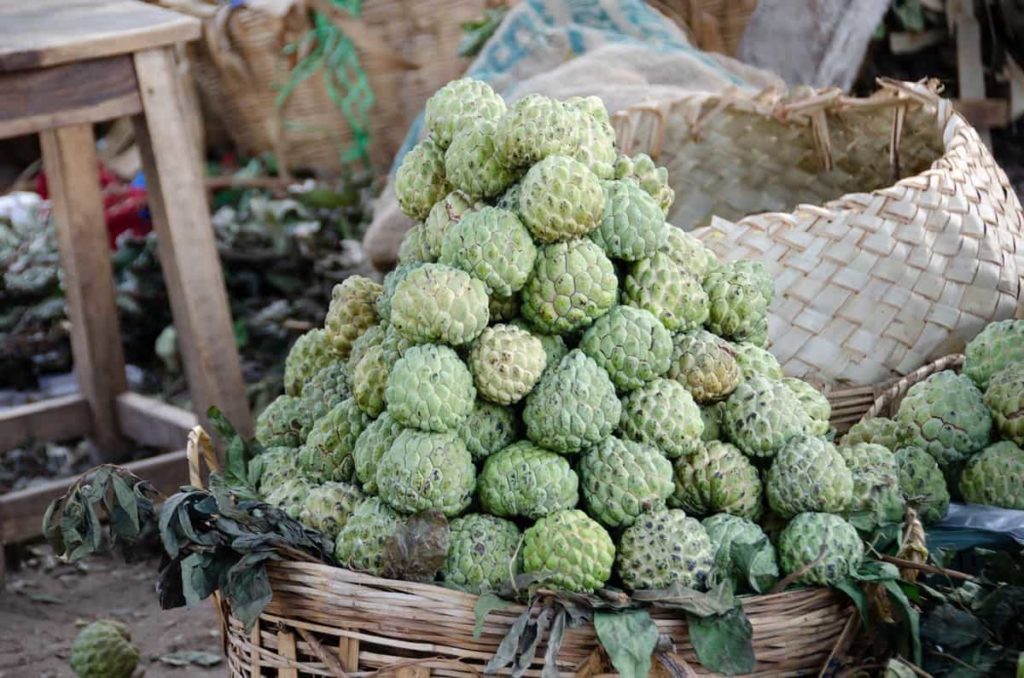
Custard apple trees grown from seed are easy to start but may take long to fruit and may not resemble the quality of the parent plant. Propagation helps you:
- Preserve desirable traits like sweetness, fruit size, and disease resistance.
- Produce early-fruiting plants compared to seed-grown trees.
- Grow multiple plants cheaply and quickly.
- Improve yield and overall performance.
Whether you want a large harvest or just a thriving home garden, propagation is the key to long-term success.
1. Best Methods to Propagate Custard Apple Trees
Custard apple can be propagated through seeds, cuttings, air layering, and grafting. Each has its own advantages. Let’s explore them in detail.
🌱 Method 1: Propagating Custard Apple from Seed (Easy for Beginners)
Growing from seed is the simplest method, although fruiting may take longer (3–5 years).
How to Do It
- Choose fully ripe custard apples and extract the seeds.
- Wash off pulp and air-dry for 24 hours.
- Soak the seeds in lukewarm water for 12 hours to improve germination.
- Prepare a nursery mix:
- 40% garden soil
- 40% compost or cow dung
- 20% sand
- Sow seeds 1 inch deep and water lightly.
- Keep in partial shade until germination (18–30 days).
- Transplant seedlings when they are 6–8 inches tall.
Pros
✔ Simple
✔ Cheap
✔ Seeds germinate easily
Cons
✘ Takes longer to fruit
✘ May not be true to parent plant
🌿 Method 2: Propagating Custard Apple from Cuttings (Fast Rooting)
Cuttings can produce fruits faster because they grow as clones of the parent tree.
How to Propagate by Cuttings
- Choose a healthy, non-flowering branch (½–1 cm thickness).
- Cut about 6–8 inches with 2–3 nodes.
- Remove lower leaves and dip the base in rooting hormone.
- Plant in a mixture of sand + cocopeat for better rooting.
- Maintain humidity by covering with a plastic bottle or grow in a greenhouse.
- Roots appear in 3–5 weeks.
Benefits
✔ Faster fruiting
✔ Replicates parent characteristics
✔ Ideal for controlled farming
🌳 Method 3: Air Layering (Most Successful Method for Home Gardeners)
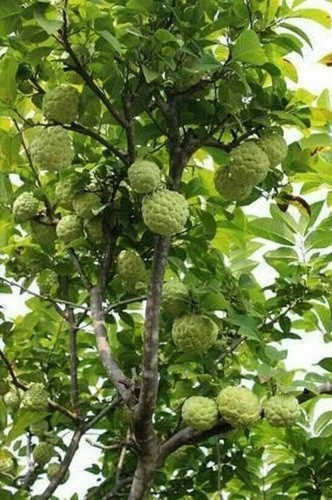
Air layering, also known as marcottage, is one of the safest and most reliable methods for custard apples. It creates strong, well-rooted plants with high fruiting potential.
Steps for Air Layering Custard Apple
- Choose a 1–1.5 cm thick branch that is healthy and disease-free.
- Make a 1-inch ring cut around the bark.
- Remove bark and scrape slightly to prevent regrowth.
- Apply rooting hormone (optional but helpful).
- Cover the exposed area with moist sphagnum moss/cocopeat + compost.
- Wrap using plastic film or aluminum foil.
- Keep moist by checking weekly.
- After 6–8 weeks, roots will appear.
- Cut below the rooted ball and plant in a pot or soil.
Advantages
✔ Very high success rate
✔ Early fruiting (as little as 2 years)
✔ Strong root system
✔ Perfect for quality plant multiplication
🌱 Method 4: Grafting Custard Apple (Best for Large-Scale Fruit Production)
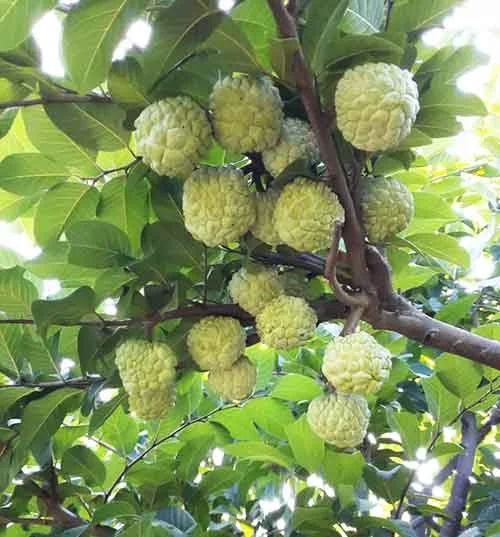
If you want superior fruit quality, grafting is the number one method. Farmers prefer this to maintain uniformity and consistent yields.
Popular Grafting Techniques
- Cleft Grafting
- Veneer Grafting
- Side Grafting
How to Graft Custard Apple
- Grow seedling rootstocks 6–12 months old.
- Choose scion wood from a mature tree with great fruit quality.
- Ensure both scion and rootstock are of similar thickness.
- Use a clean grafting knife to make diagonal cuts.
- Join the scion to the rootstock firmly.
- Wrap with grafting tape.
- Keep in shade for 3–4 weeks until union forms.
Why Grafting Is the Best
✔ Early fruiting
✔ High productivity
✔ Disease resistance
✔ Uniform fruits
✔ Suitable for commercial orchards
2. Best Conditions for Growing Propagated Custard Apple Plants
Propagation is only half the journey—caring for young plants is equally important.
🌞 Sunlight Requirements
Custard apple thrives in full sun.
- Minimum: 6 hours of direct sunlight
- Ideal: 8–10 hours
More sunlight = more flowering and better quality fruits.
🌧 Watering Need
Custard apple prefers moderate watering.
- Keep soil moist but not waterlogged.
- Reduce watering during winter.
- Increase moisture during flowering and fruiting.
🌿 Soil Requirements
The ideal soil mix should be:
- Well-draining
- Slightly sandy
- Rich in organic matter
Recommended Mix:
40% garden soil + 40% compost + 20% sand
Custard apple does not tolerate waterlogging, so proper drainage is essential.
🧪 Fertilizer Application
To boost growth and fruit production:
Organic Fertilizers
- Cow dung compost
- Vermicompost
- Banana peel fertilizer
- Bone meal
- Neem cake
Fertilizer Schedule
- Apply compost every 45–60 days.
- Apply bone meal or potash at the start of flowering.
- Mulch around the base to retain moisture.
3. How to Encourage Heavy Fruiting
Here are some practical tips to maximize your custard apple yield:
1. Prune Correctly
- Remove weak branches
- Allow sunlight to reach the center
- Promote strong scaffolding branches
2. Hand Pollination
Custard apple flowers often fail to pollinate naturally. Hand pollination increases fruit set by up to 70%.
3. Mulching
Use dry leaves, sugarcane mulch, or grass to:
- Retain moisture
- Improve soil
- Protect roots from heat
4. Control Pests Early
Watch out for:
- Mealybugs
- Fruit borers
- Scale insects
Use neem oil spray every 15 days.
5. Plant in Pairs
Plant at least two varieties to improve cross-pollination.
4. When Will Your Propagated Tree Start Fruiting?
- Seed-grown: 3–5 years
- Cuttings: 2–3 years
- Air-layered plants: 2 years
- Grafted plants: 1.5–2 years
Grafted plants are the fastest and best for high production.
🌟 Conclusion
Propagating custard apple trees is simple, rewarding, and highly productive when done correctly. Whether you choose seeds, cuttings, air layering, or grafting, each method can help you cultivate a thriving garden filled with delicious, creamy custard apples.
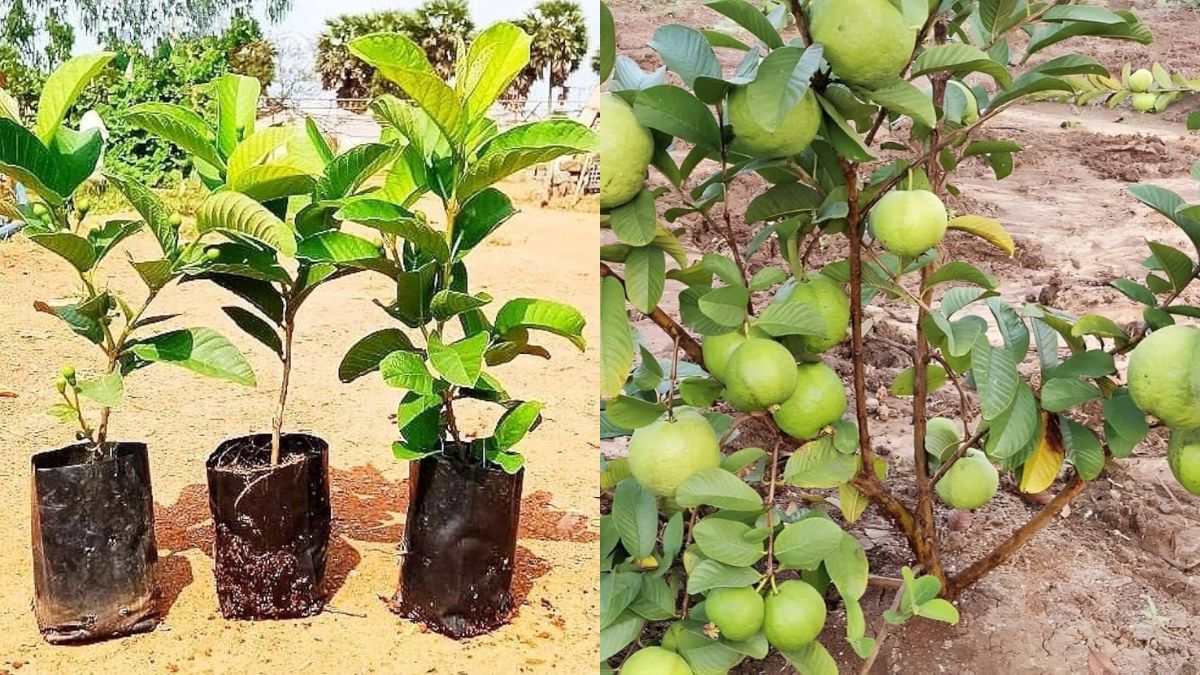
With proper care, sunlight, organic feeding, and pruning, your propagated custard apple tree can produce abundant, high-quality fruits year after year.
If you want, I can also create: