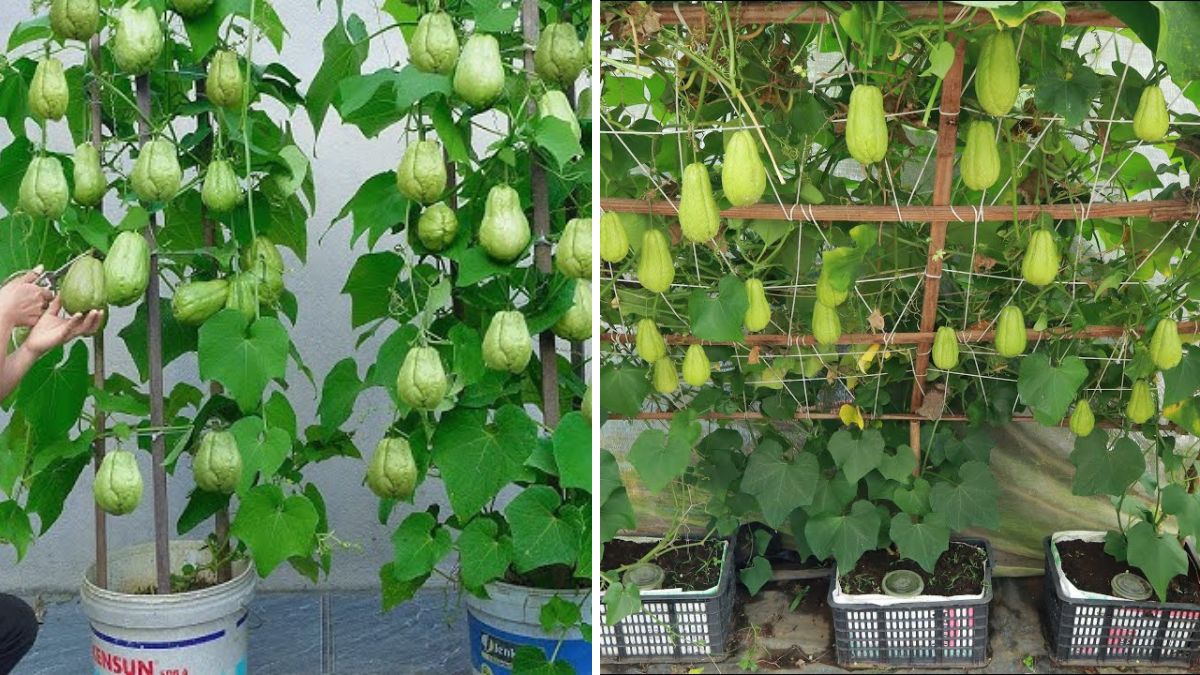
Chayote—also known as chow chow, mirliton, or vegetable pear—is one of the easiest and most rewarding vegetables you can grow at home. Many gardeners believe it requires a big yard or a farm-like setup, but the truth is far more exciting… you can grow massive, fast-producing chayote right in containers! And not just small harvests—you can enjoy baskets of fresh, crisp, delicious chayote from just one pot.
In this complete 1200-word guide, we’ll show you how to grow chayote in containers efficiently, how to train the vines, what soil mix to use, how to fertilize for bigger yields, and how to avoid the common mistakes that keep gardeners from achieving full production.
Let’s dive into the world of container-grown chayote—and discover how you can enjoy big, fast, high-yield harvests even without a garden.
Why Grow Chayote in Containers?
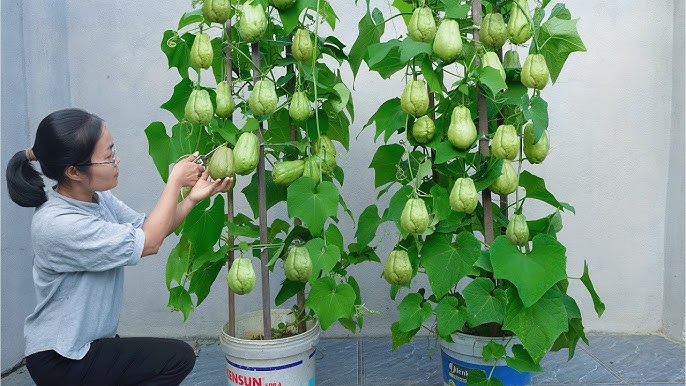
Most people are surprised to learn that chayote does wonderfully in pots. Here’s why it works so well:
1. Strong, Fast-Growing Vines
Chayote naturally climbs, making it a perfect candidate for trellises, pergolas, or rooftop railings.
2. Deep Roots Adapt Well to Containers
With the right pot size and soil mix, chayote thrives without needing ground-level space.
3. Easy to Maintain and Harvest
Container gardening reduces weeds, pests, and soil diseases.
4. High Yield from a Single Plant
One chayote vine can produce 20–60 fruits each season when cared for properly.
5. Perfect for Urban Homes
Balconies, rooftops, terraces, and even small patios become productive chayote gardens.
Materials You Need
To grow a high-yield chayote plant, gather the following:
- 1 whole chayote fruit with a healthy pit
- Large container (minimum 40–60 liters)
- High-quality potting mix
- Compost or vermicompost
- Cocopeat
- Well-draining soil (sand or perlite)
- Tall trellis or climbing support
- Slow-release fertilizer
- Watering can or drip line
Step 1: Choose the Perfect Chayote Fruit for Planting
Chayote is unique: you plant the whole fruit, not the inner seed.
Look for:
✔ Mature fruit with a firm texture
✔ No cuts or rotting areas
✔ Slightly wrinkled or sprouted end (a sign of readiness)
If your chayote hasn’t sprouted yet, place it in a warm, dry area for a few days until the sprout begins to emerge.
Step 2: Select the Right Container
Chayote has strong roots and needs ample space:
Ideal Pot Size:
- Minimum 40 liters for small spaces
- Best: 50–60 liters for maximum production
Choose a container that is:
- Deep
- Wide
- Has 5–8 drainage holes
- Strong enough to support a large plant
Step 3: Prepare the Perfect Chayote Soil Mix
Chayote thrives in loose, fertile, moisture-retaining—but well-draining—soil.
Best Soil Mix Recipe:
- 40% garden soil or potting soil
- 30% compost or vermicompost
- 20% cocopeat
- 10% sand or perlite
Mix in:
- 1 cup neem cake
- 1 handful bone meal (for strong roots)
This blend encourages vigorous vine growth and heavy flowering.
Step 4: Planting the Chayote
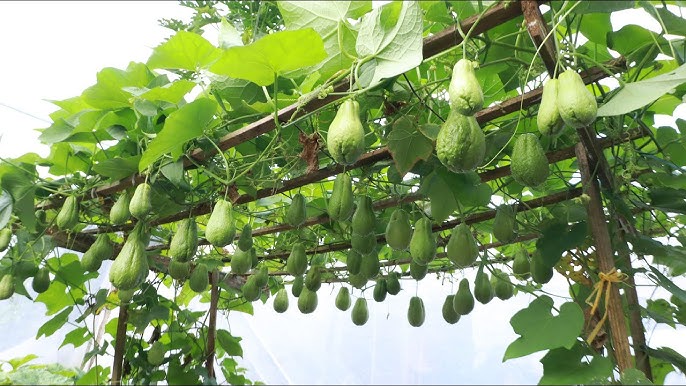
Plant the whole fruit on its side at a slight angle.
How Deep?
- Bury the bottom half of the fruit
- Leave the sprouted top half above soil
Cover lightly with soil and water gently.
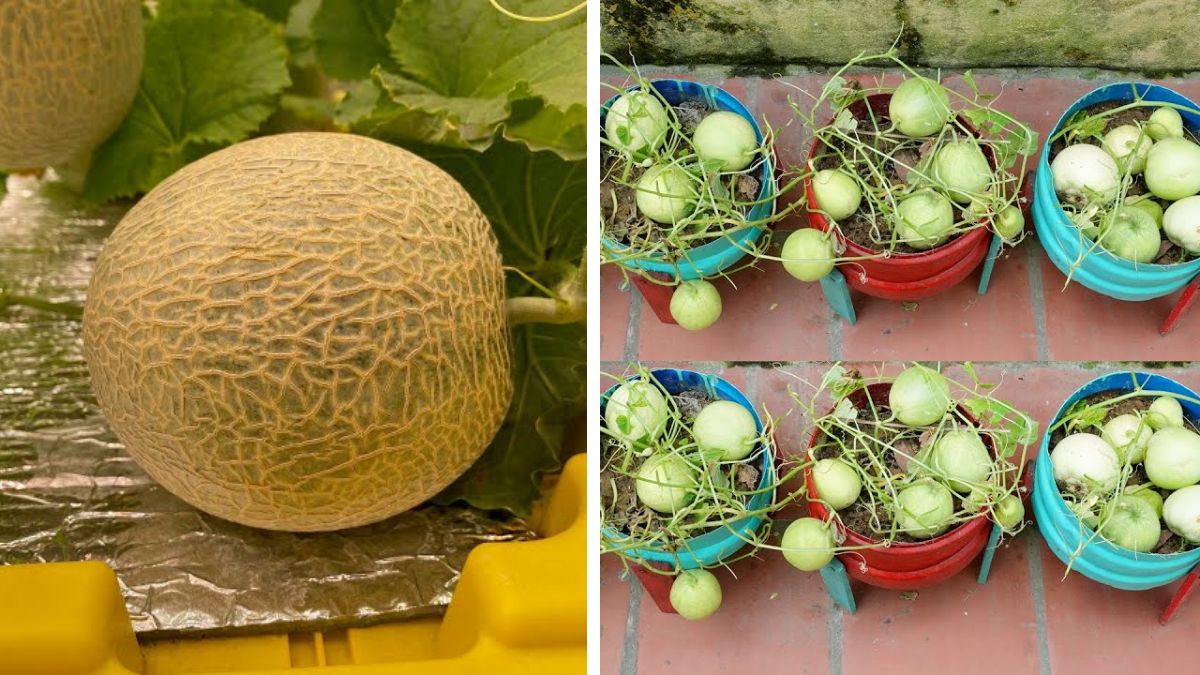
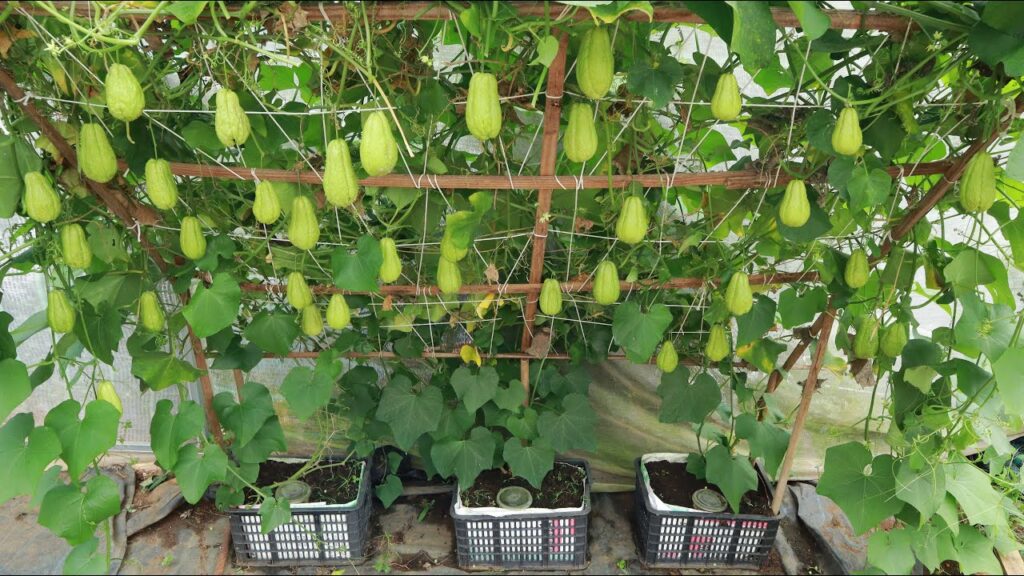
Step 5: Install a Strong Trellis (Very Important!)
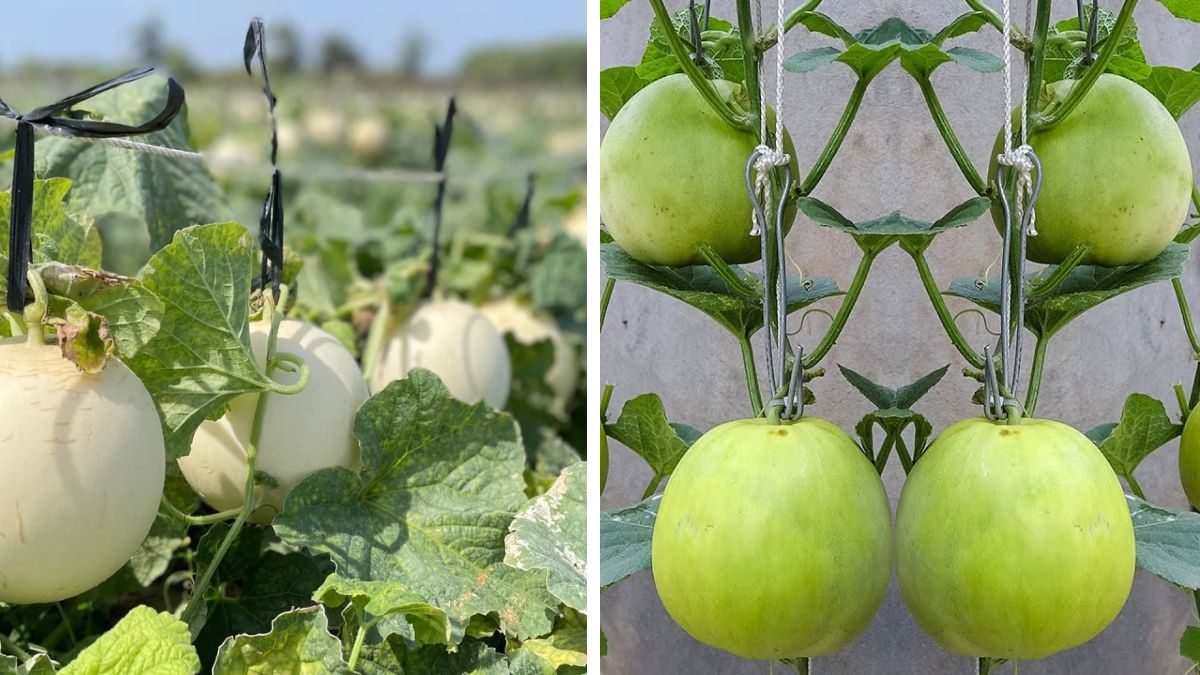
Chayote vines grow aggressively—sometimes 5 to 10 meters long. A proper trellis ensures maximum fruiting.
Best Trellis Options:
- Bamboo frames
- Metal mesh grids
- Balcony railings
- Pergolas
- Overhead wires
The more space the vine gets, the bigger your harvest.
Step 6: Watering the Plant Correctly
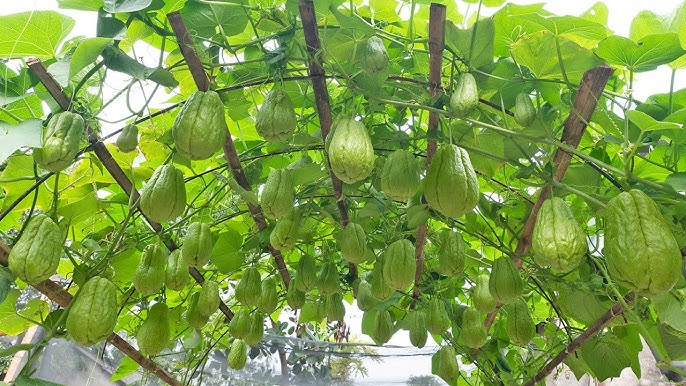
Chayote needs consistent moisture, especially in containers.
Watering Rules:
- Water deeply 3–4 times a week
- Increase frequency in hot summer
- Avoid waterlogging
The soil should always feel moist but not soggy.
Mulch with dry leaves or coco chips to retain moisture.
Step 7: Feeding for Big, Fast, High-Yield Growth
Chayote is a heavy feeder. To maximize results, follow this feeding schedule:
Every 15 Days:
- Compost tea
- Fish emulsion
- Seaweed extract
Every 30 Days:
- Organic NPK (5-5-5 or 10-10-10)
- 1 handful bone meal for stronger fruiting
- 1 handful neem cake for protection
During Flowering & Fruiting:
- Add more potassium (banana peel fertilizer works great!)
Proper nutrition ensures a constant supply of fruits over months.
Step 8: Training the Vines
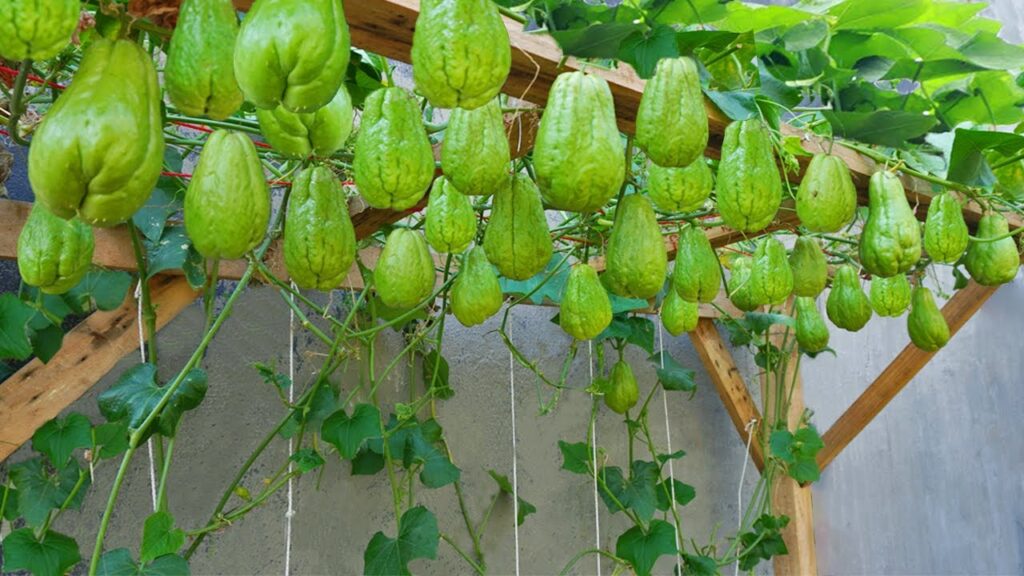
For best yield:
✔ Guide new shoots along the trellis
✔ Trim any weak or yellow leaves
✔ Remove overcrowded vines
Good airflow prevents diseases and encourages maximum fruit set.
Step 9: Watch for Common Problems
Container-grown chayote is generally healthy, but keep an eye out for:
1. Powdery Mildew
Solution: Spray neem oil or baking soda solution.
2. Aphids and Whiteflies
Solution: Soap water spray weekly.
3. Poor Fruit Set
Cause: Lack of sunlight
Fix: Move container to brighter location.
4. Yellow Leaves
Cause: Overwatering
Fix: Improve drainage.
When and How to Harvest Chayote
Chayote grows surprisingly fast. You can begin harvesting in 90–120 days from planting.
Harvest Signs:
- Fruit is firm
- Light green color
- 10–20 cm long
- Skin feels smooth
Cut the fruit with scissors, leaving a tiny stem attached.
A well-cared plant can produce fruit every week during peak season.
How to Keep Your Plant Productive for Months
Chayote is a perennial vine, meaning it can live for years if maintained.
Here’s how to extend productivity:
✔ Remove old, dead vines regularly
✔ Add compost every month
✔ Keep soil cool with mulch
✔ Trim vines after each major harvest
✔ Maintain steady moisture
With good care, your container chayote plant can produce for 3–5 years.
Benefits of Growing Chayote at Home
Growing this vegetable yourself brings numerous advantages:
- Fresh, chemical-free harvest
- Low maintenance
- High nutritional value
- Versatile in cooking (stir-fry, curry, soups, salads)
- Beautiful green vines that add shade and decoration
- Great for beginners
Chayote is hardy, forgiving, and incredibly productive—perfect for busy gardeners.
Beginner Mistakes to Avoid
❌ Using small pots
Roots get restricted → fewer fruits.
❌ Weak trellis
Vine collapses → poor growth.
❌ Overwatering
Causes rot and yellow leaves.
❌ Planting un-sprouted fruit
Leads to slow or no germination.
❌ Insufficient sunlight
Needs 6–8 hours daily.
Avoiding these mistakes guarantees big harvests.
Final Thoughts
Growing chayote in containers is one of the most rewarding gardening projects you can try. It delivers:
🌱 Fast growth
🍃 Giant vines
🍈 High yields
🌿 Sustainable homegrown food
All from just one fruit and one container!
Whether you’re gardening on a balcony, rooftop, patio, or indoors with a strong light source, chayote adapts beautifully and rewards you with months of continuous harvest.