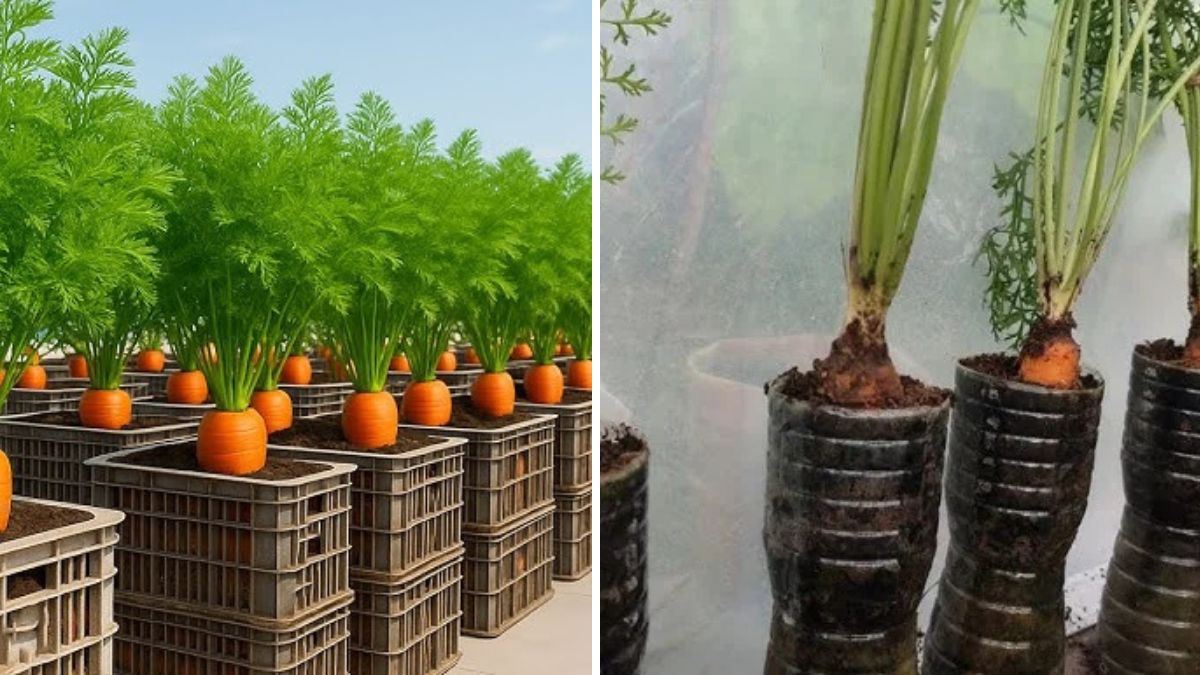
Growing carrots at home may sound challenging, especially if you live in a city apartment with little or no garden space. But what if you could turn a handful of old plastic bottles into a vertical carrot garden that produces crisp, sweet, brightly colored roots—all from your balcony?
This innovative method is not only space-saving but also eco-friendly and surprisingly simple. Whether you’re a beginner or an urban gardening enthusiast, this technique will help you grow carrots like never before.
In this 1200-word guide, you’ll learn how to convert hanging bottles into a productive carrot garden, the best carrot varieties for vertical setups, how to maintain your plants for maximum yield, and smart tips that make the entire process nearly fail-proof.
Why Grow Carrots in Hanging Bottles?
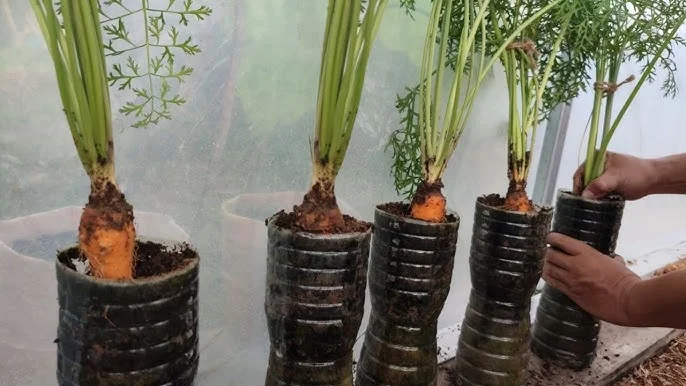
Before jumping into the method, let’s understand why this unique style of gardening works so well:
1. Space Efficiency
Carrots need depth, not width. Vertical bottles provide exactly that, making them perfect for balconies, windows, or even kitchen walls.
2. Cleaner Produce
Growing in bottles means your carrots stay clean, disease-free, and protected from pests that normally attack outdoor beds.
3. Perfect Drainage
Plastic bottles allow you to control water flow, preventing waterlogging—a common cause of rotten or deformed carrots.
4. Eco-Friendly Gardening
Instead of throwing away plastic bottles, you transform them into productive planting containers.
5. High Yields in Small Spaces
A single balcony wall fitted with 10–15 hanging bottles can produce several kilograms of fresh carrots each harvest cycle.
What You’ll Need
To start your balcony carrot farm using hanging bottles, gather these simple materials:
- Plastic bottles (1–2 liters work best)
- A sharp knife or cutter
- Strong rope or metal hooks
- Good-quality potting mix
- Compost or vermicompost
- Carrot seeds (choose short or mini varieties)
- A spray bottle or watering can
Step-By-Step: Turning Bottles into Carrot Planters

1. Choose the Right Bottles
Use transparent or semi-transparent bottles because they allow you to monitor moisture levels inside. Ensure they are clean and have no chemical residue.
2. Cut Open the Bottle
Make a wide horizontal opening on one side of the bottle—this will be the planting window. Leave enough plastic around the edges for strength.
3. Make Drainage Holes
Poke 4–5 small holes at the bottom. Carrots hate soggy soil, so drainage is essential.
4. Add Hanging Support
Tie strong ropes around the bottle’s neck and base to hang it securely. Alternatively, use hooks mounted on the wall.
5. Prepare the Carrot Soil Mix
Carrots need loose, airy soil so their roots can grow strong and straight.
Use this perfect carrot mix:
- 40% cocopeat or sandy soil
- 40% compost or vermicompost
- 20% perlite or coarse sand
Pro Tip: Sift the soil to remove stones—carrots split or bend when they hit obstacles.
6. Fill the Bottles
Fill each bottle with the soil mix, tapping gently to remove air pockets but not compressing the soil.
7. Sow the Seeds
Sprinkle 10–12 carrot seeds evenly in each bottle opening. Carrot seeds are tiny, so don’t bury them too deep. Simply cover with a thin layer of soil.
8. Water Gently
Use a spray bottle to moisten the soil. Carrot seeds need consistent moisture to germinate within 7–10 days.
9. Hang the Bottles
Position them where they get 4–6 hours of sunlight daily—east or southeast-facing balconies work best.
Caring for Your Hanging Bottle Carrot Garden
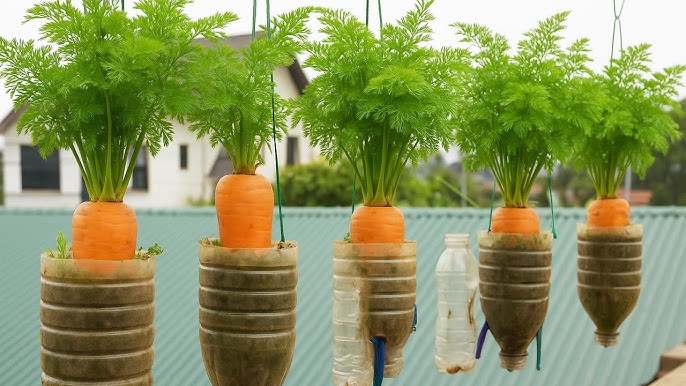
Growing carrots vertically is easy, but the real results come from proper care. Here’s how to keep your balcony carrot farm thriving:
1. Thin the Seedlings
When plants reach 5 cm tall, thin them out gently, keeping only the strongest ones.
Each bottle should have 4–6 healthy seedlings for best root development.
2. Water Wisely
Carrots don’t like too much water.
Maintain even moisture—dry soil causes cracks, while soggy soil causes rot.
Water when the top layer feels dry.
3. Feed Your Plants
After 3 weeks, feed the plants with:
- Liquid compost tea, or
- Diluted seaweed extract
Avoid adding nitrogen-heavy fertilizers—these grow big leaves but small roots.
4. Provide Good Light
Carrots need light to develop sweet sugars in the roots. If sunlight is weak, add a small balcony LED grow light.
5. Avoid Disturbing the Roots
Once planted, do not poke around the soil. Carrot roots are sensitive and easily damaged.
When and How to Harvest
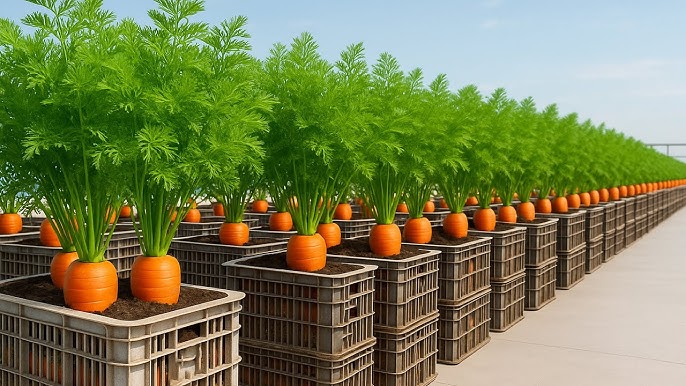
Most carrot varieties mature between 70–90 days, but mini varieties often finish in 50–60 days.
Signs Your Carrots Are Ready:
- The shoulder (top part of the carrot) begins to peek out of the soil.
- The stems look thick and strong.
- The diameter appears close to the variety description.
How to Harvest:
- Moisten the soil first so the roots slip out easily.
- Gently pull the carrot from the greens.
- If resistance is strong, squeeze the bottle to loosen soil first.
You’ll be surprised at how straight, bright, and sweet balcony-grown carrots can be!
Best Carrot Varieties for Bottle Growing
Choose short or round types, which develop beautifully in limited soil depth:
- Paris Market (small and round, very sweet)
- Thumbelina
- Little Finger
- Short ‘n Sweet
- Nantes Mini
These varieties thrive exceptionally well in bottle-depth soil.
Extra Tips for Maximum Yield
✔ Use Vertical Racks
Hang multiple bottles in rows to maximize space and harvest more carrots in each cycle.
✔ Rotate Bottles Every Few Days
This ensures even sunlight exposure, leading to uniformly colored carrots.
✔ Use Mulch
Thin layers of straw or cocopeat help retain moisture and prevent cracking.
✔ Reuse Soil Wisely
After harvesting, rejuvenate the soil with compost before planting again.
Why This Method Works So Well for Urban Growers
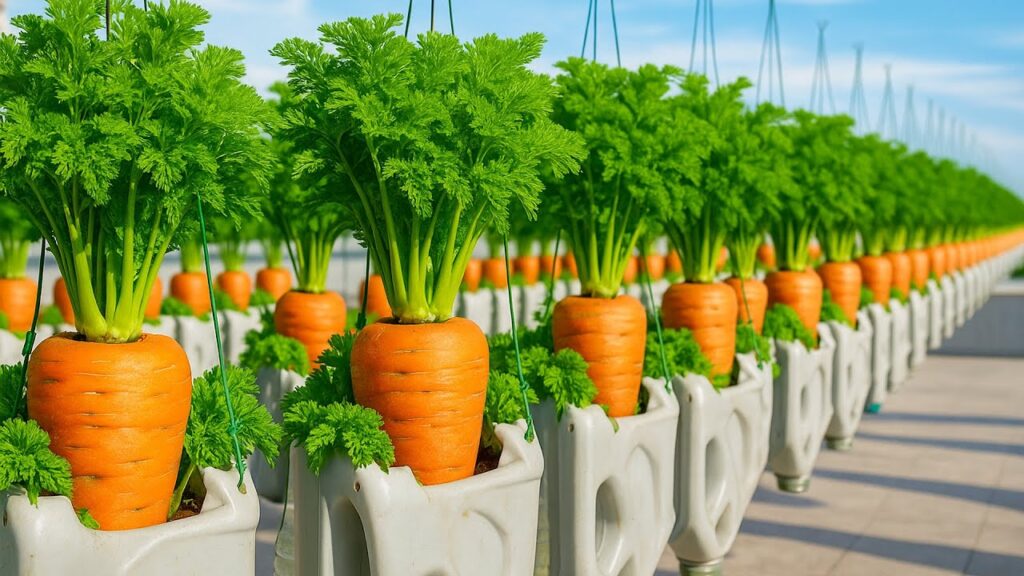
Urban apartments often lack gardening space, but they have something just as valuable: vertical surfaces.
By using hanging bottles, you unlock unused space while enjoying these advantages:
- Grow food sustainably
- Reduce household waste
- Produce pesticide-free vegetables
- Attract pollinators with carrot flowers if you let some bolt
- Enjoy gardening even on the smallest balconies
This method empowers anyone—students, busy professionals, seniors—to experience the joy of growing fresh, organic vegetables at home.
Final Thoughts
Turning plastic bottles into a balcony carrot farm is not just a gardening experiment—it’s a lifestyle shift. It proves that you don’t need land, fancy equipment, or professional experience to grow your own food. You only need creativity, passion, and a corner of sunlight.
Whether you grow carrots for their crisp sweetness, for fun with kids, or simply to enjoy the beauty of green foliage cascading from hanging bottles, this method promises great results. So don’t wait—start today, and your balcony will soon transform into a lush, vibrant, high-yield carrot garden you’ll be proud of.