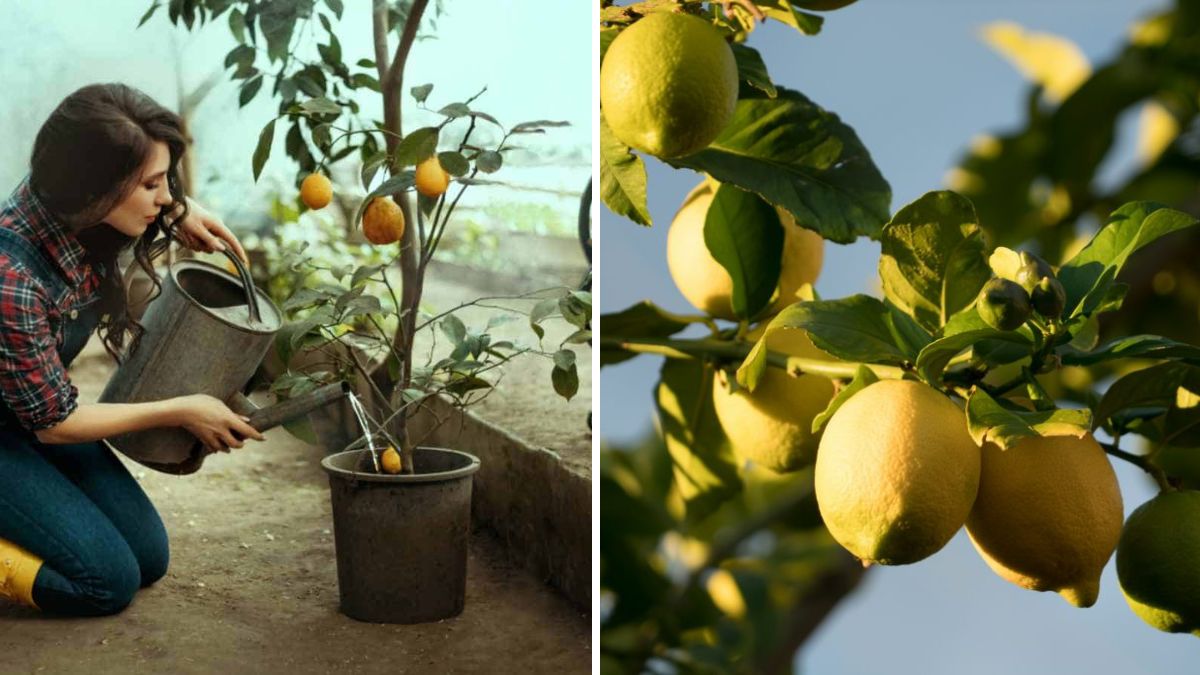
Lemon trees are more than just a source of tangy, refreshing fruit—they are a beautiful addition to any home garden or balcony. Growing a lemon plant at home might seem daunting, but with the right approach, it can be surprisingly easy and rewarding. Imagine having a fresh supply of lemons for cooking, beverages, or natural remedies right at your fingertips. In this guide, we’ll take you through a step-by-step process to grow a lemon plant effortlessly at home, covering everything from planting and watering to care and harvesting.
Why Grow a Lemon Plant at Home?
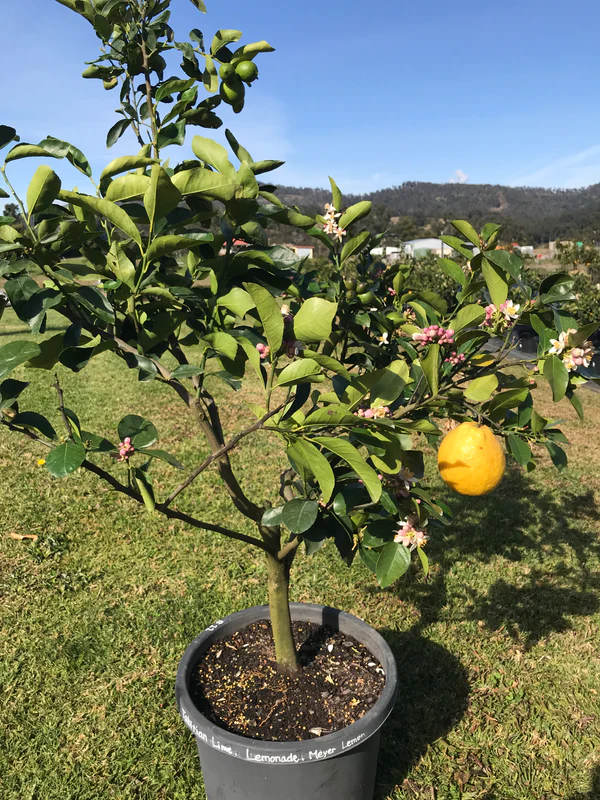
Growing a lemon plant at home has several benefits:
- Fresh Produce: Enjoy fresh, pesticide-free lemons for cooking, teas, and drinks.
- Health Benefits: Lemons are rich in vitamin C and antioxidants, boosting immunity and overall health.
- Aromatic and Decorative: Lemon plants add a fresh citrus scent and lush greenery to your home.
- Educational and Rewarding: Growing a plant from seed or sapling teaches patience and care, making it a fun project for the whole family.
- Eco-Friendly: Homegrown lemons reduce the need for store-bought produce and packaging waste.
Whether you have a small balcony, a backyard, or a sunny windowsill, lemon plants can thrive indoors or outdoors with proper care.
Choosing the Right Lemon Variety
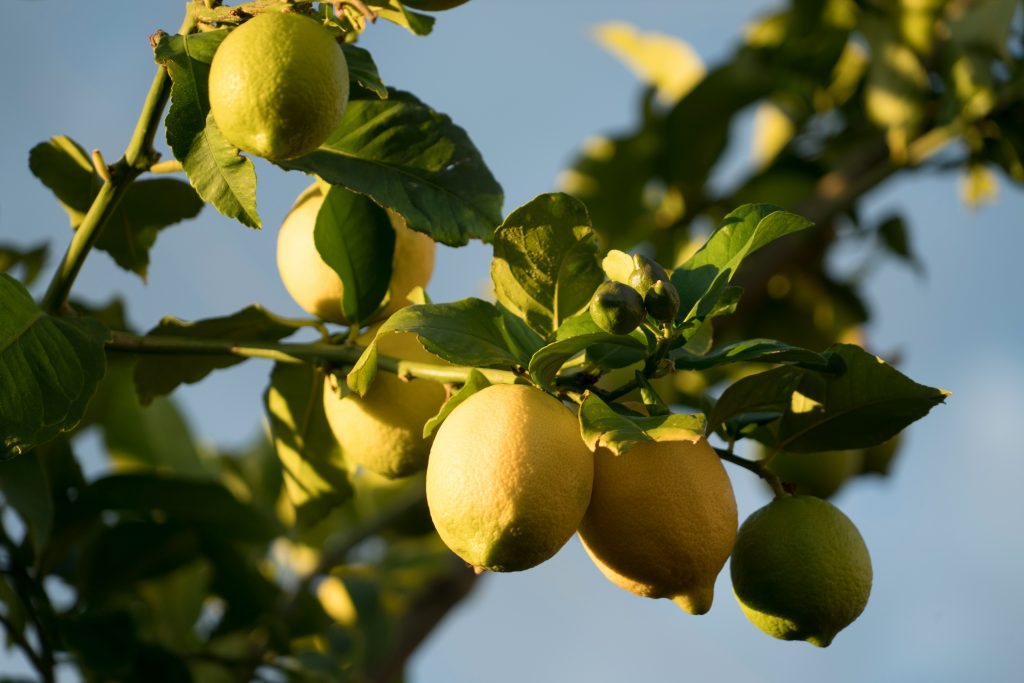
Before planting, select a lemon variety suitable for home cultivation:
- Eureka Lemon: Classic, widely available, and produces fruit year-round.
- Lisbon Lemon: Hardy variety that tolerates cooler climates and produces abundant fruit.
- Meyer Lemon: Sweet, less acidic, ideal for indoor growing and smaller spaces.
- Ponderosa Lemon: Large fruit, ornamental, and suitable for pots.
For indoor growing, Meyer lemons are highly recommended because they adapt well to containers and have a compact growth habit.
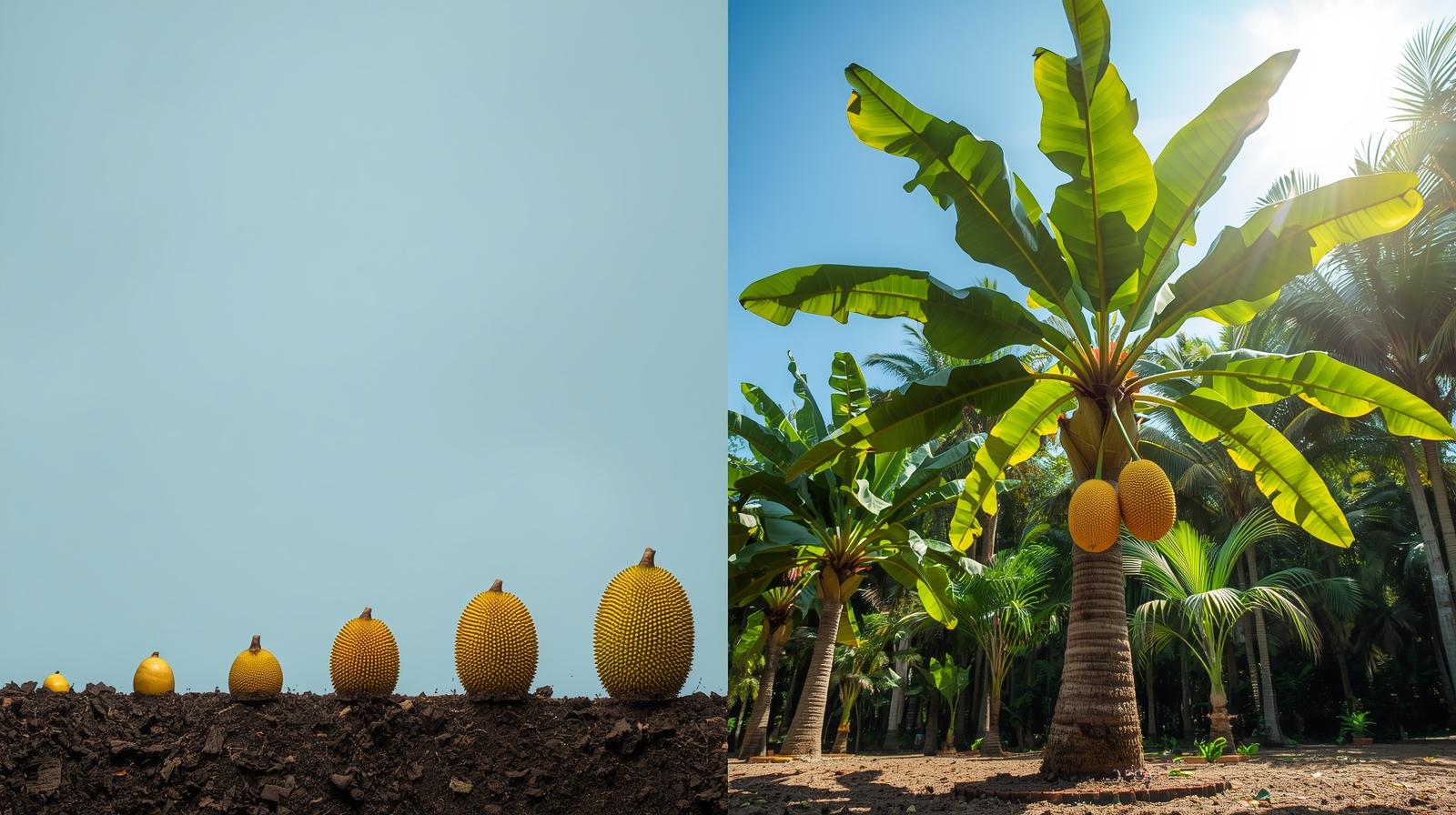
Starting Your Lemon Plant
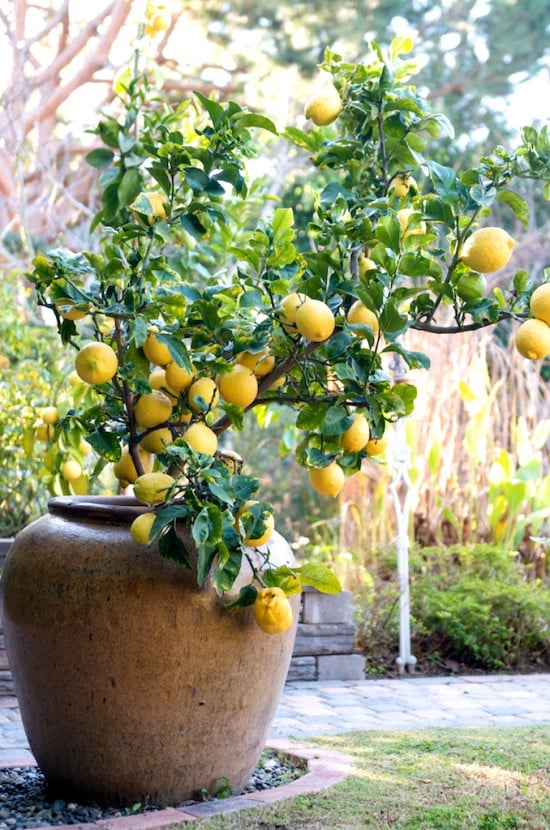
Option 1: From Seeds
Growing lemons from seeds is easy, though it requires patience:
- Extract seeds from a fresh lemon and clean them thoroughly.
- Soak the seeds in water for a few hours to improve germination.
- Fill a small pot with well-draining potting soil and plant the seeds about ½ inch deep.
- Keep the soil moist and place the pot in a sunny location.
- Seeds usually germinate within 2–4 weeks, and seedlings can be transplanted into larger pots as they grow.
Tip: Lemon trees grown from seeds may take 2–5 years to bear fruit, but they are perfect for beginners and indoor gardeners.
Option 2: From Saplings or Nursery Plants
Starting with a young sapling is faster and often easier for first-time growers:
- Purchase a healthy lemon sapling from a nursery.
- Choose a pot at least 12–16 inches in diameter with drainage holes.
- Use well-draining potting soil rich in organic matter.
- Transplant the sapling carefully, filling the pot with soil and gently pressing around the roots.
Saplings will usually start producing fruit in 1–2 years, making them ideal for those seeking quicker results.
Choosing the Right Container

Lemon plants require deep containers to accommodate their roots. Use pots that are:
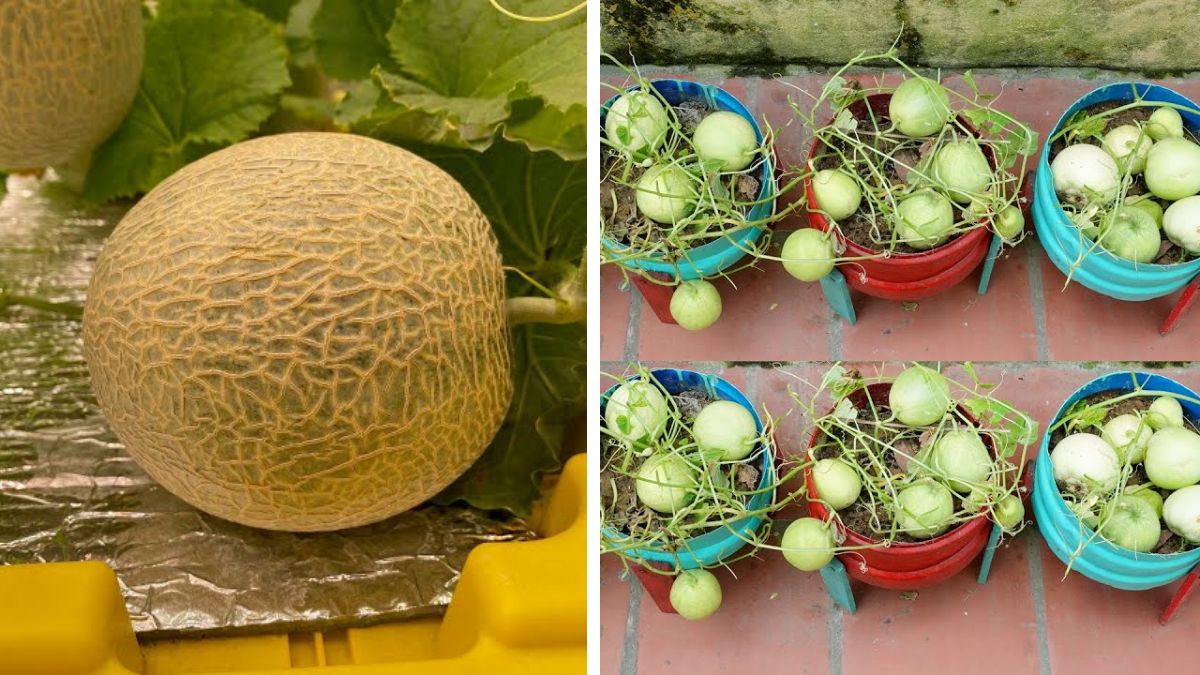
- At least 12–16 inches wide and deep for young plants.
- Made of plastic, clay, or ceramic, with proper drainage holes.
- Equipped with a saucer to catch excess water.
As the plant grows, you may need to repot into a larger container to prevent root binding and ensure healthy growth.
Planting and Soil Requirements
Lemon plants thrive in well-draining, slightly acidic soil (pH 5.5–6.5). Use a potting mix enriched with compost or organic matter for nutrients. Avoid heavy garden soil that retains water, as this can lead to root rot.
Planting tips:
- Fill the pot with soil, leaving 2–3 inches from the rim.
- Place the sapling or seedling in the center.
- Fill around the roots with soil, gently pressing to remove air pockets.
- Water thoroughly to settle the soil.
Sunlight Requirements
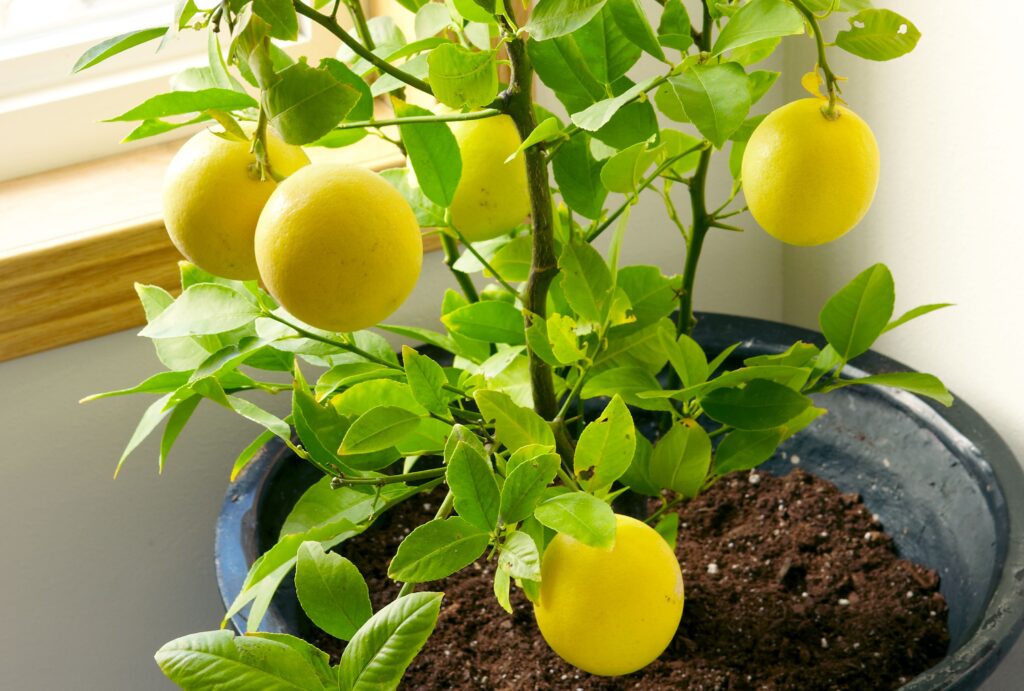
Lemon plants need plenty of sunlight to thrive:
- Indoors: Place near a south-facing window that receives at least 6–8 hours of sunlight daily.
- Outdoors: Ensure full sun exposure for maximum growth and fruiting.
- Supplemental Lighting: Use grow lights if natural light is insufficient, especially during winter months.
Consistent light is essential for healthy leaves, strong stems, and abundant fruit production.
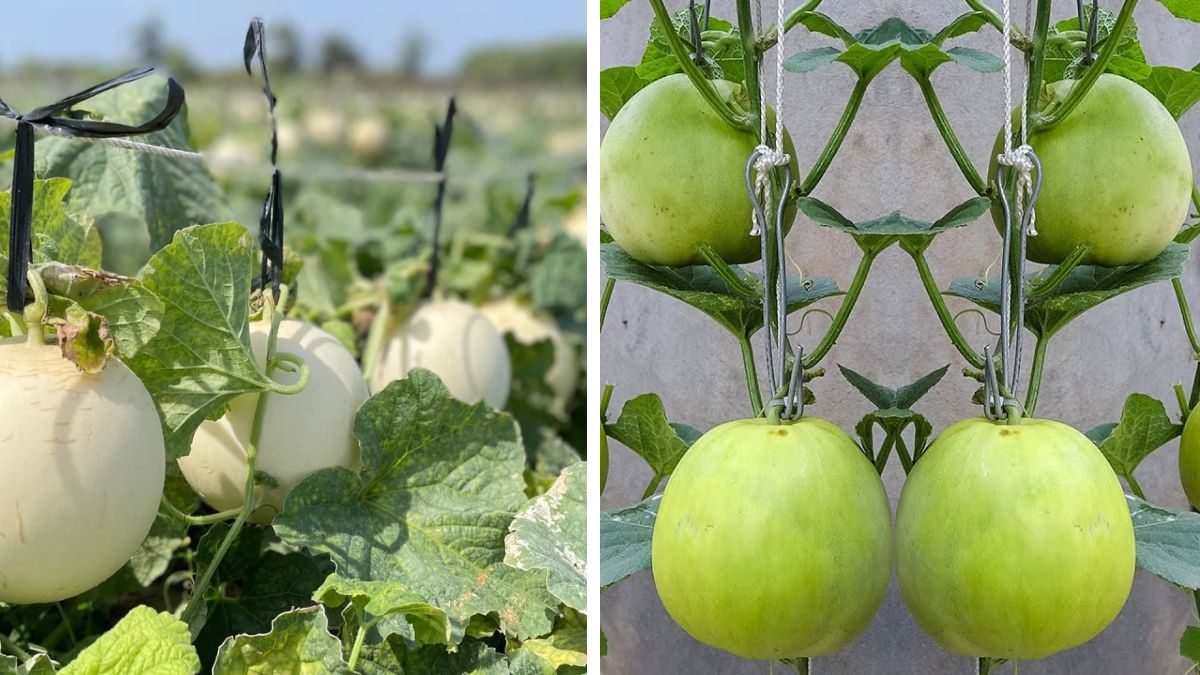
Watering and Humidity
Lemon plants prefer slightly moist soil but do not tolerate waterlogging. Follow these watering tips:
- Water deeply whenever the top 1–2 inches of soil feel dry.
- Avoid overwatering to prevent root rot.
- Indoor plants benefit from occasional misting to maintain humidity.
- Ensure proper drainage in the pot to prevent standing water.
Fertilization
Lemon plants are heavy feeders and require regular fertilization:
- Use a balanced citrus fertilizer high in nitrogen for healthy leaves and growth.
- Fertilize every 4–6 weeks during the growing season (spring and summer).
- Reduce fertilization during winter when the plant’s growth slows.
Organic options such as compost, worm castings, or diluted fish emulsion can also be used to nourish the plant naturally.
Pruning and Maintenance
Pruning helps maintain a compact shape, encourages new growth, and improves airflow:
- Remove dead or yellowing leaves regularly.
- Trim long, leggy branches to promote bushier growth.
- Pinch off flowers initially if the plant is young to allow energy to focus on root and leaf development.
Regular pruning keeps the plant healthy and productive.
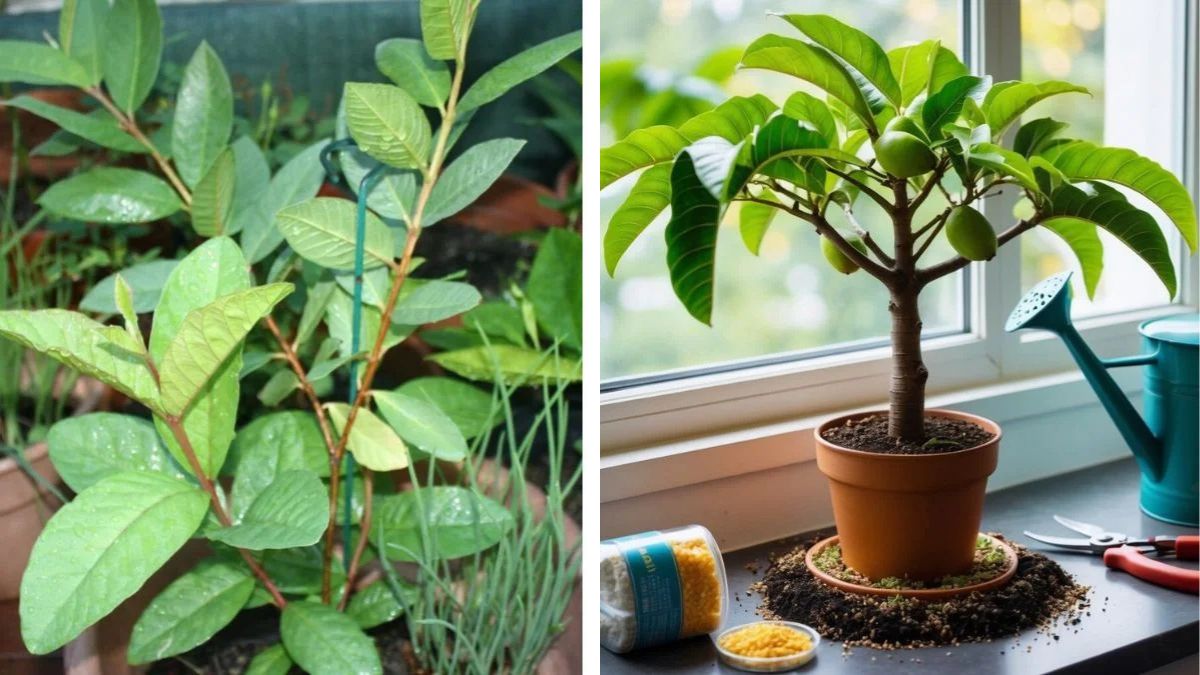
Pest and Disease Management
Lemon plants may encounter pests or diseases:
- Common Pests: Aphids, spider mites, and scale insects. Treat with neem oil or insecticidal soap.
- Diseases: Root rot (from overwatering) and leaf spot (from fungal infections). Ensure proper drainage and air circulation.
- Preventive Measures: Avoid overcrowding, provide adequate sunlight, and inspect plants regularly.
Harvesting Lemons
Lemons are ready to harvest when they are fully yellow, slightly soft to touch, and have reached the desired size. Harvest tips:
- Twist or cut fruit carefully from the stem to avoid damaging branches.
- Use scissors or pruning shears for precise harvesting.
- Regularly picking mature lemons encourages more flowering and fruiting.
Indoor lemon plants may produce smaller fruits, but they are equally flavorful and aromatic.
Tips for Success
- Choose the Right Variety: Meyer lemons are ideal for indoor cultivation due to their compact size and continuous fruiting.
- Maintain Light and Temperature: Ensure 6–8 hours of sunlight daily and keep the plant in temperatures above 15°C (60°F).
- Rotate Pots: Rotate the pot every few days for even light exposure.
- Regular Care: Water, fertilize, prune, and monitor for pests consistently.
- Patience: Indoor lemon plants may take 1–2 years to bear fruit, so be patient and persistent.
Conclusion
Growing a lemon plant at home is an easy, rewarding endeavor that brings freshness, beauty, and health benefits to your living space. With proper care—including sunlight, water, fertilization, and pruning—you can enjoy a continuous supply of fresh lemons for cooking, beverages, and natural remedies.
Whether you start from seeds or a nursery sapling, indoor or balcony-grown lemon plants thrive with minimal effort. By following the steps outlined in this guide, even beginners can successfully cultivate their own lemon tree, adding vibrant greenery, a refreshing aroma, and nutritious fruit to their home.
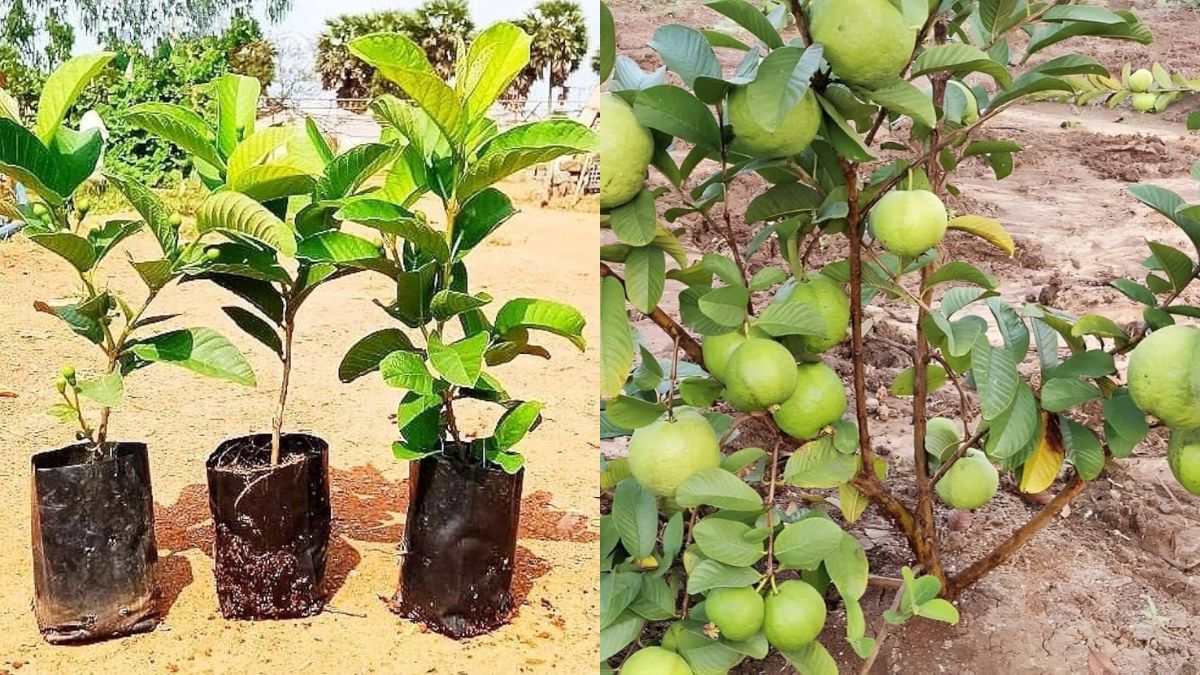
Lemon plants are a perfect example of how a simple home gardening project can yield extraordinary results, offering both aesthetic pleasure and practical benefits. With patience, care, and attention, your homegrown lemon plant can flourish and provide you with fresh, delicious lemons year-round.