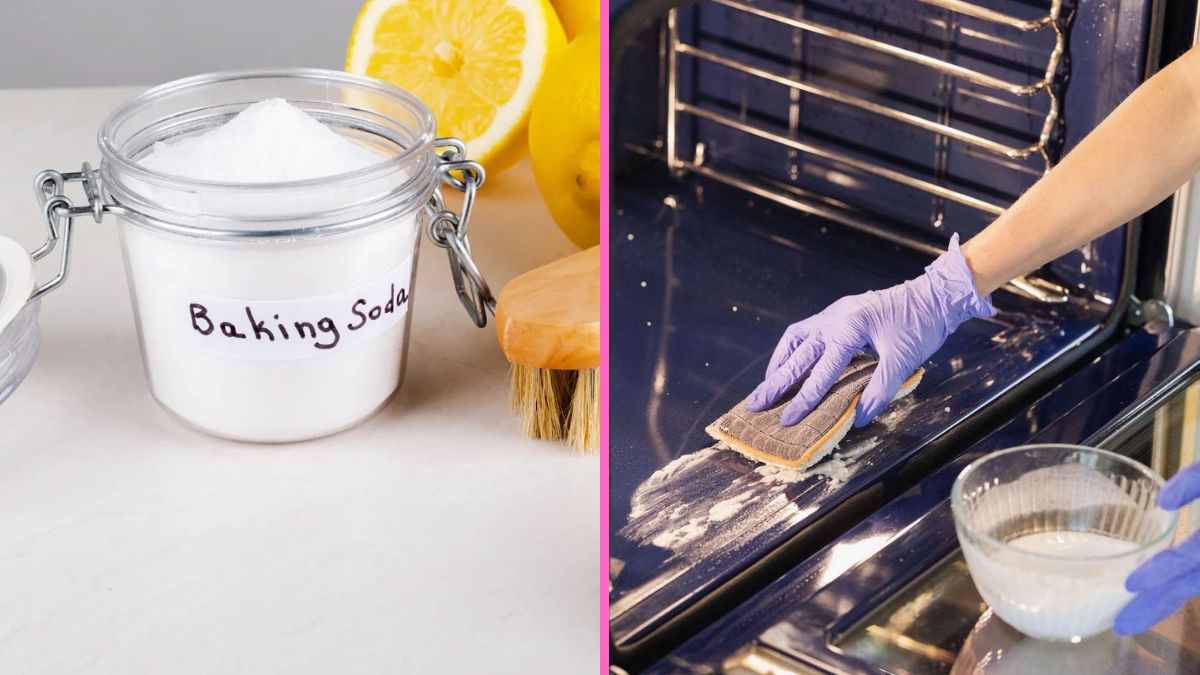
If you’ve ever tackled the daunting task of cleaning an oven, you know it’s one of the least enjoyable chores in the house. The combination of burnt-on grease, sticky residue, and smoky buildup can make even the most seasoned home cleaner cringe. Like many people, I used to rely on harsh chemical oven cleaners to get the job done—until I realized just how strong and unpleasant those fumes could be.
So, when I stumbled upon the idea of cleaning an oven with a simple baking soda paste, I was skeptical but curious. Could something so basic really stand up to years of baked-on grime? I decided to try it, and to my surprise, it worked far better than I expected. Not only did my oven look almost brand-new afterward, but I didn’t need a single drop of chemical cleaner. Here’s exactly how I did it, why it works, and why I’ll never go back to store-bought oven sprays again.
Why I Ditched Chemical Oven Cleaners
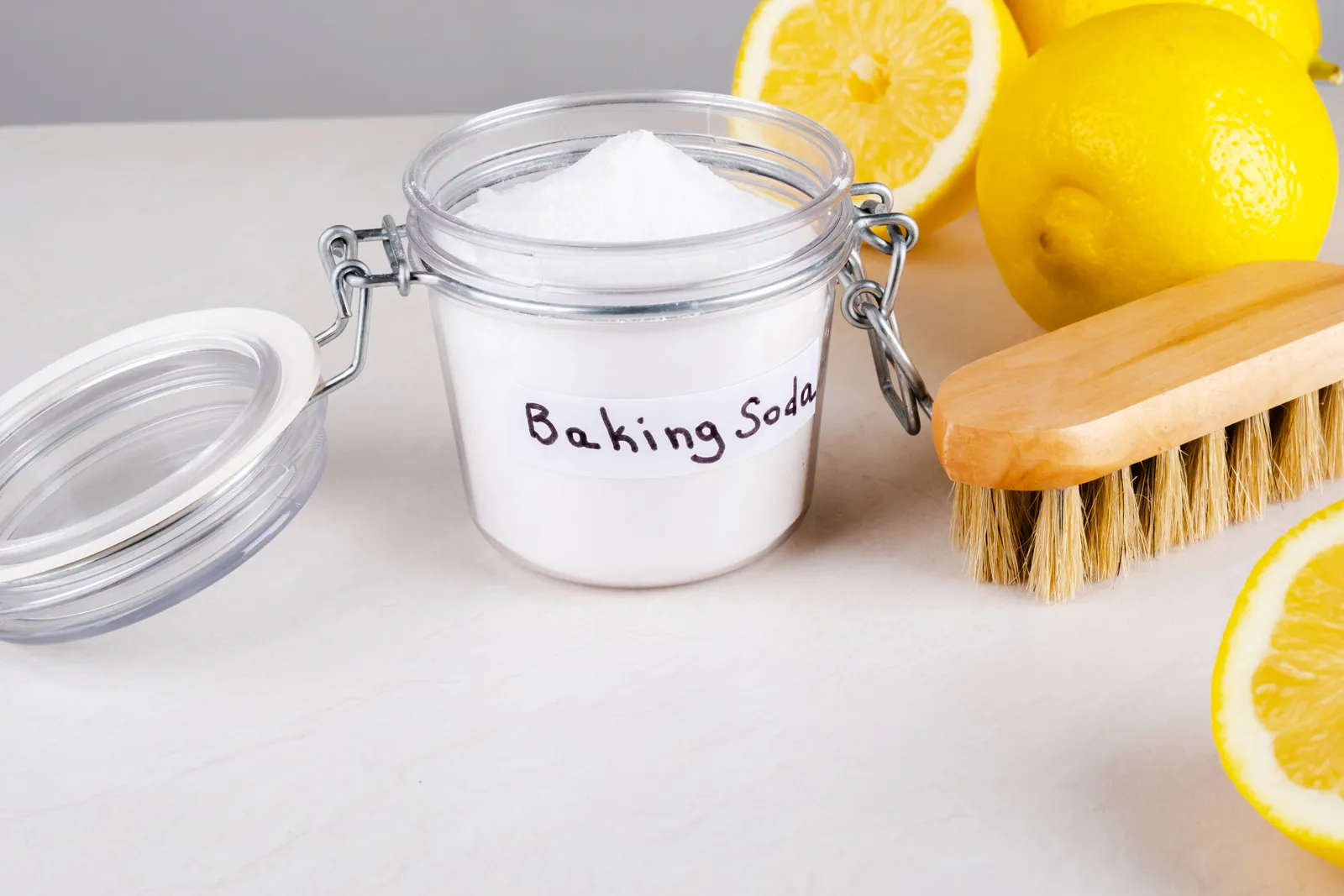
Before this experiment, my go-to solution for cleaning the oven was a commercial oven cleaner. The problem? The smell was overwhelming. Even with the kitchen windows open, I’d find myself coughing from the fumes, and the labels were filled with warnings about skin irritation and respiratory risks.
Beyond the smell, I didn’t love the idea of spraying harsh chemicals into the same space where I bake food. Even after wiping thoroughly, I was never completely sure all the residue was gone. I wanted a cleaning method that was safe, natural, and effective—and that’s when I discovered the baking soda paste method.
Baking soda is one of those kitchen staples that’s been used for centuries as a natural cleaner and deodorizer. It’s inexpensive, non-toxic, and safe for food surfaces. Combined with a little water or vinegar, it can break down grease and lift stains with surprising power.
The Baking Soda Paste Method
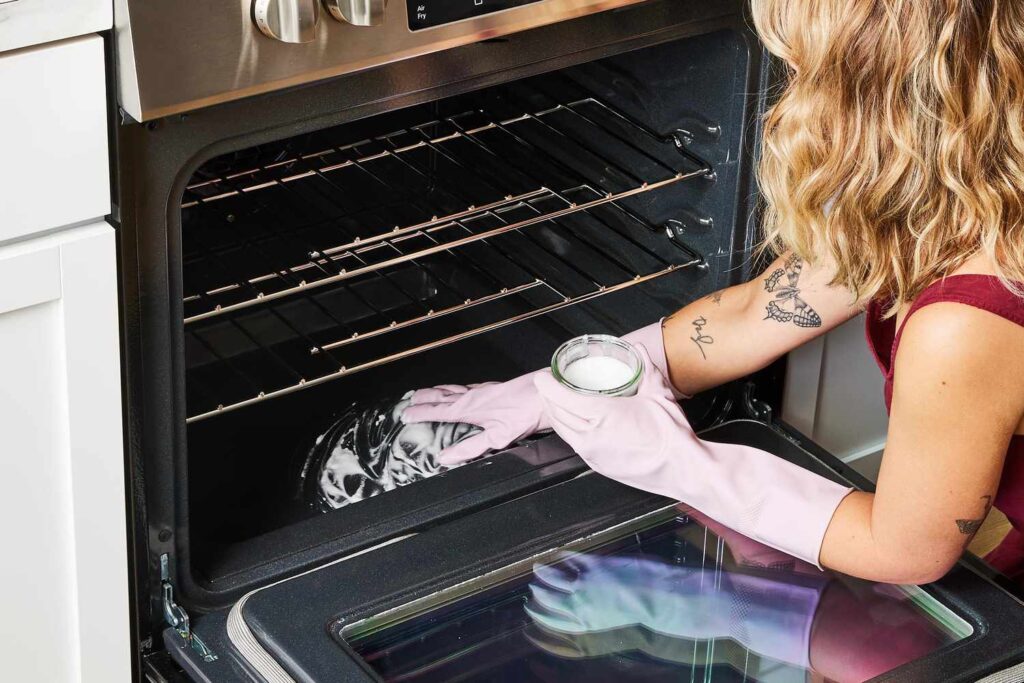
The beauty of this method is its simplicity. You only need three basic ingredients:

- Baking soda
- Water
- White vinegar (optional, for an extra boost)
Here’s exactly how I cleaned my oven using nothing but these pantry staples.
Step 1: Empty the oven
I started by removing the oven racks, thermometer, and any loose crumbs at the bottom. It’s easier to work with a clean surface, and you’ll want to treat the racks separately.
Step 2: Mix the paste
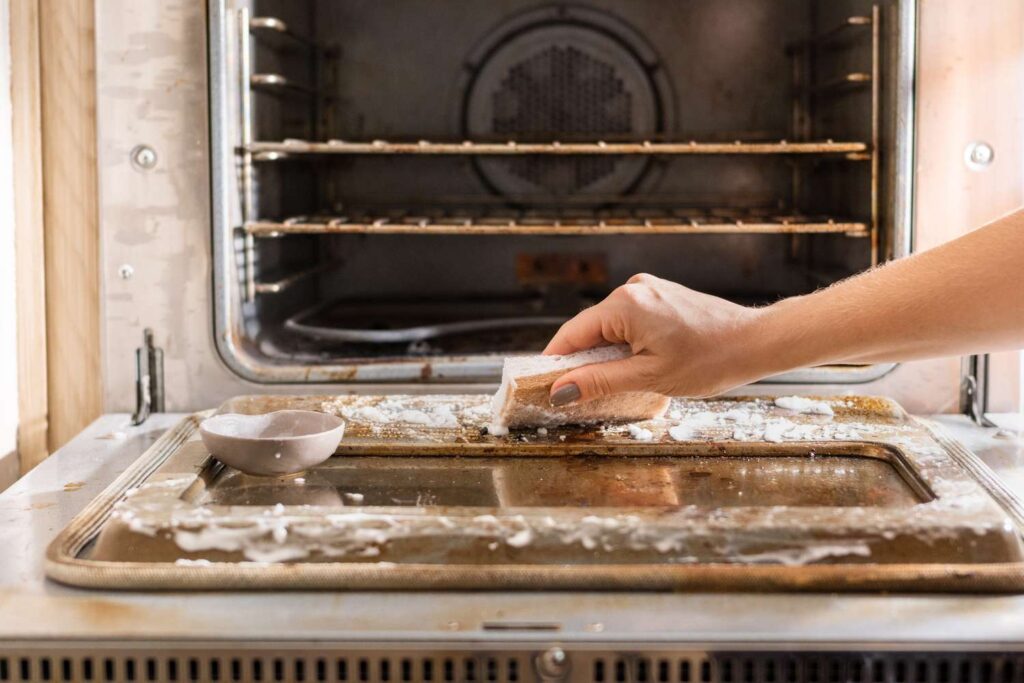
In a small bowl, I combined about ½ cup of baking soda with a few tablespoons of water, stirring until it formed a thick, spreadable paste. The consistency should be similar to cake frosting—thick enough to stick to surfaces but soft enough to spread easily.
Step 3: Apply the paste
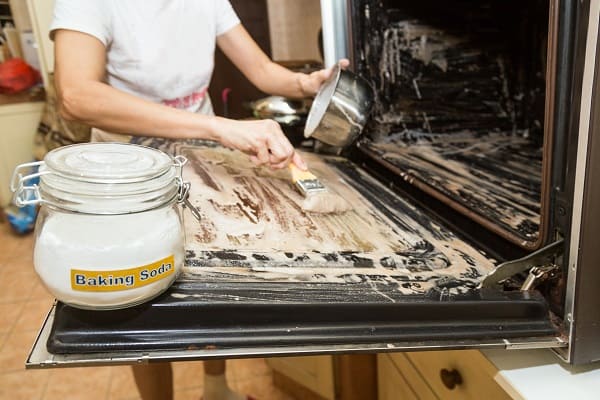
Using a spatula (you can also use your hands with gloves), I spread the baking soda paste all over the interior of the oven—on the bottom, the sides, and even the inside of the door. I avoided the heating elements but made sure to cover every greasy spot and burnt area.
As I applied the paste, it turned brownish in places—that’s the baking soda reacting with the grease and grime. I made sure to coat it evenly, paying extra attention to areas with stubborn buildup.
Step 4: Let it sit overnight
Here’s the secret: time does the work for you. I left the paste to sit overnight (at least 12 hours). This waiting period allows the baking soda to break down grease and loosen the stuck-on food particles without scrubbing.

If you’re short on time, you can let it sit for at least 4–5 hours, but overnight works best for heavy buildup.
Step 5: Wipe it down
The next morning, I grabbed a damp cloth and began wiping away the dried paste. To my surprise, much of the grime came off easily with just gentle wiping. For tougher spots, I used a plastic spatula to lightly scrape away the residue—no heavy scrubbing required.
Step 6: Spray vinegar for a final shine
To remove any remaining baking soda film, I filled a spray bottle with white vinegar and misted it over the oven’s interior. The vinegar reacted with the leftover baking soda, fizzing gently and helping lift off any remaining residue. After one final wipe-down with a clean damp cloth, the interior looked spotless and bright.
The Results
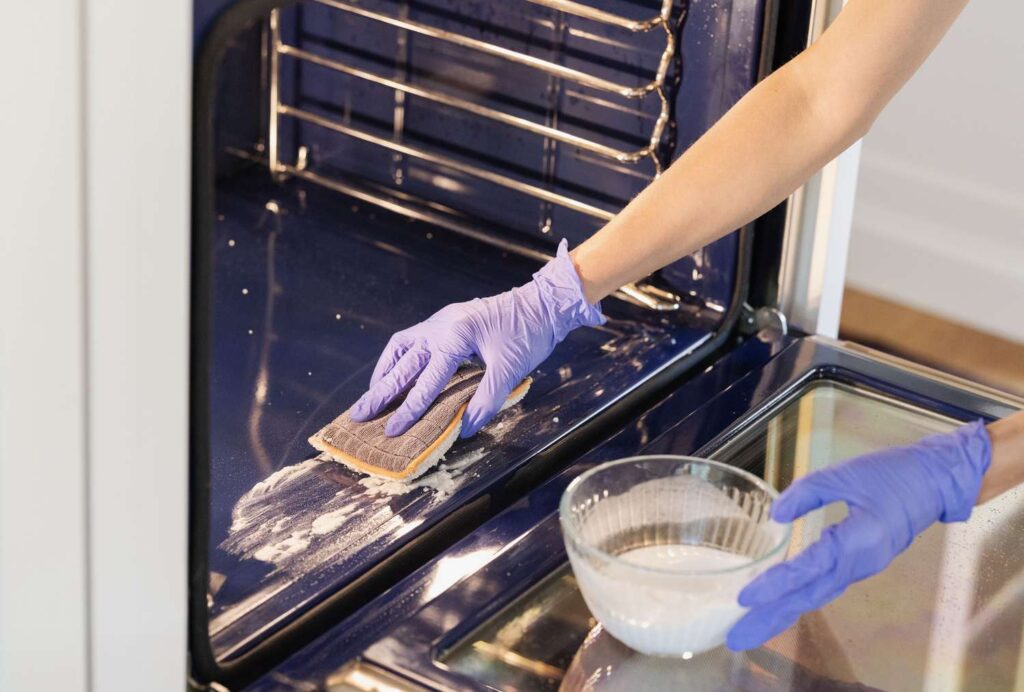
I was genuinely amazed. What had been a dull, greasy mess now looked almost new. The glass door was clear again, the sides were shiny, and even the oven floor, once coated with burnt spots, looked refreshed.
There was no chemical smell, no lingering fumes, and no sticky residue—just a clean, fresh scent and a sparkling oven ready for use. It felt satisfying to know that I had done it entirely with natural ingredients.
The best part? My hands didn’t sting, my eyes didn’t water, and I didn’t need to ventilate the entire kitchen afterward.

Why Baking Soda Works So Well
It turns out there’s real science behind why this simple trick works. Baking soda, or sodium bicarbonate, is slightly alkaline. Grease and food residues are often acidic, and when baking soda comes into contact with them, it neutralizes the acids and breaks down the bonds that make the grime stick to surfaces.
Its fine, gritty texture also acts as a mild abrasive, scrubbing away buildup without scratching the oven’s enamel surface. When combined with vinegar, the fizzing chemical reaction helps lift and dissolve the loosened dirt even further.
Essentially, baking soda does the heavy lifting that harsh chemical cleaners do—but without any of the toxic side effects.
Cleaning the Oven Racks
While the paste was working its magic inside the oven, I turned my attention to the racks. Instead of scrubbing them endlessly, I filled my bathtub with hot water and dissolved about ½ cup of baking soda and a few drops of dish soap in it. I then submerged the racks and let them soak overnight.
The next day, I wiped them down with a sponge, and the grease slid right off. After rinsing and drying them, they looked as shiny as the oven interior.
A Few Helpful Tips
After experimenting with this method a few times, I’ve learned some tips that make the process even easier:

- Don’t rush it: Letting the paste sit overnight really makes a difference. Time allows the baking soda to fully penetrate and soften tough grease.
- Use gloves: While baking soda is gentle, it can dry out your hands after prolonged contact.
- Avoid heating elements: Always keep the paste away from electrical or gas components.
- Add lemon juice for fragrance: Mixing a few drops of lemon juice into the paste not only adds cleaning power but also leaves your oven smelling fresh.
- Regular maintenance: Wipe down spills as soon as they happen, and repeat the baking soda method every couple of months to keep your oven spotless with minimal effort.
Benefits of a Chemical-Free Clean
Switching to baking soda for oven cleaning has benefits that go beyond appearance:
- Healthier for your home: No toxic fumes or harsh chemicals that can irritate your lungs or skin.
- Better for the environment: Baking soda and vinegar are biodegradable and non-polluting.
- Safe around food and pets: You don’t have to worry about lingering residues contaminating your meals.
- Budget-friendly: A box of baking soda costs less than most single-use oven cleaner sprays.
- Satisfying results: It’s genuinely rewarding to clean with natural ingredients and see real results.
How Often Should You Do It?
If you use your oven regularly, cleaning it every three months keeps it in great condition. For light use, twice a year might be enough. A quick wipe-down after messy baking sessions also prevents buildup and makes deep cleaning easier.
And because the baking soda method is so safe and simple, you can use it more frequently without worrying about damaging the oven surface or exposing yourself to harsh chemicals.
Expanding the Baking Soda Magic
After seeing how well baking soda worked on my oven, I started using it all over my kitchen—and even beyond. It’s a multipurpose cleaner that can handle:
- Cooktops: Removes burnt-on spills.
- Microwaves: Deodorizes and cleans stains.
- Sinks and drains: Lifts grime and neutralizes odors.
- Cutting boards: Gently cleans and sanitizes without bleach.
- Pots and pans: Helps remove stuck food when mixed with vinegar.
It’s incredible how one humble ingredient can replace an entire shelf of chemical cleaners.
My Final Thoughts
Cleaning the oven used to be one of my most dreaded chores. The thought of dealing with noxious fumes and scrubbing for hours made me postpone it far too long. But ever since I discovered the power of baking soda paste, that’s changed completely.

Now, I clean my oven confidently and without hesitation, knowing it will come out sparkling clean—without a single chemical in sight. The process is simple, safe, and surprisingly satisfying.
It’s a small change, but it’s made a huge difference in how I approach cleaning my home. There’s something empowering about finding natural solutions that truly work, especially when they’re better for your health, your wallet, and the environment.
So the next time your oven starts to look a little grimy, skip the harsh sprays. Grab a box of baking soda, a little water, and maybe some vinegar, and let nature do the cleaning. You’ll be amazed at how fresh, clean, and chemical-free your kitchen can be—just like I was.