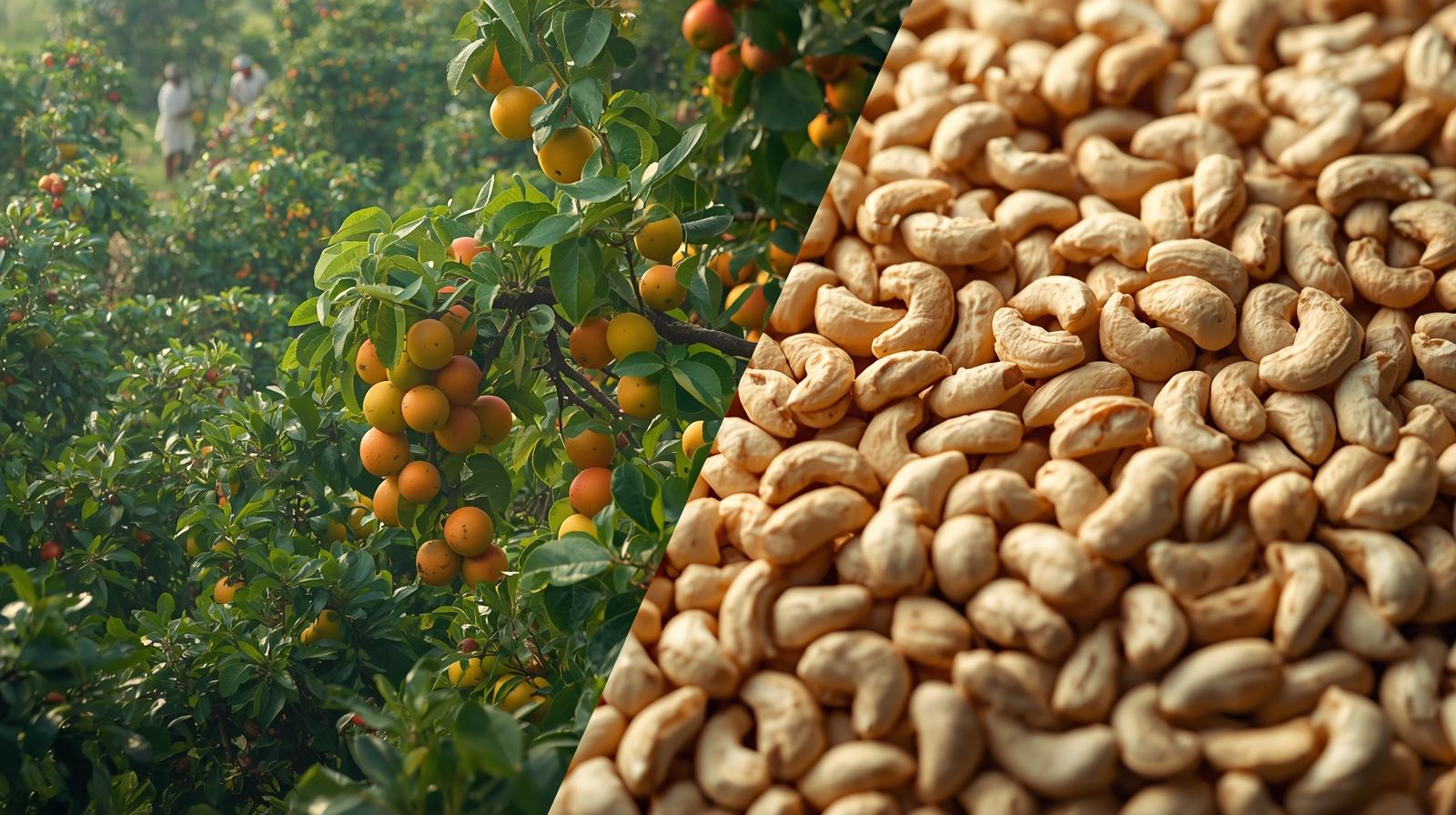
Cashew nuts are one of the most valuable tree nuts traded globally. They are widely used in snacks, cooking, confectionery, and dairy alternatives. Cashews are also an important export commodity for many tropical countries. The global demand for cashews has increased steadily due to their nutritional benefits. Rich in healthy fats, protein, and minerals, cashews are popular among health-conscious consumers. Their cultivation supports millions of farmers worldwide. Understanding where cashews are produced helps explain global food supply chains. One country has emerged as the clear leader in cashew production.
Understanding Cashew Cultivation Worldwide
Cashew trees thrive in tropical climates with warm temperatures and moderate rainfall. They prefer sandy, well-drained soils and coastal regions. Cashew cultivation is labor-intensive, especially during harvesting and processing. Many producing countries rely on smallholder farmers. Climate, soil quality, and farming practices determine yield levels. Cashew trees take several years to mature. Once established, they can produce nuts for decades. These factors influence which countries dominate global production.
India as the World’s Largest Cashew Producer
India is the largest producer of cashew nuts in the world. The country accounts for a significant share of global cashew output annually. Large-scale cultivation across multiple states contributes to this leadership. India’s dominance is not accidental but the result of decades of agricultural development. Favorable climate conditions allow year-round cultivation. Strong domestic demand also supports large-scale production. India’s experience in plantation crops strengthens its position. This leadership is supported by both tradition and innovation.
Major Cashew-Producing Regions in India
Cashew cultivation in India is concentrated in coastal states. Kerala, Karnataka, Goa, Maharashtra, Andhra Pradesh, Odisha, and Tamil Nadu are major producers. These regions offer ideal tropical conditions. Coastal humidity and sandy soils promote healthy cashew growth. Many farmers integrate cashew with other crops. Government support programs encourage expansion. Regional expertise improves productivity. Together, these states form India’s cashew backbone.
Why India Leads in Cashew Production
India leads due to a combination of climate, labor availability, and processing expertise. The country has a long history of cashew cultivation. Skilled labor supports harvesting and shelling processes. Strong domestic consumption stabilizes the market. India also invests in research and improved varieties. Government policies support cashew farming. Infrastructure development improves transportation and exports. These advantages keep India at the top.
Cashew Processing: A Key Advantage
India is not only a producer but also a global leader in cashew processing. Raw cashews are processed into edible kernels domestically. Processing adds significant value to the product. Indian processing units employ millions of workers. This expertise attracts raw cashew imports from Africa. High-quality processing enhances export competitiveness. Processed cashews fetch higher prices. This strengthens India’s leadership in the global market.
Role of Small Farmers in India’s Cashew Industry
Small and marginal farmers play a vital role in cashew production. Many farms are family-owned and operated. Cashew provides stable income in rural areas. Low maintenance requirements suit smallholders. Cashew trees tolerate drought better than many crops. Government training programs improve farming practices. Cooperative models support farmers financially. Rural participation strengthens production stability.
Cashew Yield and Production Volume
India produces millions of tons of raw cashew annually. Yield varies depending on region and farming practices. Improved hybrid varieties increase output per hectare. Better irrigation methods enhance productivity. Pest management reduces losses. Continuous research supports yield improvement. Production volume meets both domestic and export demand. High output ensures India’s global leadership.
Export Strength of Indian Cashews
Indian cashews are exported to numerous countries worldwide. The United States, Europe, and Middle East are major markets. Indian kernels are known for quality and taste. Strict quality control enhances brand reputation. Export earnings contribute significantly to the economy. Value-added processing boosts revenue. Strong trade relationships support exports. Global trust reinforces India’s leadership position.
Competition from Other Producing Countries
Countries like Vietnam, Ivory Coast, and Brazil also produce cashews. Vietnam excels in processing efficiency. African nations lead in raw nut production. However, India balances both production and processing. Integrated supply chains provide an advantage. Domestic consumption reduces market volatility. Experience ensures consistency. Competition exists but India remains dominant.
Government Policies Supporting Cashew Production
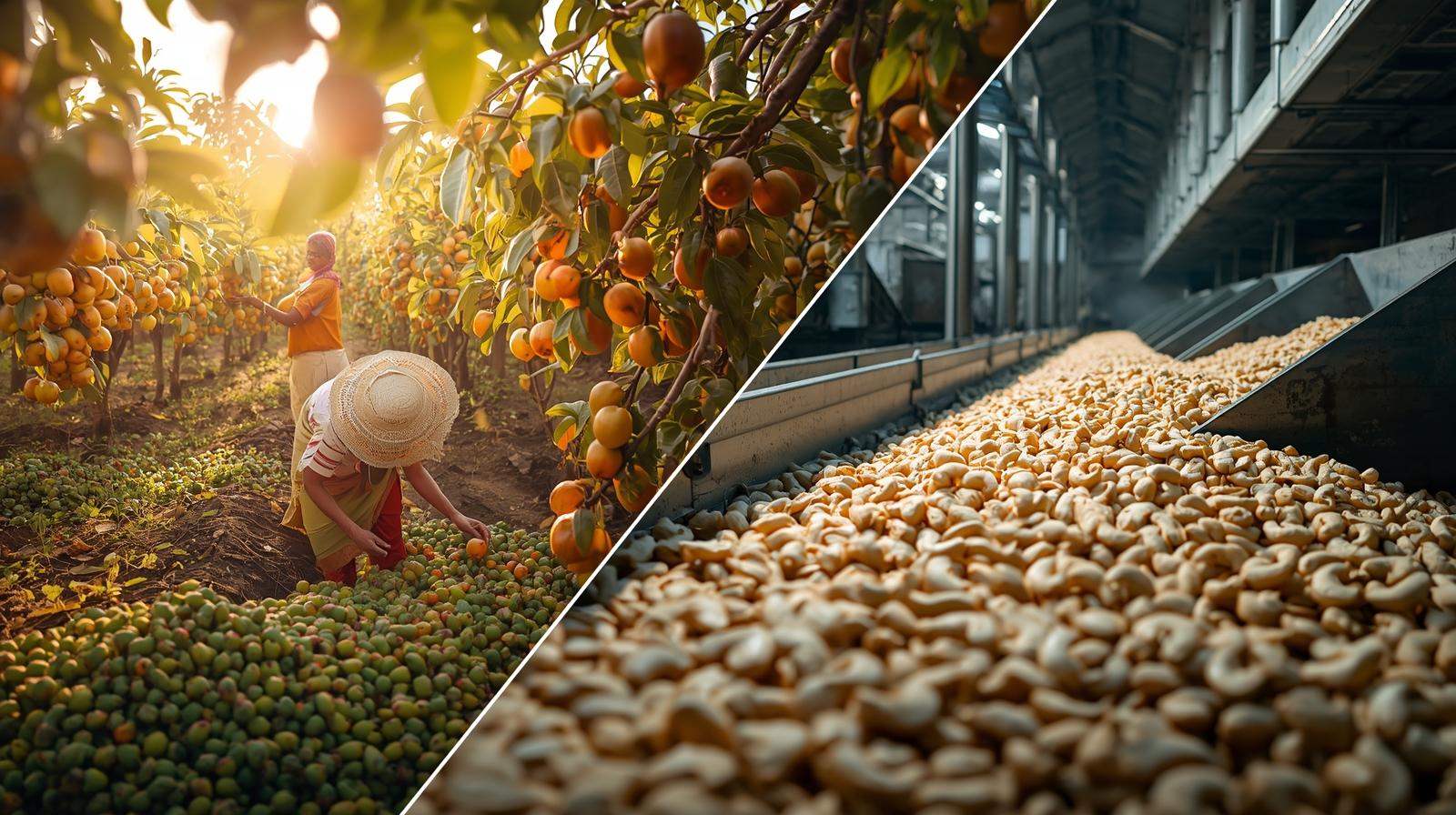
Indian government initiatives promote cashew cultivation. Subsidies support planting and irrigation. Research institutions develop improved varieties. Farmer training programs enhance productivity. Export incentives encourage global trade. Infrastructure investments improve logistics. Policy support ensures long-term growth. These measures strengthen industry resilience.
Sustainability and Environmental Factors
Cashew farming is relatively eco-friendly. Trees prevent soil erosion. Cashew plantations support biodiversity. Minimal chemical use reduces environmental impact. Agroforestry systems enhance sustainability. Climate-resilient varieties adapt to changing weather. Sustainable practices protect long-term yields. Environmental responsibility supports future growth.
Challenges Facing Cashew Producers
Despite leadership, challenges remain. Climate change affects rainfall patterns. Labor shortages increase costs. Pest infestations threaten crops. Price fluctuations impact farmer income. Aging plantations reduce productivity. Addressing these challenges requires innovation. Investment in modernization is essential. Solutions ensure continued leadership.
Technological Advancements in Cashew Farming
Modern technology improves cashew farming efficiency. Drip irrigation conserves water. Improved harvesting tools reduce labor strain. Digital platforms provide market information. Research enhances disease resistance. Mechanization improves processing speed. Technology bridges productivity gaps. Innovation supports long-term dominance.
Cashew Consumption Trends
Global cashew consumption is rising. Plant-based diets increase demand. Cashew milk and butter gain popularity. Snack industry growth boosts sales. Health awareness supports consumption. India benefits from domestic and global demand. Market expansion drives production. Consumption trends favor long-term growth.
Table: Major Cashew-Producing Countries
| Country | Production Strength | Key Advantage | Global Role |
|---|---|---|---|
| India | Highest production | Integrated processing | Market leader |
| Vietnam | High processing | Efficiency | Strong exporter |
| Ivory Coast | Raw production | Large plantations | Supplier |
| Brazil | Regional production | Climate suitability | Exporter |
| Nigeria | Growing output | Expanding farms | Emerging player |
Economic Impact of Cashew Industry
Cashew farming supports millions of livelihoods. Processing units create employment. Export revenue boosts national income. Rural development improves living standards. Small farmers gain stable income. The industry supports allied sectors. Economic contribution is substantial. Cashews strengthen agricultural economies.

Future of Cashew Production in India
India continues to invest in cashew development. Replantation programs renew aging trees. Research improves climate resilience. Export markets expand steadily. Domestic consumption remains strong. Sustainable practices ensure longevity. India’s future leadership appears secure. Strategic planning supports growth.
Why India Remains the Global Leader
India’s leadership is based on scale, experience, and integration. Balanced production and processing ensure stability. Strong domestic demand reduces risk. Skilled labor enhances quality. Government support strengthens infrastructure. Adaptability maintains competitiveness. These factors sustain leadership. India remains unmatched globally.
Conclusion: India’s Cashew Dominance Explained
India is the largest cashew producer due to natural advantages and human expertise. Its integrated industry sets it apart. From farm to export, India controls the value chain. Continuous innovation supports growth. Despite challenges, resilience remains strong. Global demand continues to rise. India’s dominance is well-established. The future remains promising.