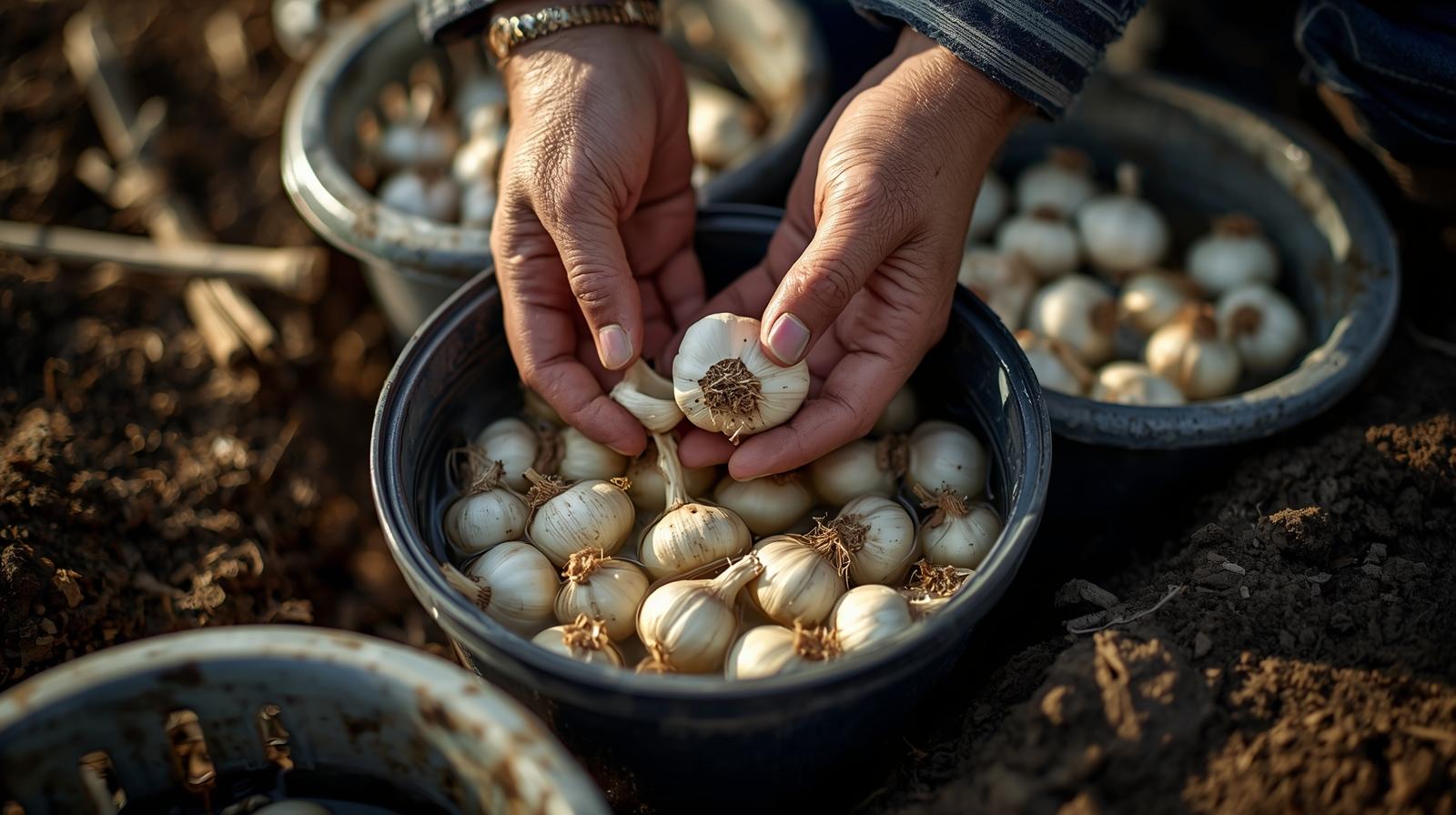
Introduction to the Garlic Soaking Practice
Garlic farmers around the world follow a unique pre-planting practice of soaking garlic cloves before sowing. While it may look simple, this technique has deep agricultural science behind it. Soaking garlic helps improve germination, reduce disease, and increase bulb size when done correctly.
Understanding Garlic Growth Challenges
Garlic often faces problems such as fungal infections, slow sprouting, and uneven bulb development. Soil-borne diseases and poor root establishment are common reasons for low yields. The soaking technique directly addresses these early-stage challenges.
Purpose of Soaking Garlic Cloves
The primary reason farmers soak garlic is to activate the clove before planting. Moisture penetrates the clove, waking up dormant enzymes that trigger faster root and shoot development once planted in soil.
Disease Prevention Through Soaking
Soaking garlic in natural or mild antimicrobial solutions helps eliminate fungal spores and bacteria present on the clove surface. This significantly reduces the risk of rot and white mold during early growth stages.
Types of Soaking Solutions Used
Farmers use various soaking solutions such as plain water, compost tea, neem extract, or mild salt solutions. Each solution serves a specific purpose, from hydration to pest and disease control.
Duration and Timing of Soaking
The soaking time is carefully controlled, usually ranging from 6 to 12 hours. Over-soaking can damage cloves, while under-soaking may not deliver full benefits. Timing is critical for optimal results.
Effect on Germination Speed
Soaked cloves sprout faster and more uniformly than dry-planted garlic. This leads to even plant growth, making nutrient and water management easier throughout the growing season.
Impact on Root Development
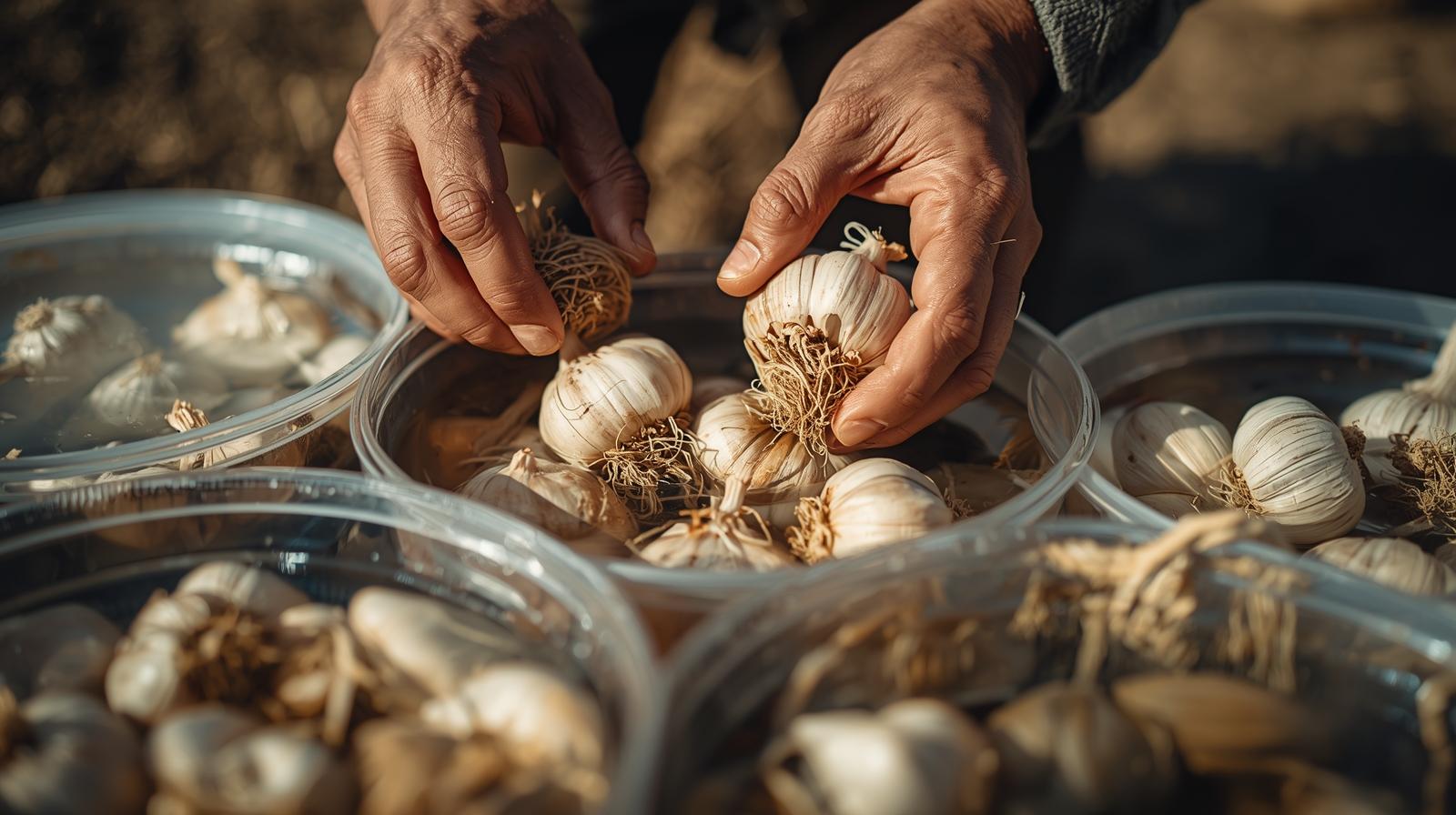
Early root formation is stronger in soaked garlic cloves. A well-developed root system improves nutrient absorption, leading to stronger leaves and larger bulbs later in the season.
Improved Nutrient Uptake
Activated cloves absorb soil nutrients more efficiently. This results in healthier foliage, which directly contributes to bulb size and overall yield.
Reduced Crop Losses
By minimizing disease incidence and uneven growth, soaking reduces early crop losses. This is especially beneficial for organic and small-scale farmers.
Suitable Conditions for This Technique
Garlic soaking is most effective in regions with high humidity or heavy soils where fungal diseases are common. It is equally useful for container and home garden cultivation.
Final Results and Farmer Benefits
Farmers who practice garlic soaking consistently report improved bulb size, better uniformity, and higher market value. This low-cost technique delivers high returns with minimal effort.
Garlic Soaking Technique Comparison Table
| Practice | Germination Rate | Disease Risk | Bulb Size |
|---|---|---|---|
| Dry Planting | Medium | High | Average |
| Soaked Cloves | High | Low | Large |