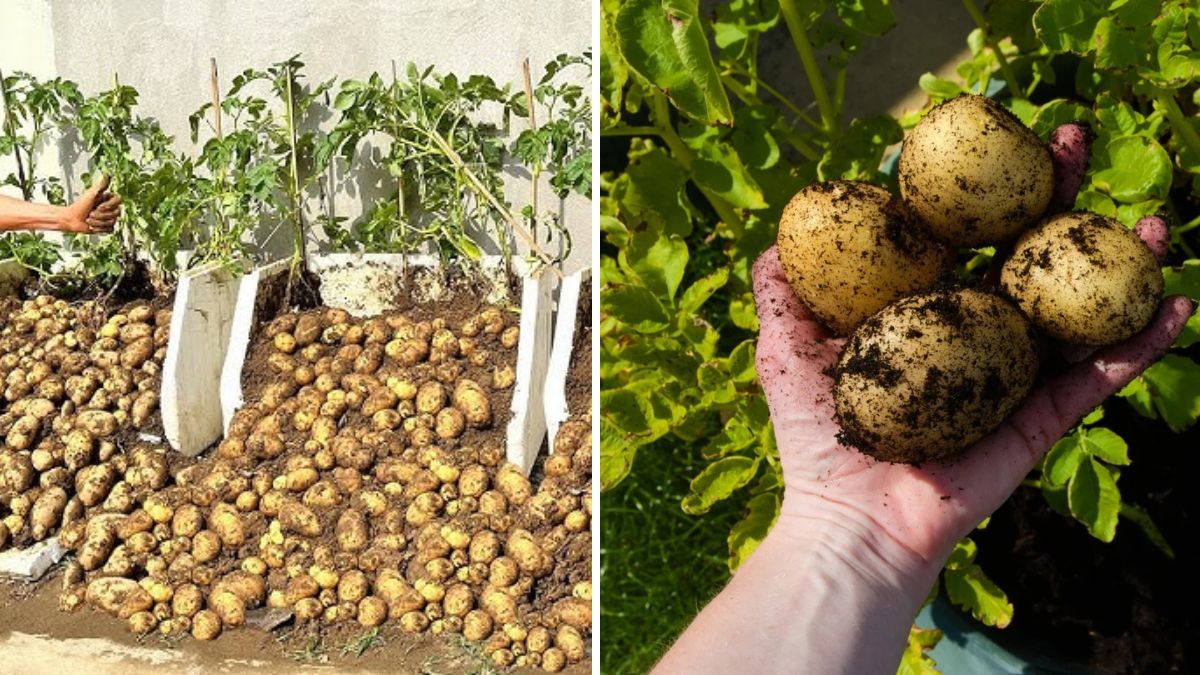
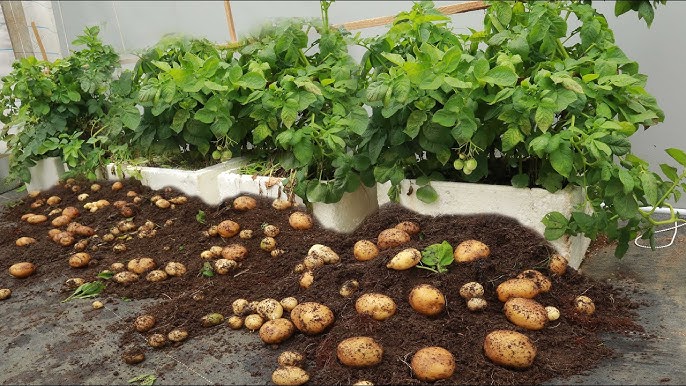
Potatoes are one of the most widely grown root vegetables in the world. They are easy to plant, fast-growing, and incredibly productive—even in small spaces. Many gardeners refer to vigorous potato plants as “potato trees” because of their bushy appearance and strong stems. While potatoes don’t grow on actual trees, they can be propagated in several clever ways that dramatically increase yield.
If you want to grow more potatoes in containers, grow bags, terraces, or gardens, the key lies in learning how to propagate potatoes correctly. In this guide, you will learn everything about propagating potatoes—from traditional methods to advanced tricks that farmers use to produce heavy yields.
Let’s explore the complete process step-by-step!
🌱 Understanding Potato Propagation
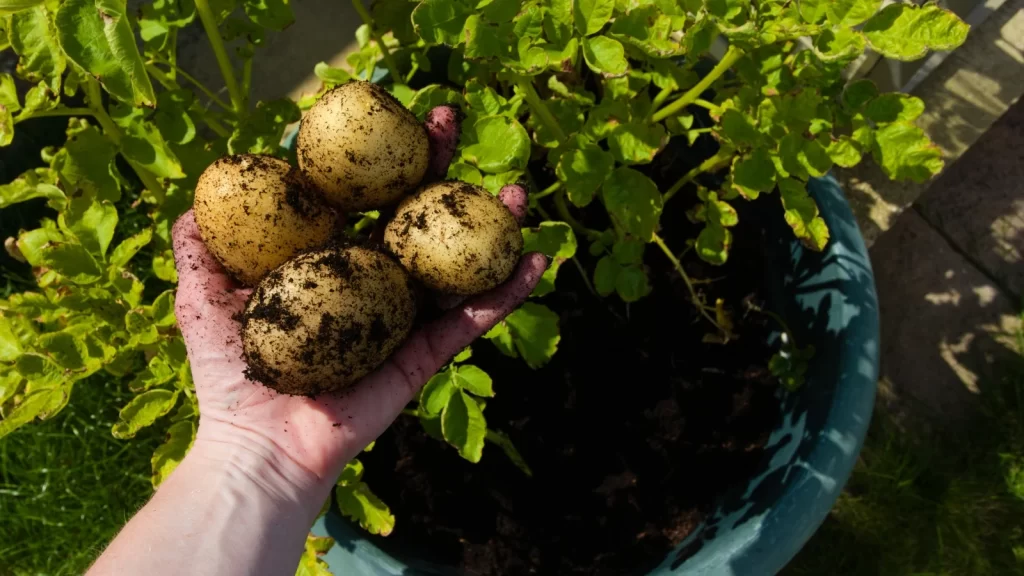
Potatoes don’t grow from seeds like many other vegetables. Instead, they are propagated by parts of the potato itself—called “seed potatoes.”
Potatoes can be propagated using:
✔️ Seed potatoes (most common)
Pieces of mature potatoes that contain “eyes” or buds.
✔️ Sprouted potatoes (eyes already growing shoots)
These naturally grow into new plants.
✔️ Potato cuttings (stems used to form roots)
A lesser-known but effective technique.
✔️ Air-layering potato stems (boosts early tuber formation)
An advanced trick for a larger harvest.
Each method gives different benefits, and using a combination of them can drastically increase yield.
🥔 1. Propagating Potatoes from Seed Potatoes
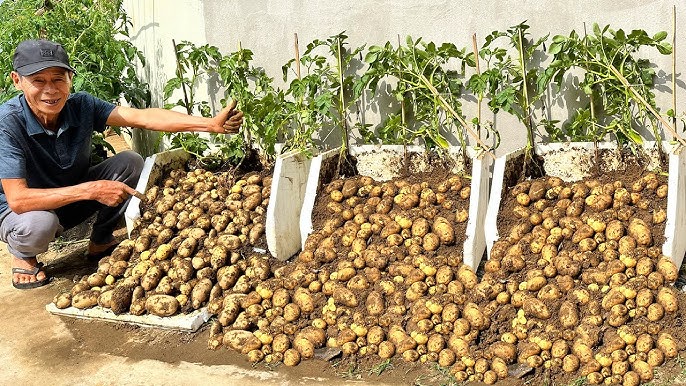
This is the simplest and most effective method. If done correctly, each seed potato can produce 10–20 large potatoes.
🌿 Step 1: Select Good Seed Potatoes
Choose potatoes that are:
- Mature
- Firm
- Free of disease
- At least 30–40 grams each
- Have 1–3 visible “eyes” or buds
Avoid soft or rotten potatoes.
🔪 Step 2: Cut the Seed Potato (If Large)
Large potatoes can be cut into pieces.
Each piece should have:
- 1–2 eyes
- About 1 inch thickness
After cutting:
- Keep the pieces in a dry place for 24–48 hours
- Allow the cut surfaces to form a protective layer
This prevents rot when planted.
🌱 Step 3: Prepare Loose Soil
Potatoes grow underground, so soil must be soft and well-draining.
Ideal soil mix:
- 40% garden soil
- 30% compost or cow dung
- 20% coco peat
- 10% sand
Potatoes also love wood ash, which boosts growth and flavor.
🌾 Step 4: Plant the Seed Potatoes
Plant pieces 3–4 inches deep with the eye facing upward.
Spacing:
- 12–15 inches between plants
- 2 feet between rows
💧 Step 5: Watering
Keep soil moist but never waterlogged.
Overwatering causes rot.
🌿 2. Propagating Potatoes from Sprouted Potatoes (Eyes)
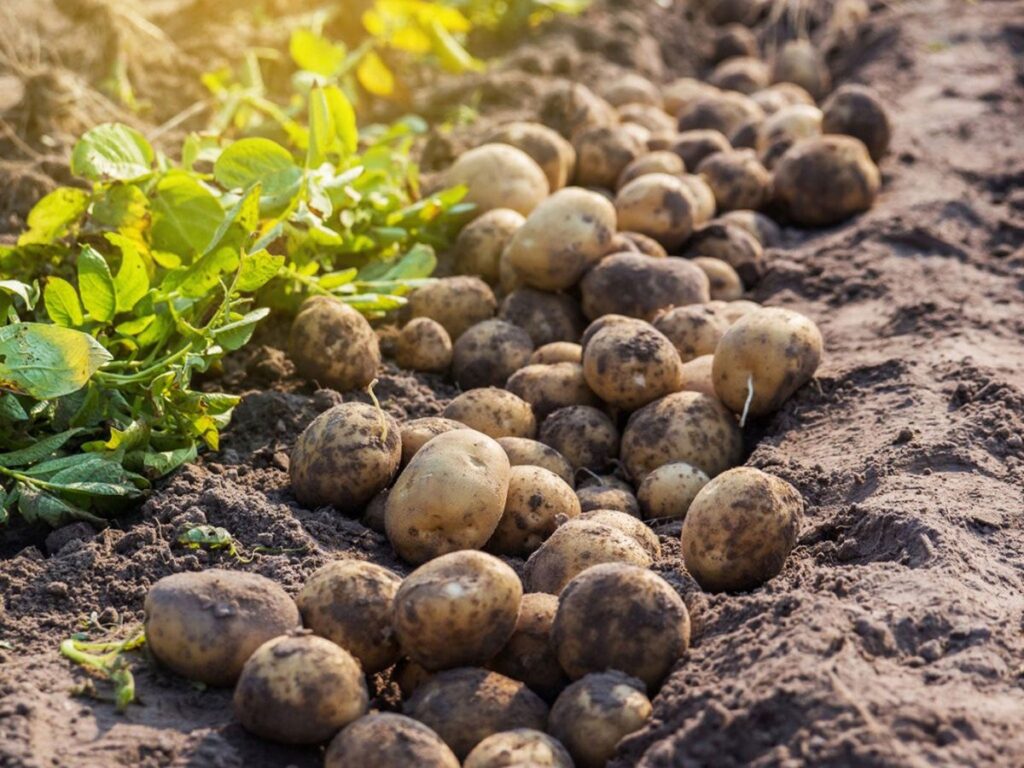
If you have potatoes with long shoots, they are perfect for propagation.
✔️ How to prepare sprouted potatoes
- Break long sprouts carefully
- Plant them directly in soil
- Cover lightly with compost
- Keep moist until shoots appear
This method is especially useful when your stored potatoes start sprouting naturally.
🌱 3. Propagating Potatoes Using Stem Cuttings (Fast Growth Trick!)
Potato stems can also be used to grow new plants—a method used in high-production farms.
🪴 Step 1: Select Healthy Stems
Choose:
- Green, strong stems
- 6–8 inches long
- With at least 2 nodes
✂️ Step 2: Prepare the Cutting
- Remove bottom leaves
- Cut below a node
- Take 3–4 cuttings per plant
🧪 Step 3: Rooting the Cutting
You can root cuttings in:
- Water
- Coco peat
- Sand
- Perlite
🌿 Step 4: Transplant After Rooting
Roots develop in 7–10 days.
Once they are 1–2 inches long, transplant into soil.
This method produces early tuber formation and gives a head start to the plant.
🌳 4. Advanced Technique: Air Layering Potato Stems for Higher Yields
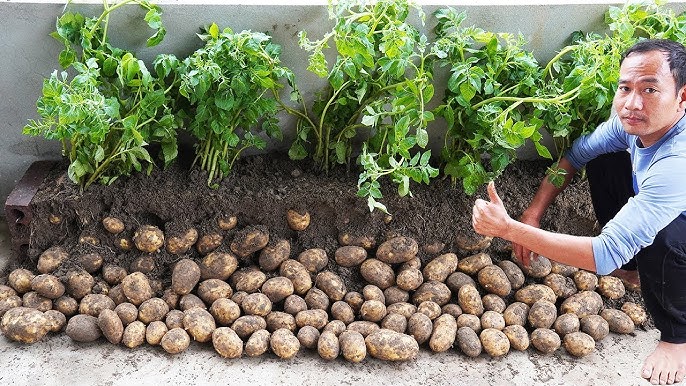
Air layering is a secret method for doubling potato production. Farmers use it to encourage tuber development early.
🌱 How it works:
When you bury part of the potato stem or wrap it with moist soil, the plant forms extra roots and baby tubers.
🌼 Steps for air layering:
- Choose a healthy potato stem.
- Wrap a small portion of the lower stem with moist coco peat or compost.
- Cover with plastic and tie both ends.
- Keep it moist for 1–2 weeks.
- You will see small tubers forming inside the wrapped area.
These mini tubers increase the plant’s total potato output.
🌿 Care Tips After Propagation for Bigger Potato Harvests
Propagation alone is not enough. Proper care ensures a heavy crop.
🌞 1. Sunlight
Potatoes need:
- 6–8 hours of direct sunlight
- Cool temperatures for best growth
They don’t grow well in extreme heat.
💧 2. Watering
Potatoes require consistent moisture.
- Water lightly every 2–3 days
- Never overwater
- Reduce watering once flowers appear
Overwatering during tuber formation reduces yield.
🌱 3. Fertilizing for Maximum Tubers
Potatoes love organic matter. Feed them:
- Compost every 20 days
- Banana peel fertilizer (potassium)
- Wood ash (extra nutrients)
- Bone meal for tuber growth
Avoid too much nitrogen—it causes leaves instead of potatoes.
🌿 4. Hilling the Soil (Most Important Step!)
Hilling means covering the lower plant with extra soil.
Why hilling is important?
- Encourages more tuber formation
- Protects growing potatoes from sunlight
- Prevents greening and toxicity
- Supports the plant stem
Hill soil every 15–20 days to increase yield dramatically.
🐛 5. Pest and Disease Management
Common pests:
- Potato beetles
- Aphids
- Cutworms
- Whiteflies
Use:
- Neem oil spray weekly
- Garlic–chili organic spray
- Mulching to prevent pests
For fungal issues:
- Avoid overhead watering
- Provide good spacing
🥔 Harvesting Potatoes for Best Results
Potatoes are ready to harvest when:
- Leaves turn yellow
- The plant starts drying
- Soil cracks around tubers
- 80–100 days have passed
Use a fork or hand tool to gently remove potatoes without damage.
For baby potatoes, harvest earlier (60–70 days).
🌟 Final Thoughts
Propagating potatoes is incredibly simple, and with the right techniques, even a small space can produce large amounts of potatoes. Whether you propagate using:
- Seed potatoes
- Sprouted eyes
- Stem cuttings
- Air layering techniques
…each method helps you multiply your plants and grow healthier, higher-yielding potato crops.
With proper sunlight, nutrient-rich soil, and regular hilling, your potato plants will reward you with abundant harvests that last all season.