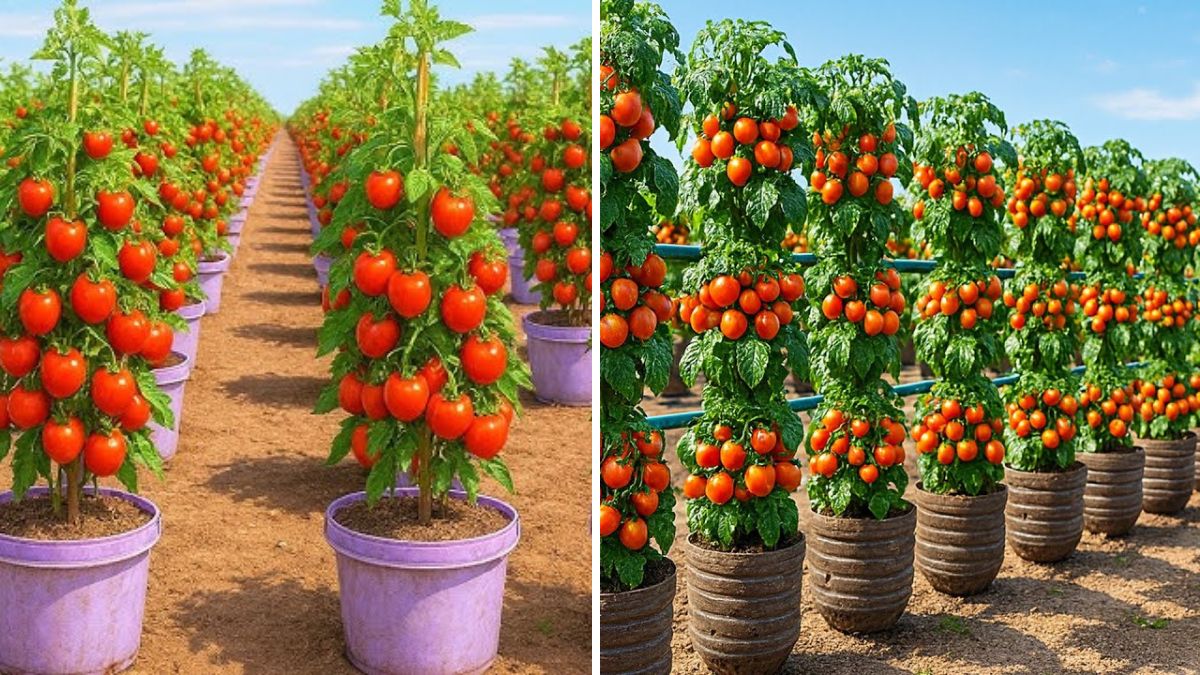
If you love fresh tomatoes but don’t have a yard, you’re not alone. Millions of people living in apartments, high-rises, and compact homes assume that homegrown tomatoes are out of reach. But what if you could grow plump, juicy, sweet tomatoes right on your walls—without soil beds, without big planters, and without any garden space?
Welcome to the world of wall-hanging tomato gardens, one of the most innovative, space-saving, and surprisingly high-yield growing techniques for urban gardeners. With just a few simple materials, you can turn a blank wall into a productive tomato farm that supplies you with fresh harvests for months.
In this 1200-word guide, you’ll learn how to set up a hanging tomato garden, choose the right varieties, avoid common mistakes, and maximize your yields even in the smallest of spaces.
Why Wall-Hanging Tomato Gardens Are Becoming a Trend
Growing tomatoes on walls isn’t just a clever idea—it’s a powerful gardening method that solves several urban living challenges.
1. Perfect for Small Spaces
No yard? No problem! A wall—indoors or outdoors—is all you need.
2. Better Sunlight Distribution
Vertical growth allows tomato plants to receive light on all sides, resulting in stronger branches and more fruit.
3. Improved Airflow
Hanging planters reduce the chances of pests and fungal diseases commonly found in ground-level gardens.
4. Less Bending, Less Mess
Everything is at eye level—easy to prune, water, and harvest.
5. Surprisingly High Yield
Tomatoes respond extremely well to vertical support, producing clusters of fruit consistently.
What You Need to Get Started
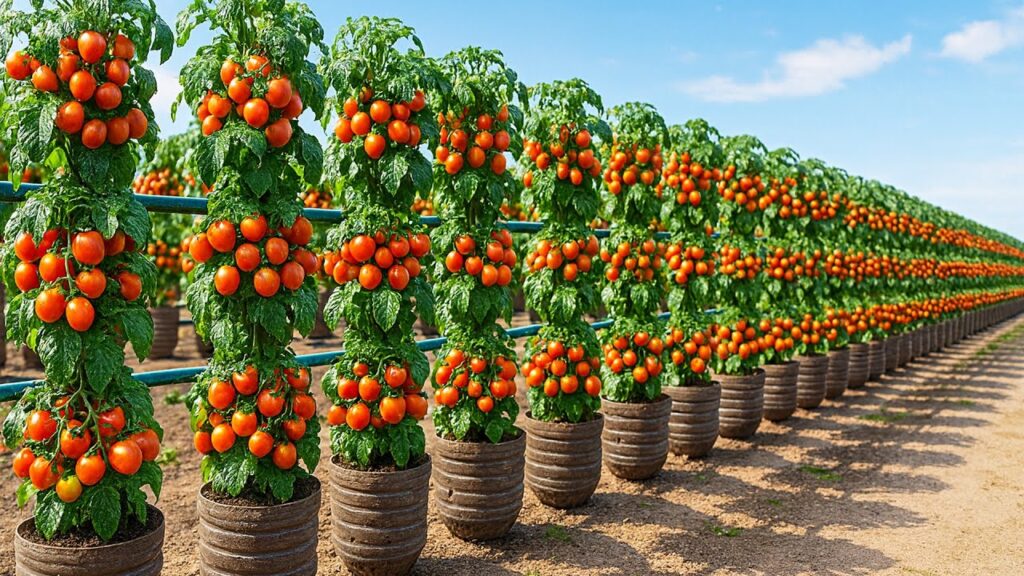
You don’t need expensive tools or fancy hydroponic systems. Here’s a simple list:
- Wall hooks or sturdy metal brackets
- Hanging containers (buckets, recycled bottles, or vertical grow bags)
- Good-quality potting mix
- Tomato seedlings
- Compost or slow-release organic fertilizer
- Drip tray or water catcher
- Stakes or trellis netting (optional)
- Watering can or drip system
Choosing the Best Tomato Varieties for Hanging Gardens
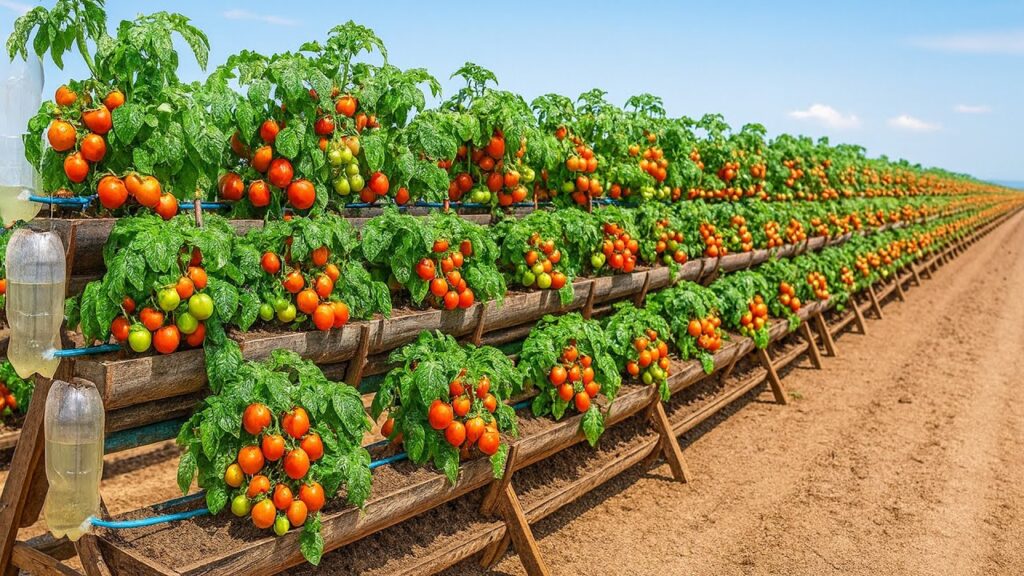
Not all tomato varieties behave the same in vertical setups. For wall-growing success, select varieties that are compact, prolific, and fast-growing.
Best Choices:
✔ Cherry Tomatoes (Sweet 100, Sungold, Black Cherry)
✔ Grape Tomatoes
✔ Tumbler or Trailing Varieties
✔ Patio Tomatoes
✔ Dwarf or Bush Types
These varieties adapt easily, require less support, and reward you with continuous harvests.
Avoid large beefsteak tomatoes—they require heavy staking and deeper planters.
Step-by-Step Guide: Building Your Wall-Hanging Tomato Garden
Let’s break it down into simple steps anyone can follow.
Step 1: Select the Right Wall
Your tomatoes need at least 5–7 hours of sunlight daily.
Choose:
- East-facing wall → Perfect morning light
- South-facing wall → Full-day sun
- West-facing wall → Strong afternoon light
Indoor walls near large windows also work if you supplement with grow lights.
Step 2: Install Hooks or Brackets
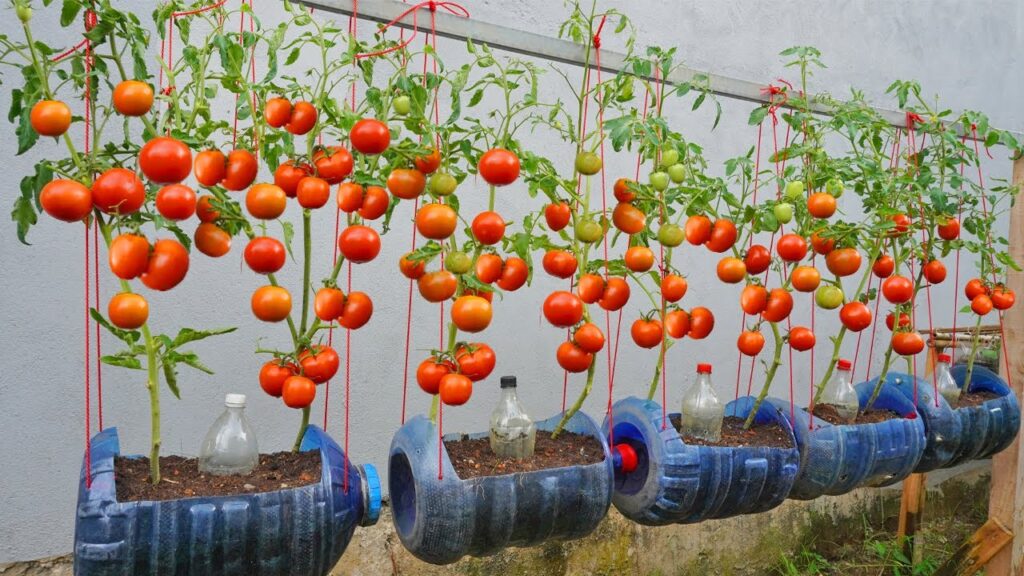
Strong support is essential because tomato plants, once loaded with fruit, become heavy.
✔ Use metal hooks
✔ Screw directly into the wall
✔ Ensure each can hold at least 5–7 kg
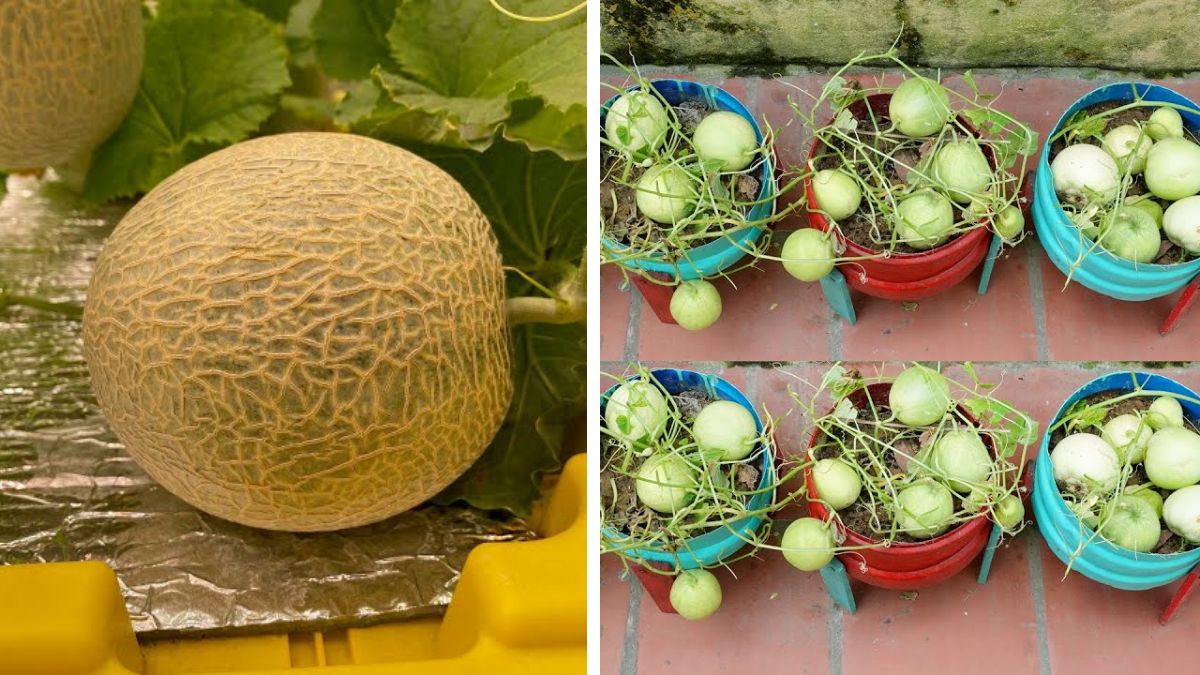
If you are renting, use removable adhesive hooks rated for heavy loads.
Step 3: Prepare the Hanging Containers
You can use many options:
- Vertical grow bags
- 5-liter plastic containers
- Recycled paint buckets
- Large plastic bottles
- Upside-down growing pots
Make Proper Drainage
Drill 5–8 holes at the bottom to prevent waterlogging.
Step 4: Prepare the Best Tomato Soil Mix
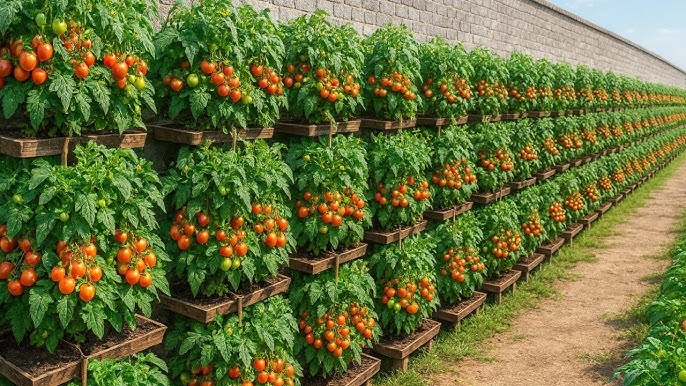
Tomatoes love loose, nutrient-rich, well-draining soil.
Perfect mix:
- 40% potting mix
- 40% compost or vermicompost
- 10% cocopeat
- 10% sand or perlite
Add 2 tbsp neem cake to prevent soil pests.
Step 5: Plant Your Tomatoes
Transplant the seedlings deep—deeper than they were in their nursery cups. Tomatoes develop roots along buried stems, making plants stronger.
✔ Plant one tomato per container
✔ Bury up to the first leaves
✔ Water thoroughly after planting
Step 6: Add Vertical Support (Optional but Recommended)
Wall hanging doesn’t mean plants grow flat. They still need support to hold the heavy fruit clusters.
Use:
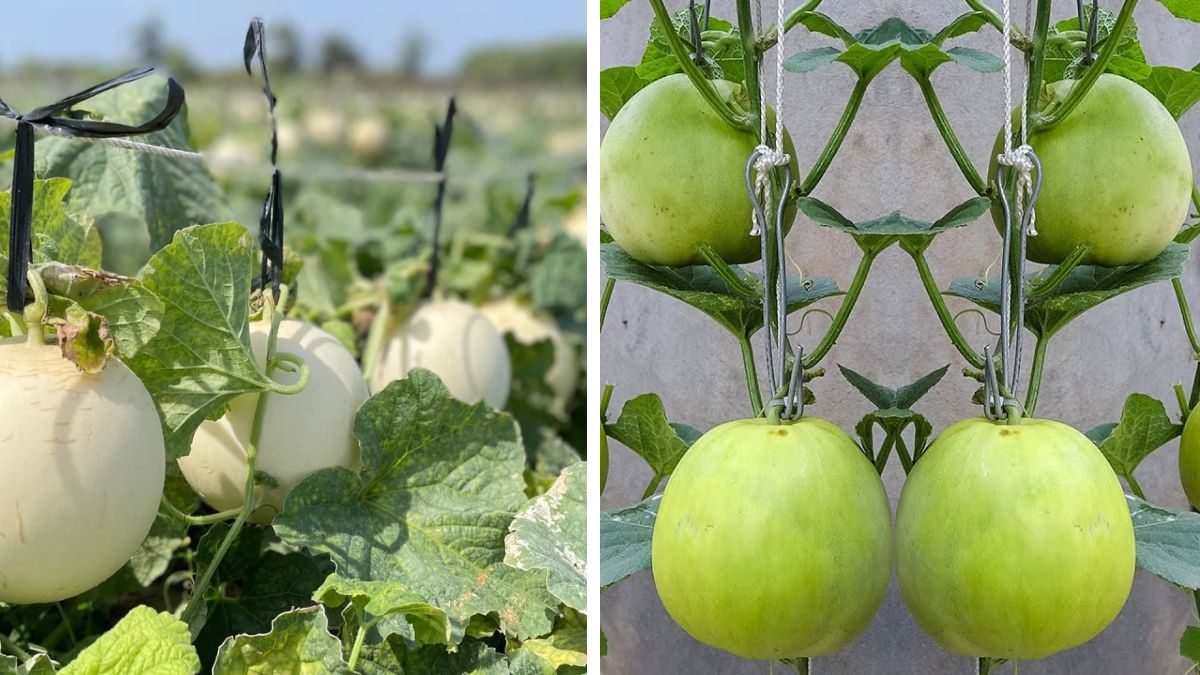
- Trellis netting
- Jute rope
- Bamboo stakes
- Wire mesh
Attach these to the wall and guide the branches as they grow.
How to Care for Wall-Hanging Tomatoes
Now comes the fun part—watching your vertical tomato garden flourish.
1. Watering
Tomatoes need consistent moisture but hate wet feet.
Best practice:
- Water every morning
- Keep soil evenly moist
- Avoid overwatering
A drip system works beautifully.
2. Feeding the Plants
Tomatoes are heavy feeders. Boost growth with:
Every 15 Days:
- Compost tea
- Banana peel fertilizer
- Seaweed extract
- Diluted fish emulsion
During Flowering:
Use potassium-rich fertilizer to increase fruiting.
3. Pruning for Maximum Yield
Pruning helps your plant focus energy on producing fruit.
Remove:
- Yellow leaves
- Weak branches
- Suckers between stem and branches (for indeterminate varieties)
This keeps the plant tidy and productive on the wall.
4. Pest Control
Hanging gardens already reduce pests, but stay alert for:
- Aphids
- Whiteflies
- Caterpillars
- Mites
Use natural controls like neem oil spray or garlic water.
Harvesting Your Wall-Grown Tomatoes
Depending on the variety, tomatoes start fruiting in 60–80 days.
Signs they’re ready for harvest:
- Bright red, orange, or yellow color
- Slight softness when squeezed
- Full size according to variety
Pluck gently to avoid damaging branches.
With proper care, your wall garden can produce tomatoes every week for months!
Tips for Massive Yields in Small Spaces
Here’s how to take your wall tomato garden to the next level:
✔ Use Self-Watering Pots
Keeps soil moisture steady and prevents cracks in tomatoes.
✔ Paint the Wall White
White walls reflect light, increasing photosynthesis.
✔ Companion Planting
Hang basil or marigold nearby—they repel pests and improve tomato flavor.
✔ Rotate Plants
If one side gets more sunlight, rotate containers gently once a week.
✔ Mulch the Soil
Use cocopeat or dry leaves to reduce evaporation.
Why This Method Works Wonders in Urban Homes
Wall-hanging tomato gardens combine the strengths of vertical growing with the adaptability of container gardening. They offer:
- Zero-land gardening
- Clean produce
- Easy maintenance
- Higher air circulation
- Perfect use of tight spaces
For apartment residents, this is a game-changing way to enjoy fresh, organic tomatoes without stepping outside.
Final Thoughts
The wall-hanging tomato garden is more than a gardening hack—it’s a revolution for modern urban living. It proves that you don’t need land to grow food; all you need is creativity, sunlight, and a few hanging containers.
Whether you are a beginner or a balcony gardening expert, this technique guarantees satisfying harvests and a gorgeous, green wall full of life and flavor. Start with one or two containers, and soon you’ll have a vertical tomato farm right in your home.