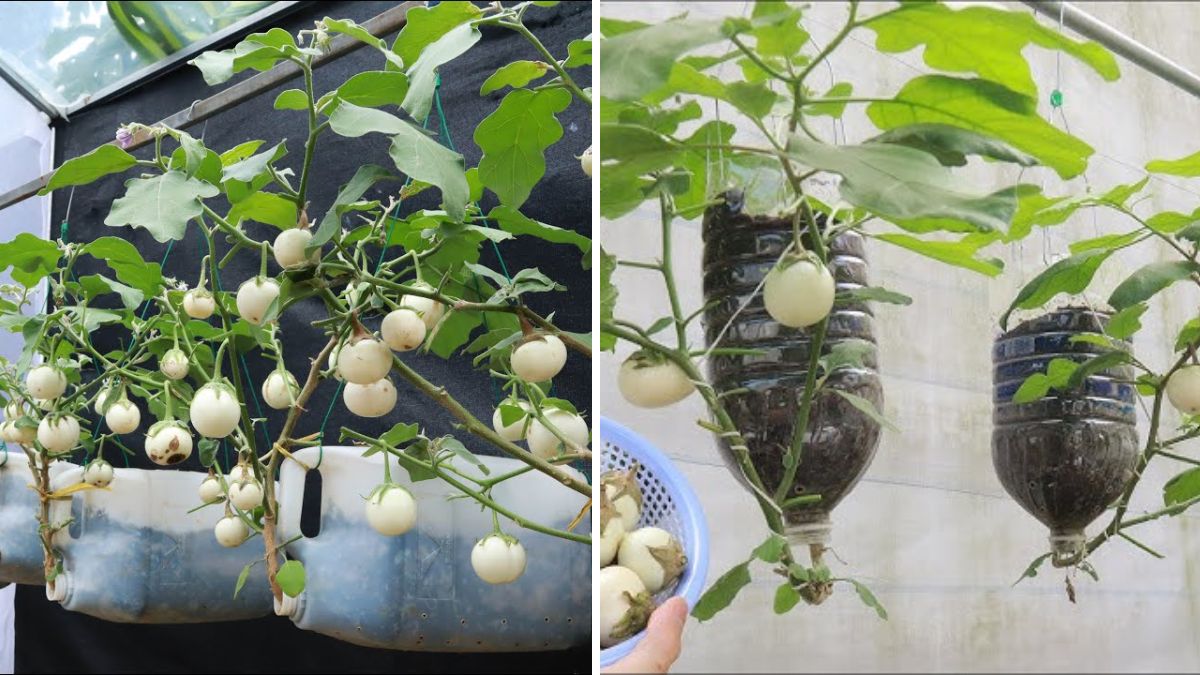
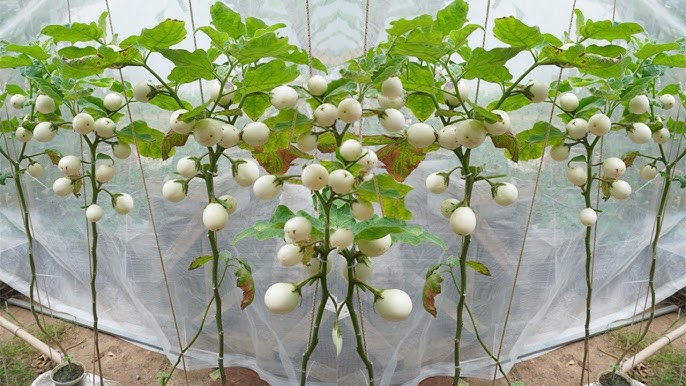
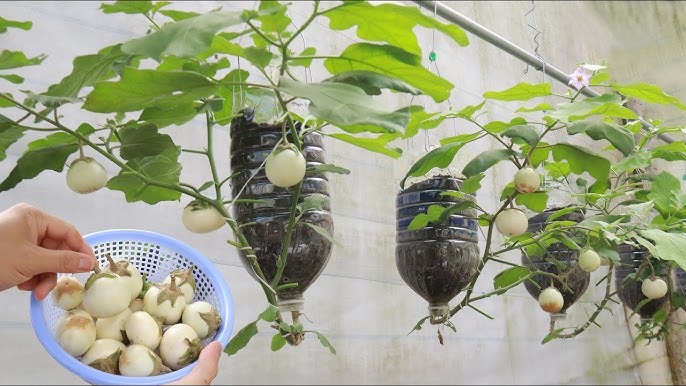
Growing vegetables at home has become more creative than ever. From vertical gardening to hydroponics, modern gardeners love methods that save space, reduce effort, and look beautiful. One such innovative method is growing white eggplants upside down in hanging containers. Yes—eggplants that grow while hanging! This method is not only space-saving but also highly productive, pest-resistant, and visually stunning.
If you’re short on garden space, living in an apartment, or simply want to try something unique, upside-down gardening is the perfect choice. This 1200-word guide walks you through the complete method to grow white eggplants successfully using hanging containers. Let’s get started!
🌱 Why Grow White Eggplants Upside Down?
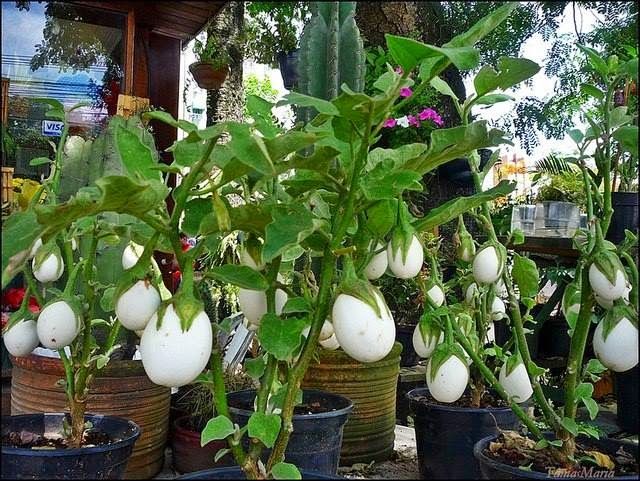
Before we go step-by-step, let’s understand why this method works so well:
✔ Saves Floor Space
Perfect for balconies, patios, rooftops, and small gardens.
✔ Less Soil-Borne Disease
Since the plant grows above the ground, problems like fungal rot or soil insects are greatly reduced.
✔ Better Air Circulation
Hanging containers allow free airflow around the branches, reducing humidity-related issues.
✔ Stronger, Straighter Fruit
Eggplants growing downward are less likely to bend or deform.
✔ Natural Pest Protection
Crawling insects have a harder time reaching the plant.
✔ Beautiful and Decorative
A hanging plant full of white eggplants looks like a living chandelier!
Upside-down gardening is functional and aesthetic.
🪴 Step 1: Choosing the Right Hanging Container
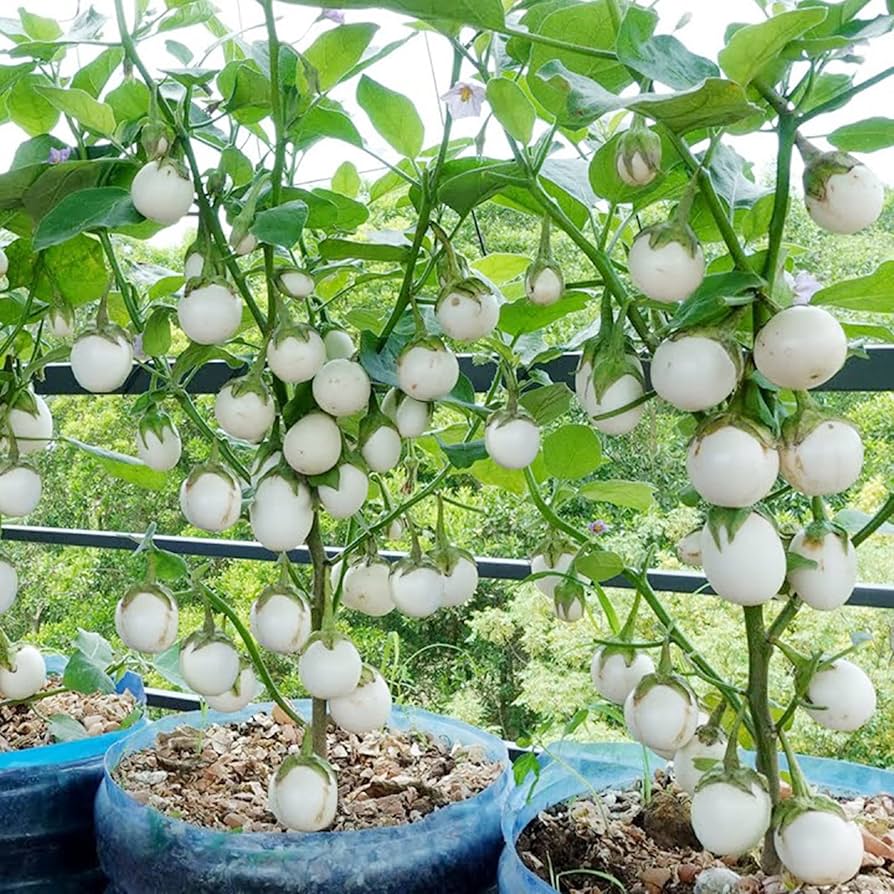
For upside-down gardening, the container is the most important element.
Recommended Container Types:
- 5–10 litre plastic buckets
- Thick grow bags
- Recycled paint buckets
- Hanging pots with bottom opening
The container must be:
- Sturdy
- Able to hold moist soil
- Equipped with a central hole for planting
How Big Should the Hole Be?
A 2–3 inch hole at the bottom is perfect for the eggplant seedling to grow through.
Add Upper Drainage Holes
Make 4–6 small holes around the sides to prevent waterlogging.
🌿 Step 2: Preparing the Potting Mix
Eggplants thrive in nutrient-rich, loose soil.
Best Soil Mix for Hanging White Eggplants:
- 40% garden soil
- 30% compost (vermicompost or cow dung)
- 20% cocopeat
- 10% sand or perlite
Add Organic Boosters:
- 1 tbsp neem cake powder
- 1 tbsp bone meal or rock phosphate
- A handful of wood ash
This mix ensures:
- Strong root growth
- Moisture retention
- Proper drainage
- Continuous nutrition
🌱 Step 3: Preparing the Seedling
You can start white eggplants from seeds or buy ready seedlings.
If Starting from Seeds:
- Soak seeds for 8 hours
- Sow in trays or small cups
- Germination takes 7–10 days
- Transplant when seedlings are 15–20 cm tall
Choose Healthy Seedlings:
Look for:
- Dark green leaves
- Thick stem
- No signs of pests
Seedlings with slightly longer stems work better for upside-down planting.
🔃 Step 4: How to Plant the Eggplant Upside Down
This is the step that makes the method unique.
Step-by-Step Planting Guide:
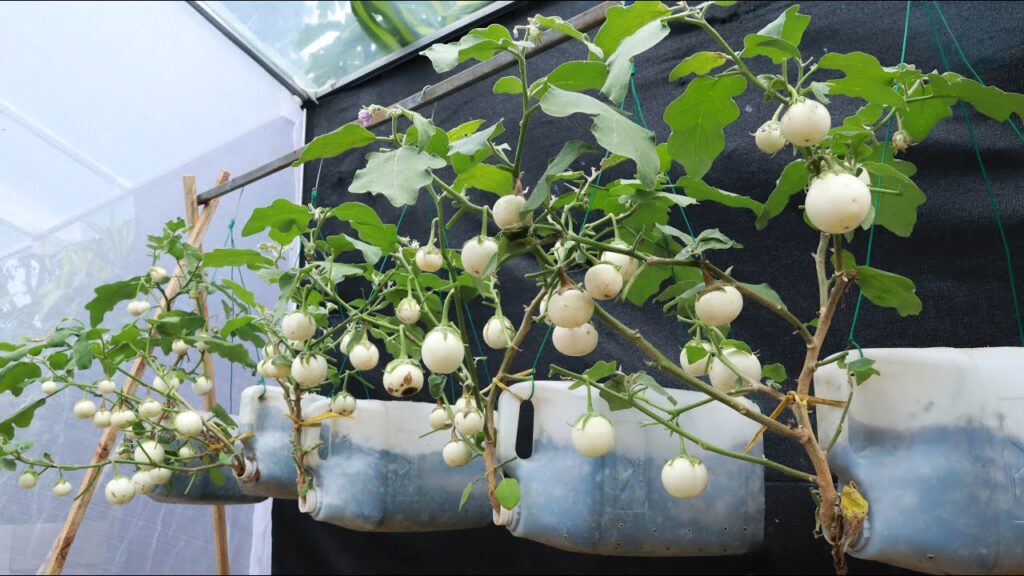
- Turn the container upside down with the hole facing up.
- Gently insert the seedling through the bottom hole, roots inside, leaves outside.
- Hold the seedling in place with your fingers.
- Slowly fill the container with the prepared soil mix from the top.
- Tap the sides gently to settle the soil.
- Leave 2–3 inches of empty space at the top for watering.
- Hang the container using a strong rope, chain, or metal hook.
Tip:
To prevent soil from spilling out of the hole during the process, use a small piece of coconut fibre or net to cover the opening before inserting the seedling.
🌞 Step 5: Sunlight Requirements
White eggplants love heat and sun.
Ideal Sun Exposure:
- 6–8 hours daily
- South-facing or west-facing areas are perfect
More sunlight = more flowers = more fruit.
💧 Step 6: Watering Upside-Down Eggplants
Upside-down containers dry out faster because of gravity and airflow.
Watering Routine:
- Water daily during summer
- Every alternate day during winter
- Ensure water flows through side drainage holes
Check Moisture:
Insert your finger into the top soil—if dry, it’s time to water.
Mulching Helps!
Add a layer of:
- Dry leaves
- Straw
- Cocopeat
This prevents soil from drying too quickly.
🍃 Step 7: Fertilizing for Maximum Yield
White eggplants are heavy feeders and need regular nutrition.
Every 15 Days Add:
- 2 handfuls of vermicompost
- 1 cup compost tea
- 1 tbsp neem cake powder
Every 30 Days Add:
- Bone meal
- Banana peel fertilizer
- Mustard cake liquid (diluted)
These keep the plant strong, green, and full of flowers.
🌺 Step 8: Pollination and Flower Care
White eggplants produce beautiful pale flowers.
To Improve Pollination:
- Shake the plant lightly in the morning
- Keep the area open for bees
- Avoid spraying neem oil during flowering
Good pollination means more fruit.
🦠 Step 9: Pest and Disease Control
Though upside-down gardening reduces pests, some may still appear.
Common Pests:
- Aphids
- Whiteflies
- Mealybugs
- Spider mites
Organic Pest Sprays:
- Neem oil spray (1 tsp neem oil + 1 tsp soap + 1 litre water)
- Garlic-chili spray
- Soap water spray
Always spray in the evening.
Preventive Measures:
- Remove yellow leaves
- Maintain air circulation
- Keep the area clean
🍆 Step 10: Harvesting White Eggplants
White eggplants grow smoothly downward and have a tender texture.
When to Harvest:
- When fruits reach 10–15 cm
- Shiny, firm skin
- Soft when pressed lightly
Frequency:
Harvest every 3–4 days for continuous production.
Don’t Let Fruits Overripen!
Overripe eggplants become:
- Hard
- Bitter
- Seedy
Regular picking encourages more flowering.
🌿 Benefits of Growing Eggplants Upside Down
- No staking needed
- Cleaner fruits
- Better yields
- Modern, decorative look
- Easier pruning
- Ideal for beginners
This method is especially great for city gardeners or those with little to no ground space.
🏡 Transform Your Balcony or Rooftop Into an Eggplant Garden
Growing white eggplants upside down is not only practical—it’s fun, creative, and rewarding. Imagine stepping onto your balcony and seeing beautiful white eggplants hanging like ornaments. With proper care, each plant can produce dozens of fruits throughout the season.
This method saves space, reduces effort, and turns gardening into art. Whether you’re a beginner or an experienced gardener, upside-down eggplant gardening is absolutely worth trying.