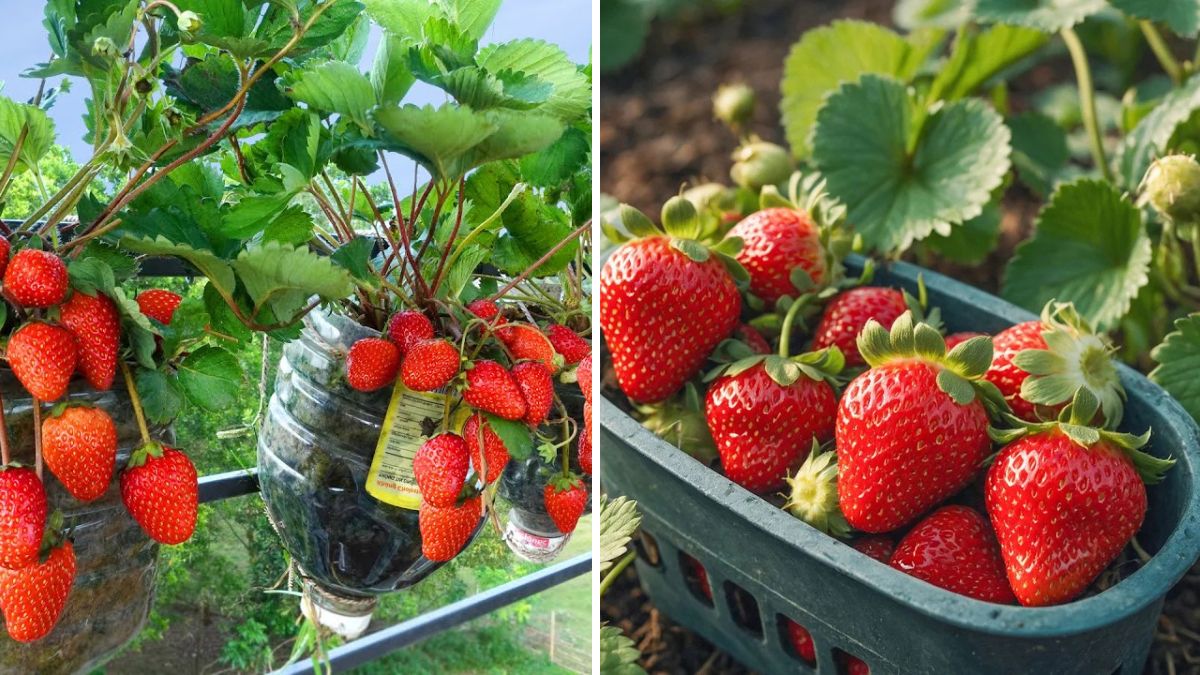
There’s nothing quite like biting into a fresh, sun-ripened strawberry grown right in your own home garden. The sweetness, fragrance, and vibrant color of a homegrown strawberry are far superior to store-bought ones. Even better, strawberries are surprisingly easy to grow—whether you live in an apartment, have a balcony, or enjoy a spacious backyard. With the right techniques, you can enjoy fresh strawberries nearly year-round.
This comprehensive guide will take you through every step of growing strawberries at home—from selecting the right variety to planting, care, harvesting, and solving common problems. Follow these steps, and soon your garden or balcony will be bursting with delicious berries.
🍓 Why Grow Strawberries at Home?
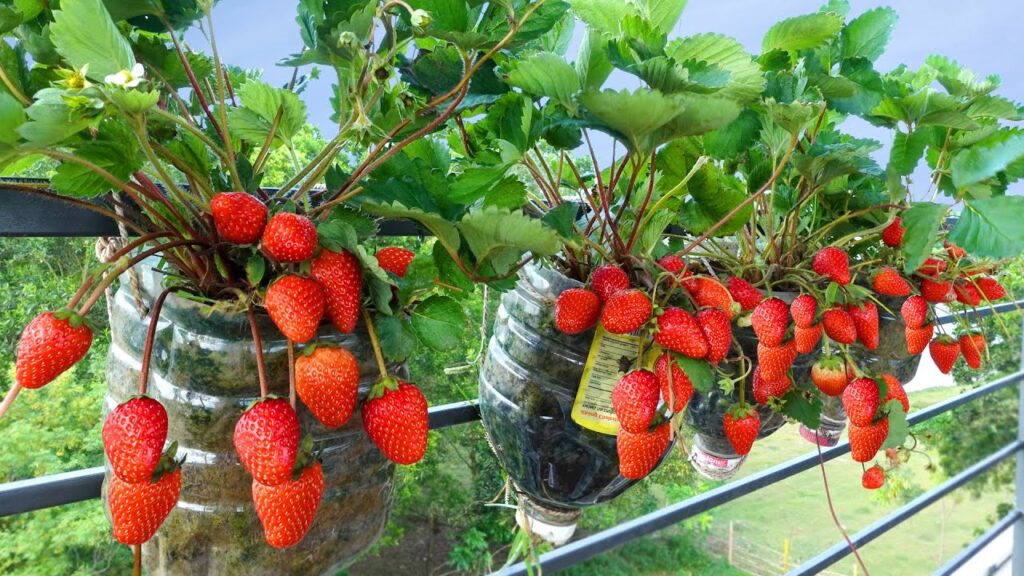
Strawberries are one of the most rewarding fruits for home gardeners. They grow quickly, produce abundantly, and fit well in small spaces.
Here’s why strawberries are perfect for home gardens:
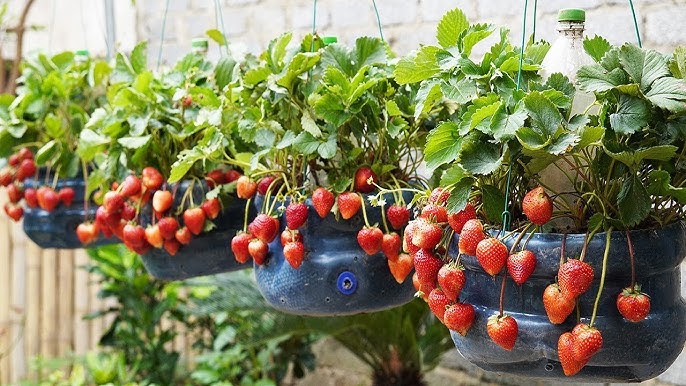
- They grow in pots, hanging baskets, grow bags, garden beds, or even vertical towers.
- They are perennial, meaning they come back year after year with proper care.
- They produce runners, allowing you to multiply your plants for free.
- They require minimal care compared to other fruits.
- They ripen quickly, giving you fresh fruits in as little as 3–4 months.
Whether you want fresh berries for smoothies, desserts, or snacking, growing strawberries at home is a delicious and economical choice.
🌿 Step 1: Choose the Best Strawberry Variety
There are three main types of strawberries, and choosing the right one can significantly affect your harvest.
1. June-Bearing
- Produce one large harvest in late spring to early summer.
- Berries are large and flavorful.
- Best for gardeners who want one big harvest for jam, freezing, or desserts.
2. Ever-Bearing
- Produce two to three smaller harvests throughout the year.
- Great for steady supply of fresh berries.
3. Day-Neutral
- Produce fruit continuously as long as temperature is between 10–30°C.
- Best for home growers who want strawberries most of the year.
If you’re a beginner, day-neutral strawberries are the easiest and most productive variety for home growing.
🏡 Step 2: Decide Where to Grow Them
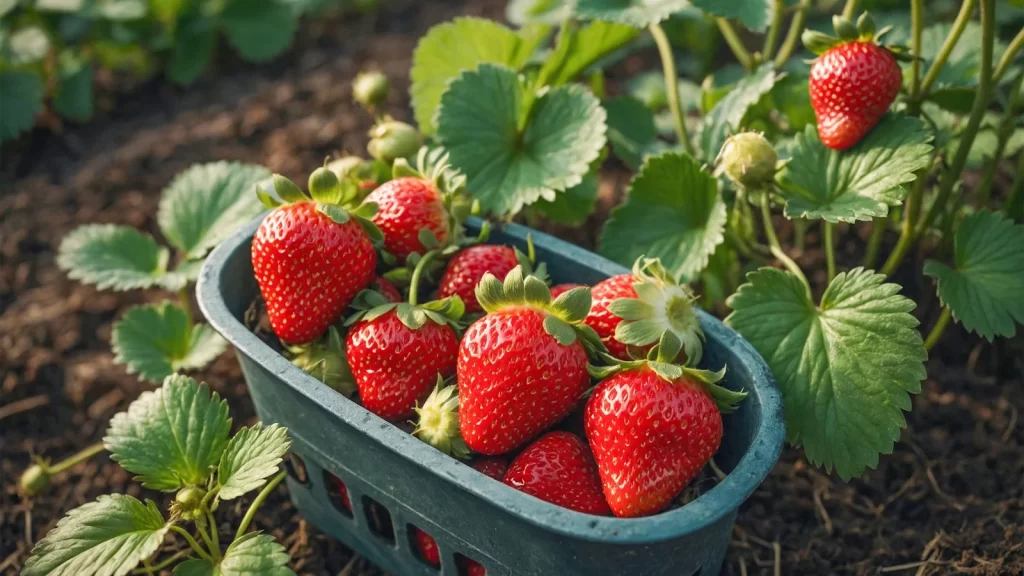
Strawberries are extremely versatile. You can grow them in:
✓ Pots / Containers
- Use 8–12 inch wide pots for each plant.
- Make sure the pot has drainage holes.
✓ Hanging Baskets
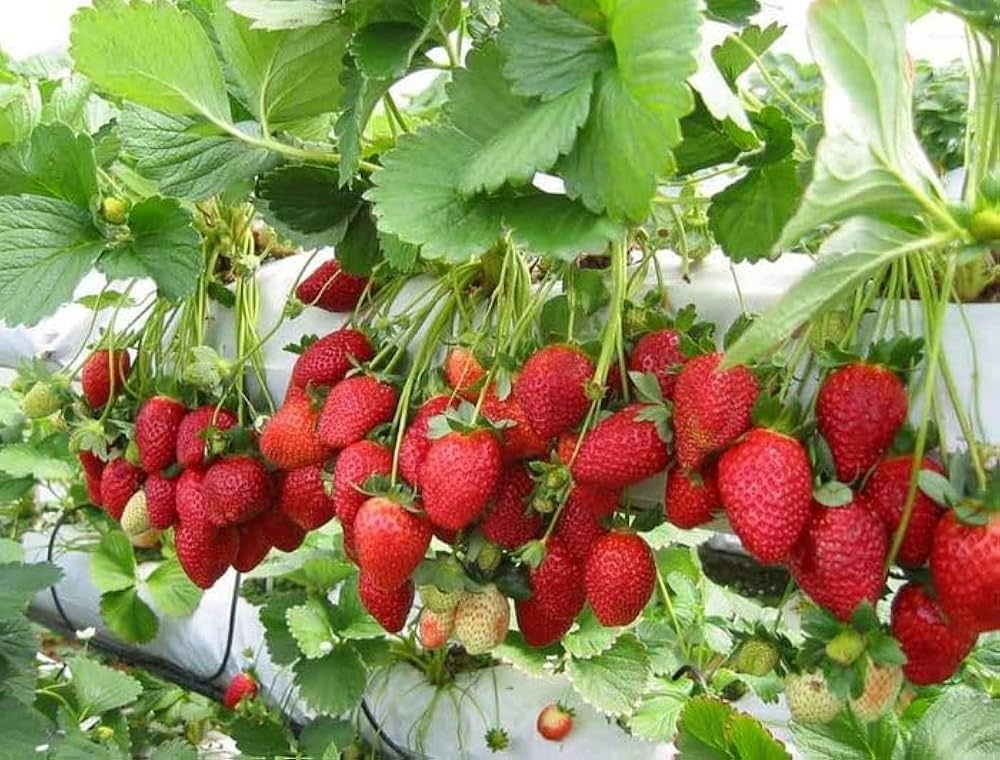
- Great for saving space and prevent fruit rot.
- Runners hang beautifully, creating a cascading effect.
✓ Vertical Towers
- Perfect for balconies and small areas.
- Allows you to grow 20–40 plants in a small footprint.
✓ Garden Beds
- Ideal for larger production.
- Soil warms quickly and yields are high.
No matter where you plant, strawberries need at least 6–8 hours of sunlight daily for maximum sweetness.
🌱 Step 3: Prepare the Soil
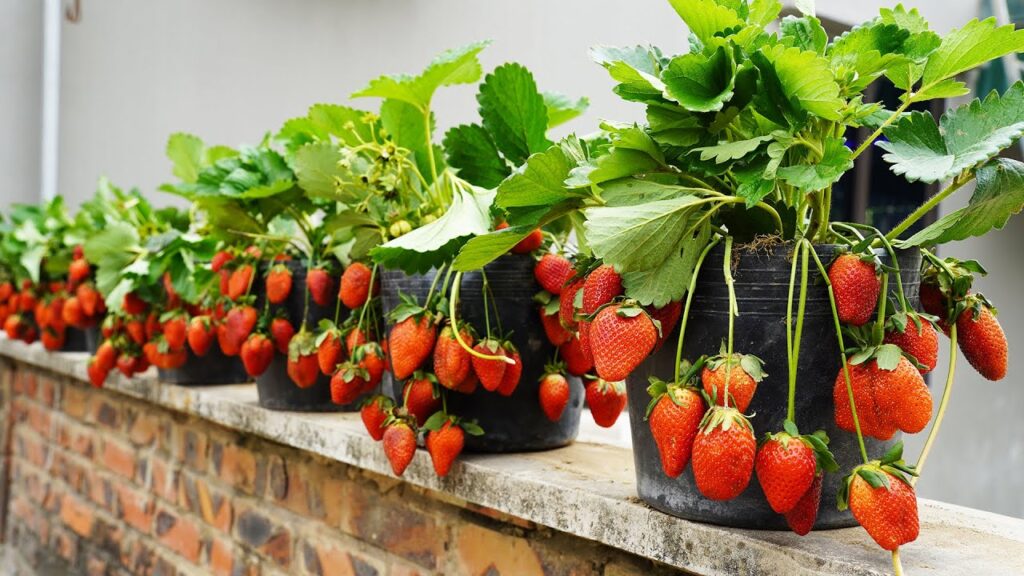
Strawberries love soft, well-drained soil rich in organic matter.
Best Soil Mix
Use a mixture of:
- 40% high-quality potting mix
- 40% compost or cow dung manure
- 20% sand or cocopeat for drainage
Ideal soil pH: 5.5 to 6.8 (slightly acidic).
Add bone meal or vermicompost at planting time for stronger roots and sweeter berries.
🍀 Step 4: Planting Strawberries Correctly
Planting may look simple, but doing it correctly is crucial for plant health.
Steps to Plant:
- Dig a small hole big enough for the roots.
- Place the plant in the hole with roots spread out.
- Keep the crown (center where leaves grow) above soil level—never bury it.
- Backfill and gently press soil.
- Water lightly.
Spacing:
- Pots: 1 plant per pot
- Garden beds: 30–40 cm apart
Deep planting suffocates the crown and causes rot. Shallow planting dries the roots. Planting at the correct depth ensures fast growth.
💧 Step 5: Watering the Right Way
Strawberries love moisture but hate soggy soil.
Watering Tips:
- Water 3–4 times a week in hot weather.
- Keep soil moist but not waterlogged.
- Water at the base, not on the leaves or fruits.
- Mulch with straw, dry leaves, or coco husk to keep fruits clean and protected.
Consistent watering leads to juicy, plump strawberries.
☀️ Step 6: Provide Enough Sunlight
Strawberries need:
- 6–8 hours of direct sunlight daily
- Warmer morning sun is best
- Afternoon shade helps in extremely hot climates
More sunlight = sweeter, richer berries.
If growing indoors, use grow lights for 10–12 hours a day.
🍌 Step 7: Feeding Your Strawberry Plants
Strawberries are heavy feeders because they produce so many fruits.
Use organic fertilizers such as:
- Vermicompost
- Cow manure
- Compost tea
- Seaweed extract
- Banana peel water
- Fish emulsion
Feeding Schedule
- At planting time
- After 4 weeks
- Then every 15–20 days during the fruiting season
Avoid too much nitrogen—it makes plants leafy but reduces fruiting.
🌼 Step 8: Flowering and Fruit Setting
After 4–6 weeks, the plant will start producing flowers.
For Best Results:
- Keep watering consistent
- Feed potassium-rich fertilizers
- Ensure pollinators can access flowers
- If indoors, gently shake the plant to help pollination
Healthy plants will produce flowers continuously if conditions are right.
🐛 Step 9: Protecting Your Strawberries from Pests
Strawberries attract insects because they are sweet and soft.
Common Pests:
- Aphids
- Slugs
- Spider mites
- Fruit flies
- Ants
Natural Solutions:
- Neem oil spray once every 10 days
- Garlic-chili spray
- Sticky traps
- Keep soil dry to avoid fungus
Birds and Squirrels?
Cover plants with:
- Netting
- Garden fabric
- Hanging baskets (keeps fruits out of reach)
🍓 Step 10: Harvesting Your Strawberries
Strawberries do not continue to ripen after picking—so wait until they are fully red.
Harvesting Tips:
- Pick early morning for best flavor
- Use scissors to cut, don’t pull
- Leave a small stem attached
- Refrigerate or eat immediately
Homegrown strawberries are soft, juicy, and extremely flavorful compared to store-bought ones.
🌱 Bonus: How to Multiply Your Strawberry Plants for Free
Strawberries send out runners—long stems with baby plants at the end.
To multiply:
- Place the runner baby plant in a pot with soil.
- Press lightly so it touches the soil.
- Keep watering.
- After 2–3 weeks roots will form.
- Cut the connection from the mother plant.
Now you have a brand new plant—for free!
🏆 Expert Tips for Maximum Strawberry Production
Here are some powerful tips to boost your strawberry yields:
- Use mulch to prevent rot and increase sweetness.
- Avoid wetting the leaves—prevents fungal diseases.
- Grow in full sun for bigger berries.
- Remove first flowers—helps the plant grow stronger roots.
- Repot every 1–2 years to keep plants healthy.
- Choose day-neutral varieties for year-round harvests.
- Pinch runners if you want large berries—or keep runners if you want more plants.
- Keep soil slightly acidic for best flavor.
🌟 Final Thoughts
Growing strawberries at home is both simple and incredibly rewarding. With the right soil, sunlight, water, and care, you can enjoy fresh berries straight from your garden or balcony. The joy of picking your own strawberries—still warm from the sun—is unmatched.
Whether you want strawberries for desserts, smoothies, or snacking, a small home strawberry garden can provide delicious harvests season after season. Start with a few plants today, and soon you’ll have a thriving strawberry patch full of sweet rewards.