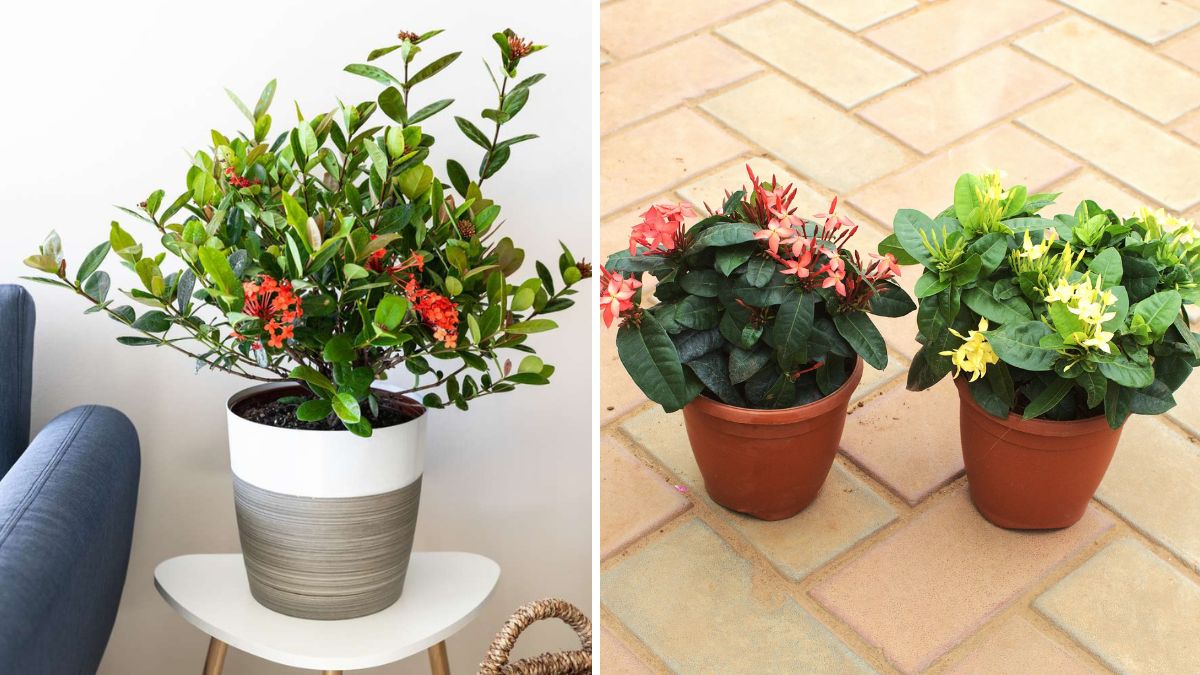
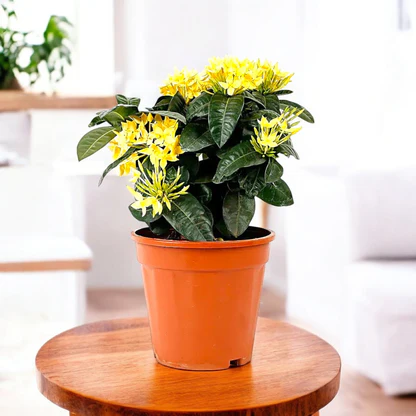
Ixora, commonly known as Jungle Flame or Flame of the Woods, is a vibrant flowering plant that adds a burst of color to gardens and homes. Its clusters of bright red, pink, orange, or yellow flowers make it a favorite for gardeners looking to enhance outdoor or indoor spaces. Known for its ability to bloom in summer, Ixora thrives in pots and containers, making it ideal for balconies, patios, and small gardens. In this guide, we will explore how to grow Ixora in pots, provide proper care techniques, and ensure continuous flowering during the summer season.
Why Choose Ixora for Your Home Garden?
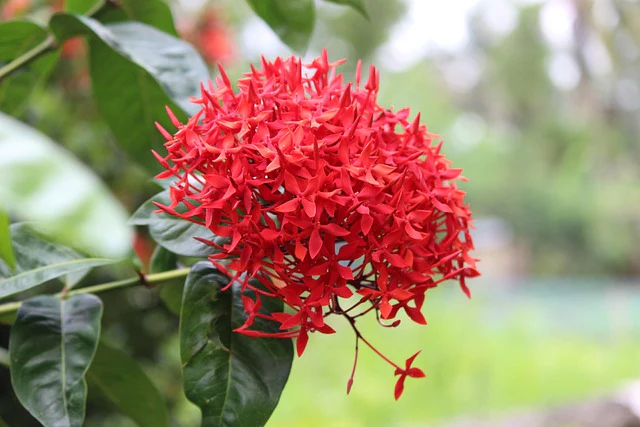
- Bright and Long-Lasting Flowers – Ixora produces dense clusters of colorful flowers that bloom almost year-round in tropical climates, with peak flowering in summer.
- Compact Growth – Its bushy nature makes it perfect for container gardening.
- Low Maintenance – Once established, Ixora requires minimal care and is hardy in sunny locations.
- Attracts Pollinators – Bees, butterflies, and hummingbirds are naturally drawn to its blooms.
Materials Needed for Growing Ixora in Pots
Before planting Ixora in containers, gather the following essentials:
- Healthy Ixora Plant or Seedlings – Choose disease-free, vigorous plants.
- Pots or Containers – Select wide and deep pots (at least 12–15 inches in diameter) with drainage holes.
- Soil – Well-draining, slightly acidic soil (pH 5.0–6.5) enriched with organic matter. Garden soil mixed with sand and compost works well.
- Watering Can or Hose – For regular watering.
- Fertilizer – Slow-release granular fertilizer or water-soluble fertilizer for flowering plants.
- Mulch – Optional, to retain moisture and prevent weeds.
Step-by-Step Guide to Growing Ixora in Pots
Step 1: Choosing the Right Pot
Ixora plants grow best in medium to large-sized containers to accommodate their root system.
- Ensure the pot has proper drainage to prevent waterlogging.
- Use pots made from clay, ceramic, or plastic. Clay pots are excellent for airflow and moisture balance.
Tip: Repot every 2–3 years to refresh the soil and encourage better flowering.
Step 2: Selecting and Preparing Soil
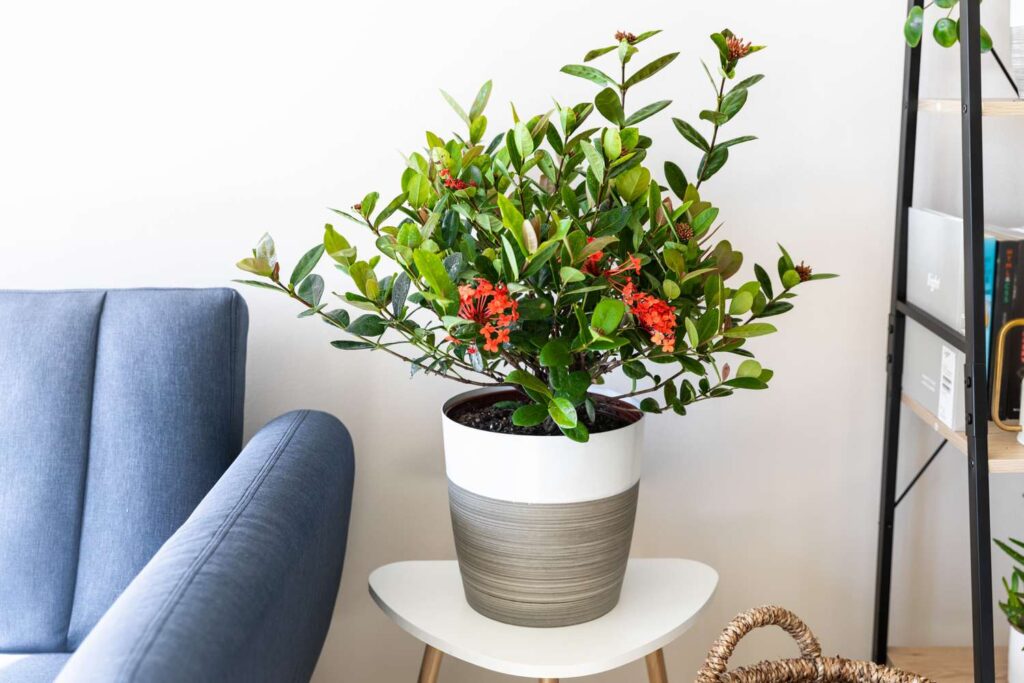
Ixora thrives in slightly acidic soil, which promotes healthy growth and vibrant flowers.
- Mix garden soil, compost, and sand in a 2:1:1 ratio.
- Optionally, add peat moss to maintain soil acidity.
- Avoid alkaline soils, as Ixora may develop yellow leaves and poor flowering in such conditions.
Step 3: Planting Ixora in Pots
- Fill the pot with the prepared soil mixture, leaving 2–3 inches free at the top.
- Gently remove the Ixora plant from its nursery container, keeping the root ball intact.
- Place the plant in the center of the pot and fill around it with soil.
- Firmly press the soil around the roots, ensuring the plant is stable.
- Water thoroughly after planting to settle the soil.
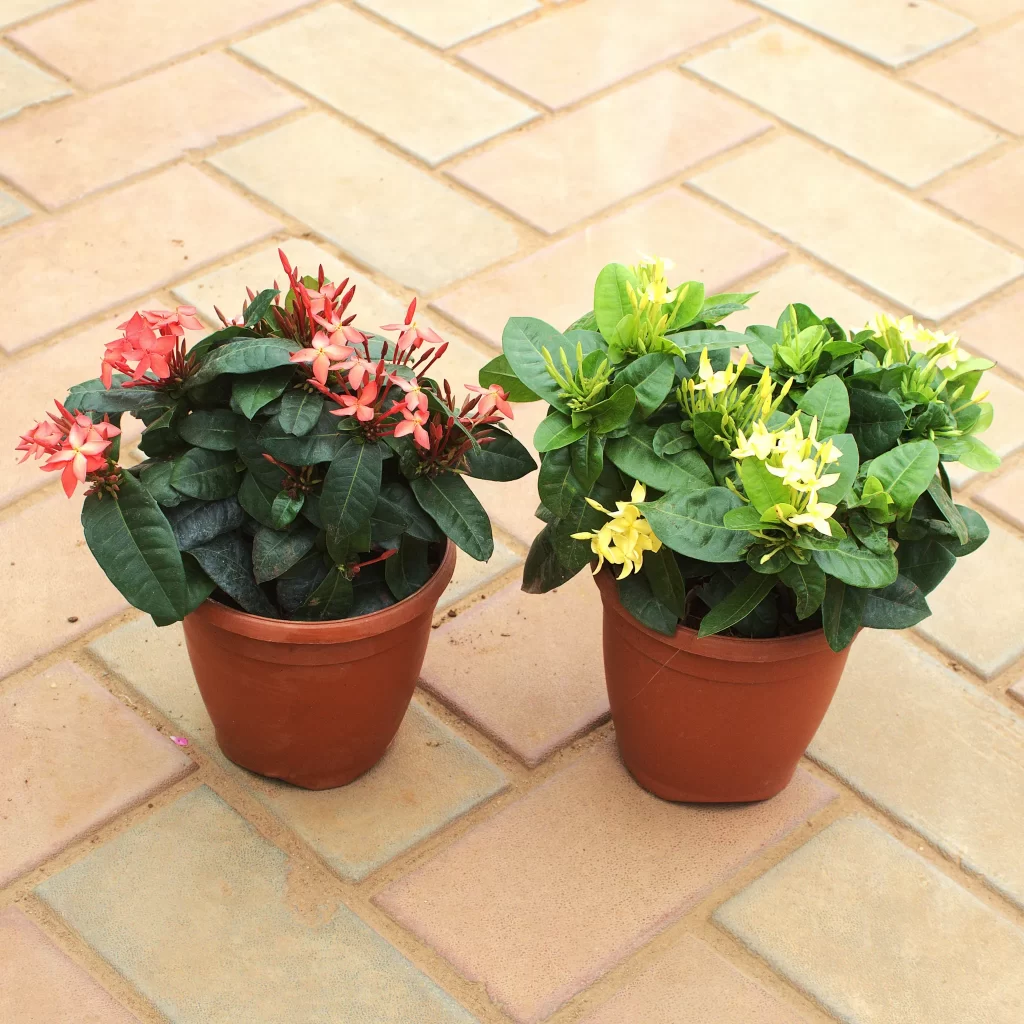
Tip: Plant multiple Ixora varieties in the same large container for a colorful display.
Step 4: Watering Requirements
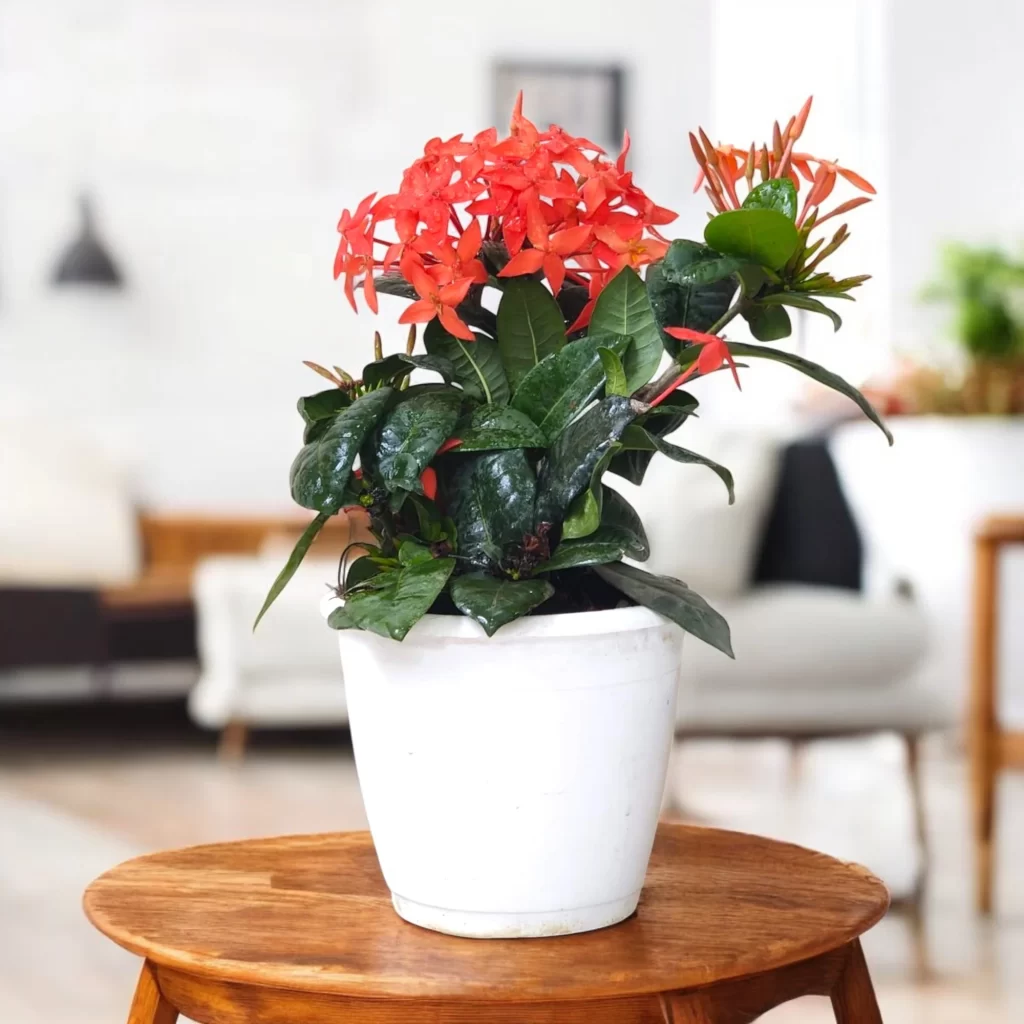
Proper watering is crucial for Ixora’s health and flowering:
- Water immediately after planting.
- Keep the soil consistently moist, but not waterlogged. Overwatering can cause root rot.
- During hot summer months, increase watering frequency, especially for potted plants.
- Reduce watering in winter when growth slows.
Update Tip: Use lukewarm water instead of cold water in summer to avoid shocking the roots.
Step 5: Sunlight and Placement
Ixora plants need ample sunlight to bloom beautifully:
- Place pots in a location receiving 5–6 hours of direct sunlight daily.
- Morning sunlight is ideal; avoid harsh afternoon sun in extremely hot climates, which may scorch leaves.
- Partial shade is acceptable but may reduce flower production.
Update Tip: Rotate pots occasionally to ensure uniform growth on all sides.
Step 6: Fertilization for Summer Flowering
Fertilizing Ixora encourages continuous flowering and healthy foliage:
- Use a balanced fertilizer rich in nitrogen, phosphorus, and potassium (NPK 10:10:10 or 20:20:20).
- Feed every 4–6 weeks during the growing season (spring to summer).
- Apply water-soluble fertilizer diluted in water for quick results.
- Stop fertilizing in late autumn to allow the plant to rest.
Update Tip: Use iron chelates if the leaves start turning yellow due to iron deficiency.

Step 7: Pruning and Maintenance
Pruning helps maintain a compact shape and stimulates flower production:
- Remove dead flowers and branches regularly.
- Trim overgrown stems to encourage new growth.
- Avoid heavy pruning in summer when the plant is actively flowering.
Tip: Light pruning after flowering season ensures a fuller and bushier plant.
Common Issues and Solutions
- Yellowing Leaves – Caused by overwatering, poor drainage, or nutrient deficiency. Adjust watering and fertilize with an iron-rich solution.
- Poor Flowering – Insufficient sunlight or acidic soil. Relocate to a sunnier spot and check soil pH.
- Pests – Aphids, mealybugs, and spider mites may appear. Treat with neem oil or insecticidal soap.
- Fungal Diseases – Overwatering and high humidity can cause leaf spots or root rot. Ensure proper drainage and remove affected leaves.
Seasonal Care Tips for Summer Flowering
- Summer is Ixora’s peak flowering season, so provide optimal care:
- Water more frequently during hot, dry spells.
- Mulch the soil surface to retain moisture and reduce heat stress.
- Fertilize with flowering plant-specific fertilizer for brighter blooms.
- Watch for pests, which are more active in warm weather, and treat promptly.
Propagation of Ixora Plants
Ixora can be propagated through stem cuttings:
- Select healthy, semi-hardwood cuttings about 4–6 inches long.
- Remove the lower leaves and dip the cut end in rooting hormone.
- Plant in a moist mixture of sand and peat moss or a well-draining potting mix.
- Keep in indirect sunlight and maintain humidity until roots develop (3–6 weeks).
- Transplant into pots once rooted and established.
Tip: Propagating in summer encourages faster rooting due to warmer temperatures.
Enhancing Aesthetic Appeal
- Plant Ixora alongside other summer flowering plants like Hibiscus, Bougainvillea, or Marigold for a colorful display.
- Use decorative pots to enhance visual appeal in balconies and patios.
- Combine different Ixora varieties for varied flower colors in the same container.
Conclusion
Ixora is a beautiful, low-maintenance summer flowering plant that thrives in pots when given proper care. By following the steps above—choosing the right pot, maintaining soil acidity, providing sunlight, regular watering, and fertilization—you can enjoy vibrant blooms throughout the season. Regular pruning, pest management, and propagation techniques ensure that your Ixora plants remain healthy and continue to brighten your garden year after year.
With a little care and attention, your potted Ixora can become the centerpiece of your summer garden, bringing color, fragrance, and joy to your home. Start today, and watch your Ixora plants flourish with spectacular summer flowers!