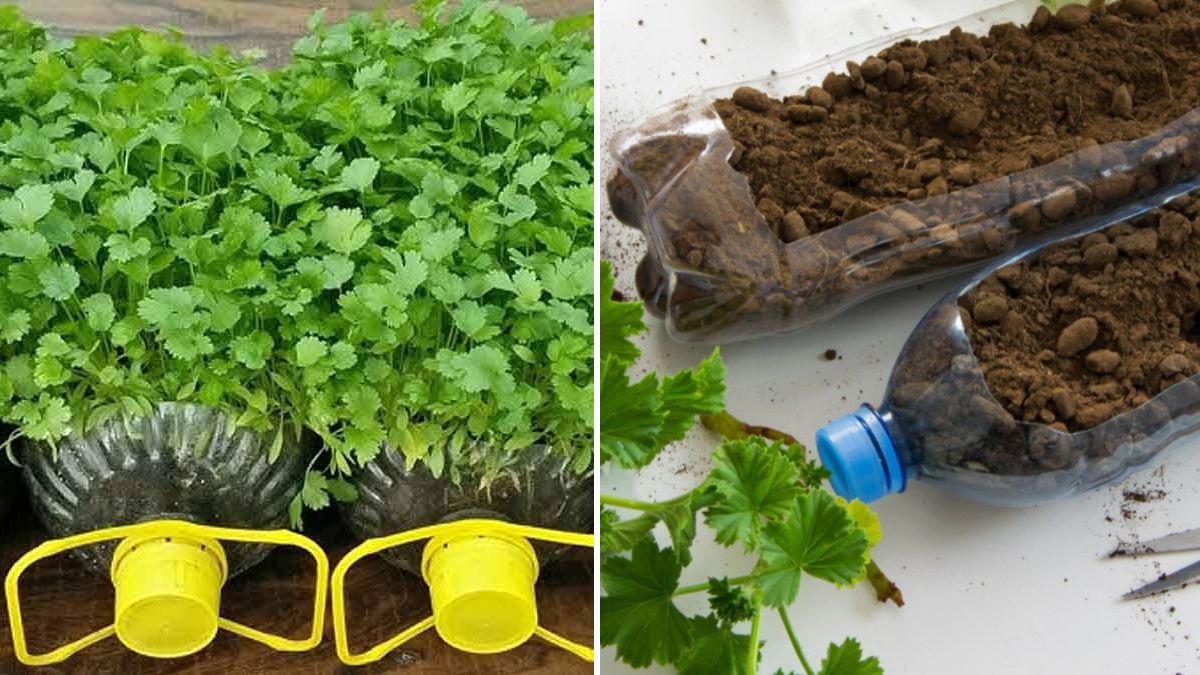
Coriander, also known as cilantro, is one of the most popular herbs used in kitchens worldwide. Its fresh, aromatic leaves enhance salads, curries, soups, and garnishes, making it a must-have in every household. But what if you could grow coriander at home without taking up much space—and also recycle waste bottles? Growing coriander in waste bottles is an innovative, eco-friendly way to enjoy fresh herbs, reduce plastic waste, and create a mini garden in your balcony, kitchen, or windowsill. This guide provides full updates and step-by-step instructions to help beginners grow coriander successfully in bottles.
1. Why Grow Coriander in Waste Bottles?
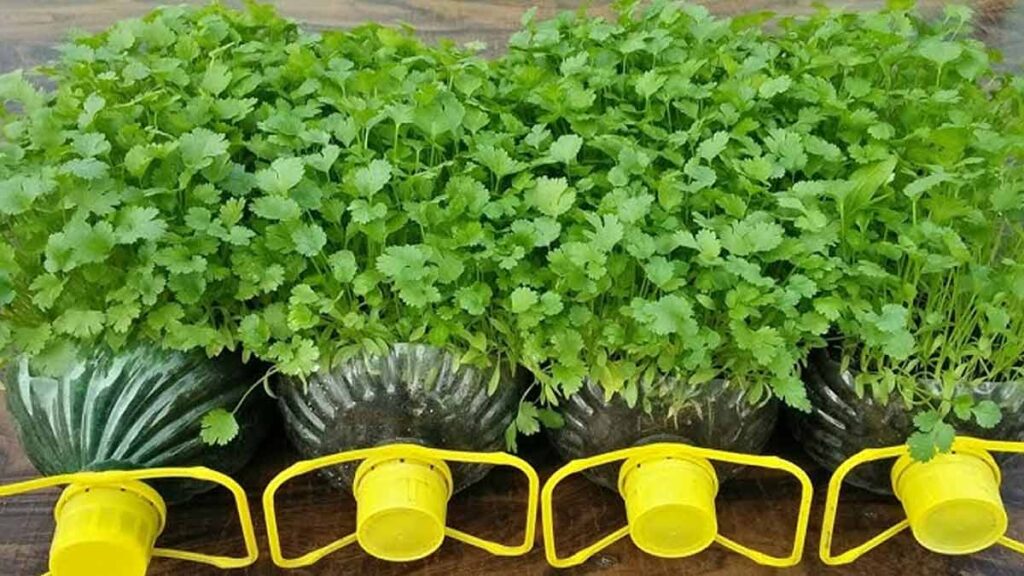
There are multiple benefits to using waste bottles as planters:
- Eco-friendly: Recycling plastic bottles reduces environmental waste.
- Space-saving: Perfect for apartments, small balconies, or kitchen gardens.
- Cost-effective: No need to buy pots or planters.
- Easy monitoring: Transparent bottles allow you to see soil moisture and root growth.
- Control over soil and water: Prevents overwatering or soil contamination.
With these benefits, waste bottle gardening is ideal for beginners who want a sustainable and productive home garden.
2. Choosing the Right Bottle
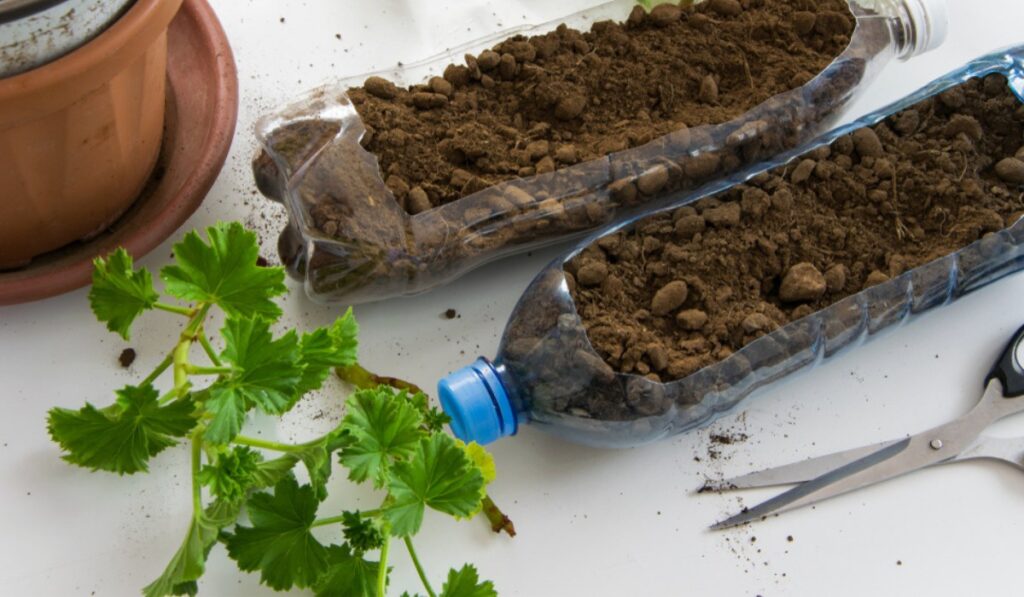
The first step is selecting the proper bottle for your coriander garden:
- Size: Use bottles of 1.5 liters or larger for adequate root space.
- Shape: Straight bottles are easier to plant and water. Avoid very narrow bottles that restrict root growth.
- Material: Plastic bottles are lightweight and easy to handle.
- Drainage: Drill 3–5 small holes at the bottom for water drainage. This prevents root rot.
Using a suitable bottle ensures that coriander has enough space and proper drainage to thrive.
3. Preparing the Soil
Coriander grows best in nutrient-rich, well-draining soil. Preparing the soil correctly is essential:
- Soil mix: Combine garden soil with compost and a small amount of sand or perlite for aeration.
- pH level: Slightly acidic to neutral soil (pH 6–7) is ideal.
- Nutrients: Organic compost or vermicompost improves fertility and supports healthy leaf growth.
Good soil preparation promotes strong roots, fast growth, and flavorful coriander leaves.
4. Selecting and Preparing Seeds
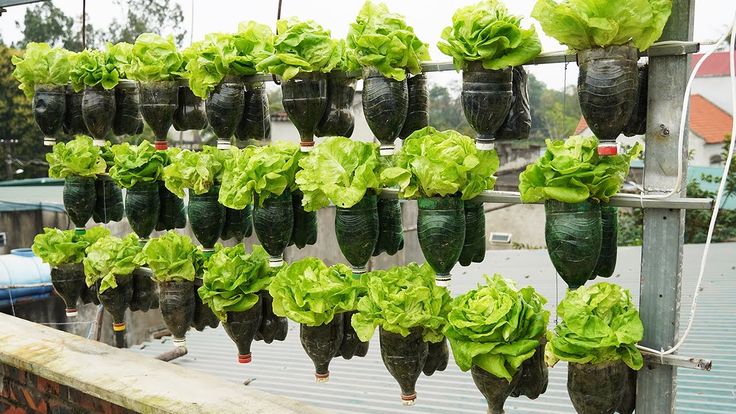
Quality seeds increase the success rate:
- Seed selection: Choose fresh, organic coriander seeds for faster germination.
- Pre-soaking: Soak seeds in water for 6–12 hours before sowing. This softens the seed coat and speeds up germination.
- Germination time: Coriander seeds usually sprout in 7–14 days.
Proper preparation ensures uniform sprouting and strong seedlings.
5. Planting Coriander in Bottles
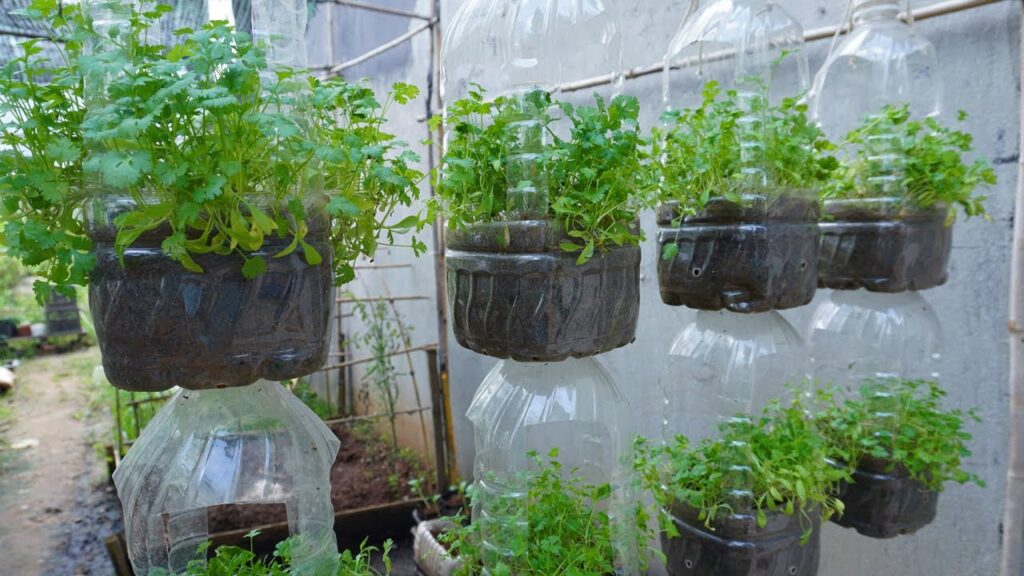
Planting coriander seeds in bottles is simple if done carefully:
- Cut the bottle (optional): For easier access, cut the bottle in half horizontally, or create a vertical opening on one side.
- Layering: Add a 1–2 inch layer of small stones or pebbles at the bottom for drainage.
- Soil filling: Fill the bottle with soil mix up to 1 inch from the top.
- Sowing seeds: Plant seeds ¼ inch deep, spacing them 1–2 inches apart. Cover lightly with soil.
- Watering: Spray gently to moisten the soil without washing away seeds.
If multiple bottles are available, sow seeds in each for staggered harvesting and continuous supply.
6. Watering and Moisture Control
Coriander requires consistent moisture but does not like waterlogged soil:
- Watering frequency: Water lightly every 1–2 days, depending on weather and soil moisture.
- Drainage check: Ensure excess water escapes through the bottom holes to prevent root rot.
- Indoor monitoring: Check soil daily, as bottles dry out faster than garden beds.
Maintaining consistent moisture promotes faster germination and healthy, green leaves.
7. Light Requirements
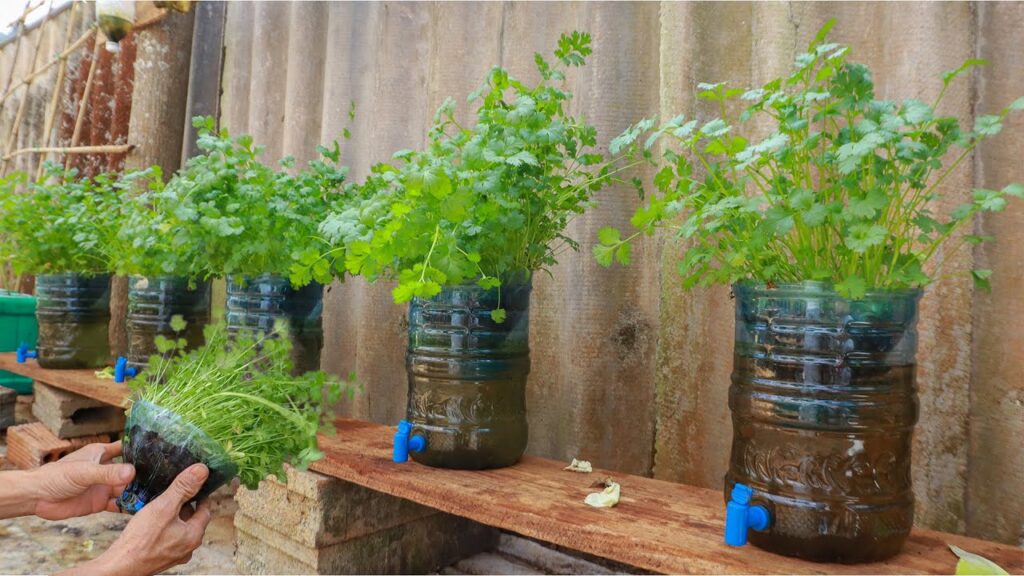
Coriander thrives in bright, indirect sunlight:
- Sunlight: Place bottles where they receive 4–6 hours of sunlight daily.
- Indoor growth: Near a sunny windowsill or under grow lights for 12–14 hours a day.
- Rotation: Rotate bottles periodically to ensure all seedlings receive equal light.
Adequate sunlight encourages strong growth, prevents leggy stems, and enhances flavor.
8. Fertilizing Coriander
Light fertilization supports lush leaf growth:
- Organic fertilizer: Use compost or vermicompost every 3–4 weeks.
- Liquid feed: A diluted liquid fertilizer every 2 weeks encourages rapid growth.
- Balanced nutrients: Avoid high-nitrogen fertilizers, which may make leaves grow too quickly with less aroma.
Proper feeding ensures a healthy, productive coriander plant.
9. Thinning Seedlings
Once seedlings grow, thinning ensures each plant has enough space:
- Spacing: Thin seedlings to 2–3 inches apart.
- Method: Snip weaker seedlings at soil level rather than pulling them to avoid disturbing roots.
- Timing: Thin when seedlings have 2–3 true leaves.
Thinning promotes strong, healthy plants and prevents overcrowding, which can cause disease.
10. Harvesting Coriander
Harvesting at the right time guarantees tender, aromatic leaves:
- First harvest: Begin harvesting when plants are 6–8 inches tall.
- Cutting technique: Use scissors to cut outer leaves 1–2 inches above the soil, leaving inner leaves to continue growing.
- Continuous harvest: Regular trimming encourages bushy growth and a steady supply of leaves.
Harvesting correctly ensures fresh coriander all season and prolongs the plant’s productivity.
11. Common Problems and Solutions
Even in bottles, coriander may face some issues:
- Pests: Aphids or whiteflies may attack. Spray mild soap solution or neem oil.
- Yellow leaves: Often caused by overwatering or nutrient deficiency. Reduce watering and feed with compost.
- Leggy growth: Caused by insufficient sunlight. Move bottles to brighter locations.
- Fungal issues: Prevent by watering at the base and ensuring good air circulation.
Early detection and timely intervention prevent plant loss and promote healthy growth.
12. Benefits of Bottle Gardening for Beginners
Growing coriander in bottles is perfect for beginners due to:
- Minimal space requirement: Ideal for apartments or small balconies.
- Eco-conscious gardening: Reuses waste bottles effectively.
- Easy maintenance: Bottles are lightweight, portable, and easy to monitor.
- Learning experience: Provides hands-on practice in seed sowing, watering, and care.
This method combines sustainability with convenience, making gardening accessible to everyone.
13. Tips for Success
- Label bottles: Keep track of planting dates and variety.
- Rotate bottles: Ensures even sunlight exposure.
- Succession planting: Sow new seeds every 2–3 weeks for continuous harvest.
- Experiment with heights: Cut bottles in half vertically or horizontally for easier harvesting.
With these tips, beginners can enjoy a thriving coriander garden in bottles year-round.
Conclusion
Growing coriander in waste bottles is an easy, eco-friendly, and space-saving way to enjoy fresh, aromatic leaves at home. With proper seed selection, soil preparation, consistent watering, sunlight, and regular harvesting, anyone can create a productive bottle garden. Not only does this method provide a sustainable solution for plastic waste, but it also offers a rewarding gardening experience, even for beginners.
Start your coriander bottle garden today and enjoy the satisfaction of growing your own fresh herbs while contributing to a greener, cleaner environment!