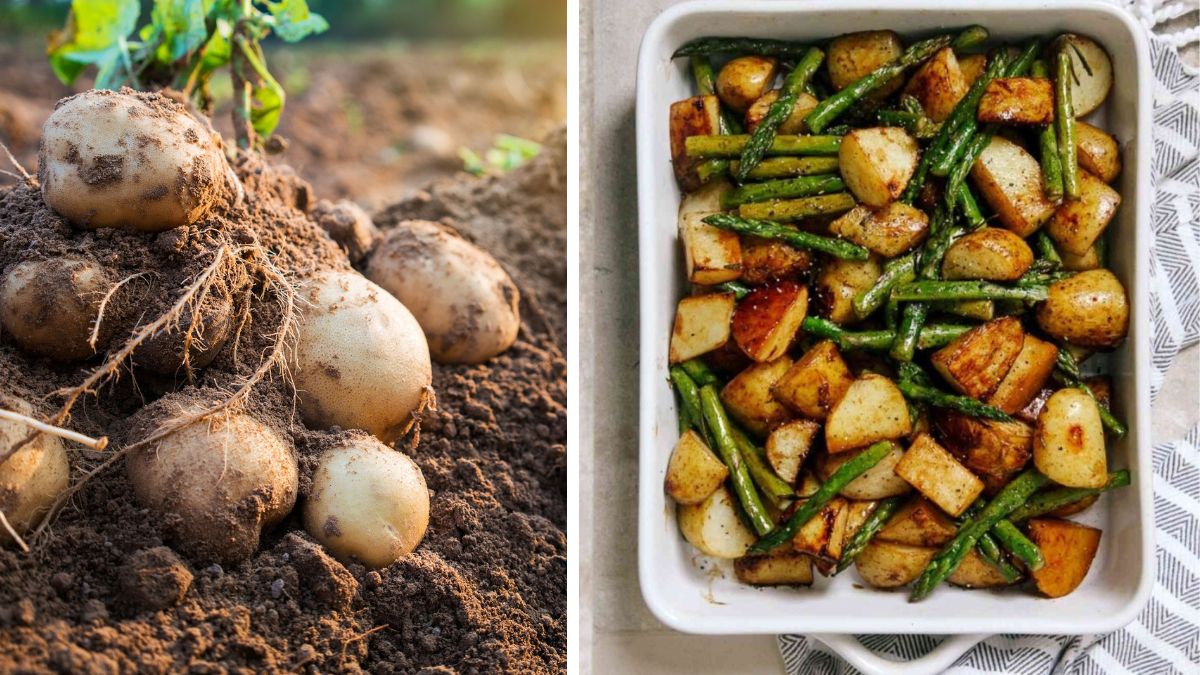
Few vegetables are as versatile, comforting, and satisfying as the potato. Whether mashed, roasted, baked, or added to hearty soups and stews, potatoes are at the heart of many vegetarian meals. But the true magic begins when you grow them yourself. A backyard potato garden not only provides a fresh, chemical-free harvest but also deepens your connection with the food you eat.
Starting a potato garden is easier than you might think. With a little planning, the right setup, and consistent care, you can enjoy a steady supply of homegrown potatoes that will transform your homemade vegetarian dishes into something truly special. Let’s explore step-by-step how to grow your own potato patch—from seed to plate.
1. Why Grow Your Own Potatoes?
Store-bought potatoes are convenient, but homegrown ones have a flavor and freshness that simply can’t be matched. When you grow your own, you get to enjoy:
- Superior taste and texture: Freshly dug potatoes are creamy, sweet, and full of earthy flavor.
- Nutrient density: Homegrown potatoes are rich in Vitamin C, potassium, fiber, and antioxidants, especially when grown in nutrient-rich soil.
- Sustainability: Growing your own reduces packaging waste and the carbon footprint associated with transporting produce.
- Control over inputs: You decide what fertilizers or pest-control methods to use—keeping your harvest chemical-free.
And for vegetarian cooking, potatoes are a perfect ingredient. They’re hearty enough to replace meat in many recipes and pair beautifully with a variety of vegetables, herbs, and plant-based proteins.
2. Choosing the Right Potato Varieties
Before you start planting, choose potato varieties that suit both your growing conditions and your favorite vegetarian dishes.
Here’s a quick guide to popular types:
- Yukon Gold: Golden-yellow flesh with a buttery taste—great for mashing and roasting.
- Red Pontiac: Moist and waxy, perfect for potato salads and stews.
- Russet Burbank: Fluffy texture, ideal for baked potatoes and fries.
- Fingerling Potatoes: Small and flavorful; excellent for roasting whole.
- Purple Majesty: Rich in antioxidants and adds vibrant color to your plate.
For a diverse harvest, plant at least two or three varieties. This ensures a mix of textures and flavors for your vegetarian recipes throughout the year.
3. Planning Your Potato Garden

Potatoes are surprisingly adaptable—they can thrive in garden beds, raised boxes, or even containers on your balcony.
A. Site Selection
Choose a sunny spot that receives at least 6–8 hours of sunlight daily. Potatoes grow best in cool weather, so plan your planting time accordingly:
- Spring planting: 2–4 weeks before the last frost.
- Fall planting: Late summer in mild climates, so tubers mature in cooler weather.
B. Soil Preparation
Potatoes love loose, well-drained, slightly acidic soil (pH 5.5–6.5).
- Remove stones and clumps that might block tuber growth.
- Mix in organic compost, aged manure, or leaf mold for fertility.
- Avoid adding fresh manure, which can cause scab disease.
C. Space Requirements
Each potato plant needs room to spread underground. Allow 12 inches between plants and 2–3 feet between rows. If space is tight, use grow bags or deep containers—they’re just as effective for a compact home garden.
4. Starting with Certified Seed Potatoes
Skip the grocery store potatoes—these are often treated with chemicals to prevent sprouting and can introduce diseases into your soil. Instead, buy certified seed potatoes from a garden center or seed supplier.

Before planting:
- Cut large potatoes into pieces, each with one or two eyes (the small buds that sprout).
- Let the pieces dry for 1–2 days to form a callus that prevents rot.
- For a head start, chit (pre-sprout) the potatoes: place them in a bright, cool area for a week or two until small green shoots appear.
Healthy seed potatoes are the foundation for a vigorous and high-yielding crop.
5. Planting Your Potatoes
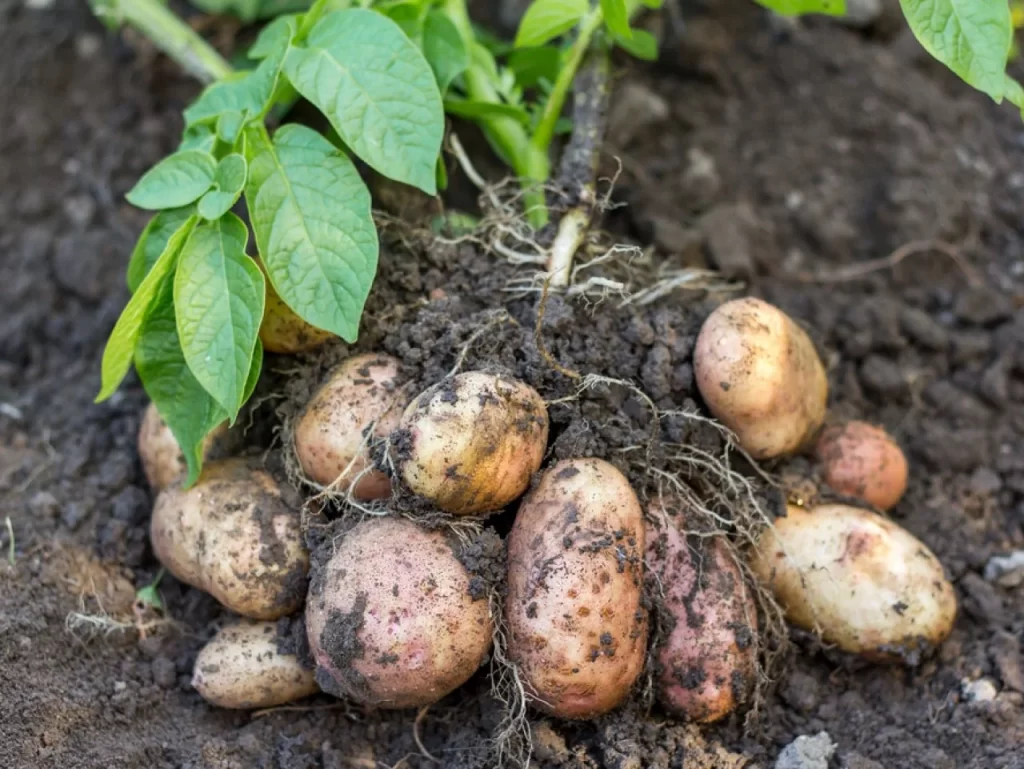
A. Traditional Ground Method
- Dig trenches about 6–8 inches deep and 2–3 feet apart.
- Place seed pieces 12 inches apart, eyes facing upward.
- Cover with 3–4 inches of soil.
- As plants grow, hill the soil around the base every few weeks—this protects developing tubers from sunlight and encourages more growth.
B. Raised Bed or Grow Bag Method
If you’re short on space, this is a fantastic alternative:
- Fill a bag or raised bed with 6 inches of soil.
- Add seed potatoes and lightly cover.
- As the plants grow, keep adding soil or compost until the bag is nearly full.
This method also simplifies harvesting—you can just tip out the bag when the potatoes are ready!
6. Caring for Your Potato Plants
Watering
Potatoes need consistent moisture but not waterlogging.
- Water once or twice a week, depending on rainfall.
- Aim for 1–2 inches of water per week.
- Water deeply in the morning to keep leaves dry and prevent disease.
Fertilizing
Feed your potatoes with organic compost, bone meal, or balanced vegetable fertilizer. Avoid high-nitrogen fertilizers—they encourage leafy growth but fewer tubers.

Mulching
Covering the soil with straw, dried leaves, or grass clippings:
- Conserves moisture
- Keeps tubers cool and protected
- Suppresses weeds
- Adds organic matter to the soil as it decomposes
7. Protecting Your Potato Crop Naturally
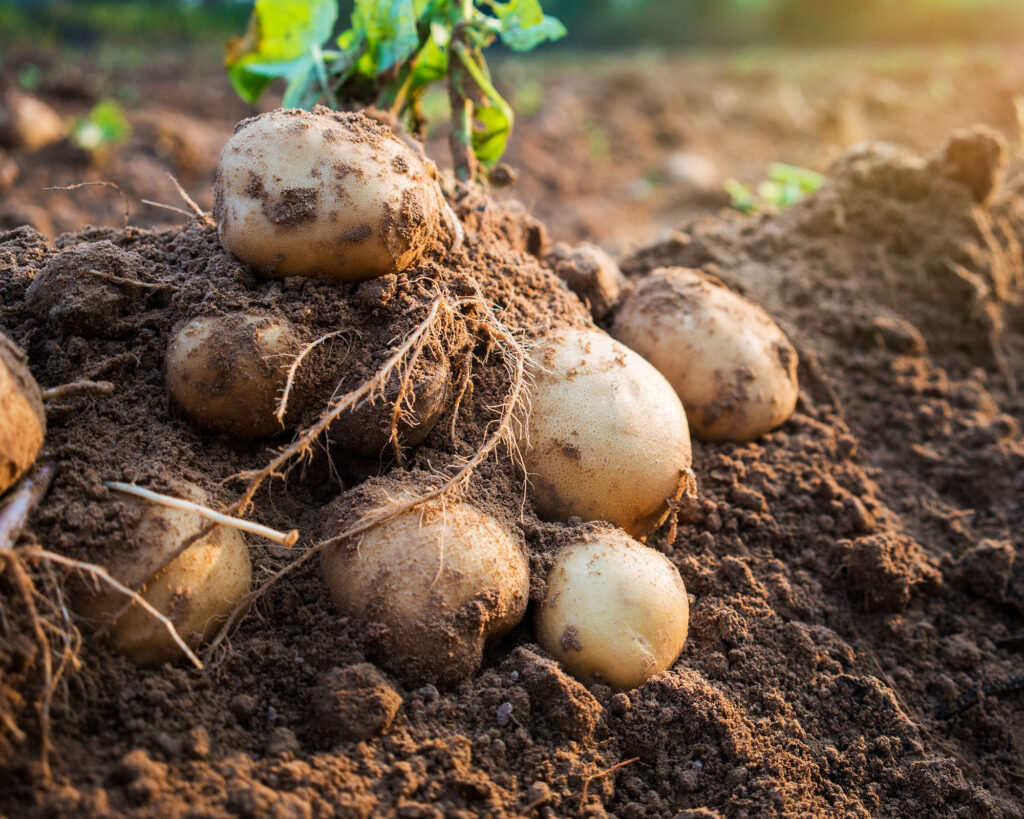
Potatoes are hardy but can fall victim to pests or disease if left unchecked. Stay ahead of problems with natural prevention methods:
- Crop rotation: Avoid planting potatoes in the same spot more than once every 3 years.
- Pest control: Hand-pick potato beetles and larvae; use neem oil or insecticidal soap if needed.
- Disease prevention: Space plants well for air circulation, water at the base, and remove any infected foliage.
- Healthy soil: Enrich with compost annually to promote beneficial microbes that naturally suppress disease.
A little vigilance goes a long way toward ensuring a clean, abundant harvest.
8. Harvesting Your Homegrown Potatoes
Potatoes are ready to harvest at different stages depending on how you want to use them.
- New Potatoes: Harvest 2–3 weeks after the plants flower. These are small, tender, and perfect for boiling or salads.
- Mature Potatoes: Wait until the vines have yellowed and died back. Carefully dig around the plants with a fork or by hand to avoid bruising the tubers.
After harvesting, let potatoes cure for 1–2 weeks in a cool, dark, well-ventilated place. This toughens their skin and improves storage life.
9. Storing Your Potatoes
Proper storage keeps your hard-earned harvest fresh for months.

- Keep cured potatoes in a dark, cool (40–50°F / 4–10°C), and humid environment.
- Avoid light exposure—it causes greening and bitterness.
- Do not refrigerate; cold converts starches to sugar, altering the flavor.
- Store in burlap bags, baskets, or wooden crates for ventilation.
Check occasionally and remove any sprouted or spoiled potatoes to protect the rest.
10. Turning Your Harvest into Vegetarian Magic
Now that your potatoes are ready, it’s time to bring them to the kitchen. Potatoes are the perfect foundation for vegetarian meals because they can stand alone as a main dish or complement other vegetables beautifully.
Here are some easy, wholesome ideas to celebrate your harvest:
A. Creamy Potato & Spinach Soup
- Sauté onions and garlic, add diced potatoes and vegetable broth.
- Simmer until tender, then blend with fresh spinach for a vibrant green soup.
B. Roasted Potato & Chickpea Buddha Bowl
- Toss cubed potatoes with olive oil, paprika, and garlic.
- Roast until crispy and serve with chickpeas, kale, and tahini dressing.
C. Vegetable Shepherd’s Pie
- Layer mashed potatoes over a filling of lentils, carrots, peas, and mushrooms.
- Bake until golden for a satisfying, protein-rich meal.
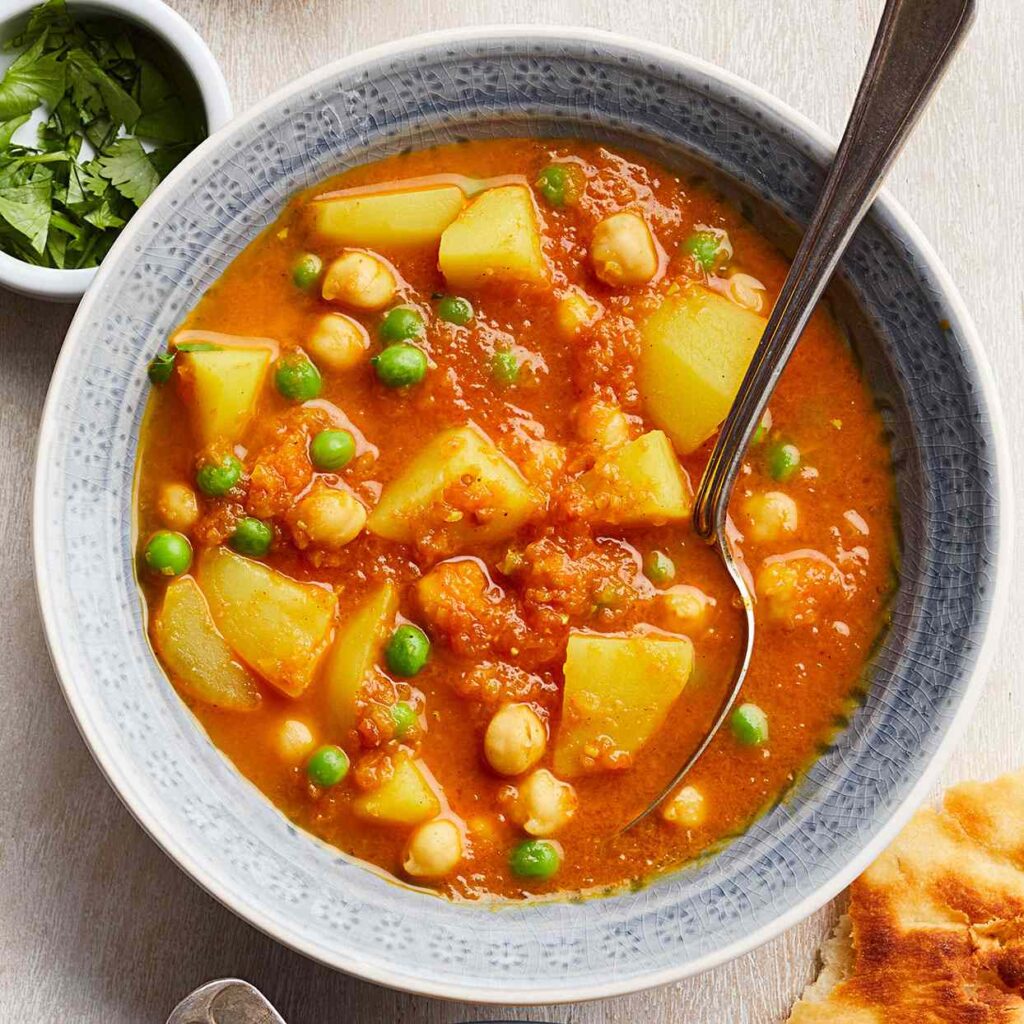
D. Indian-Style Potato Curry
- Combine boiled potatoes with peas, tomatoes, and aromatic spices like turmeric, cumin, and garam masala.
- Serve with rice or naan for a comforting, plant-based dinner.
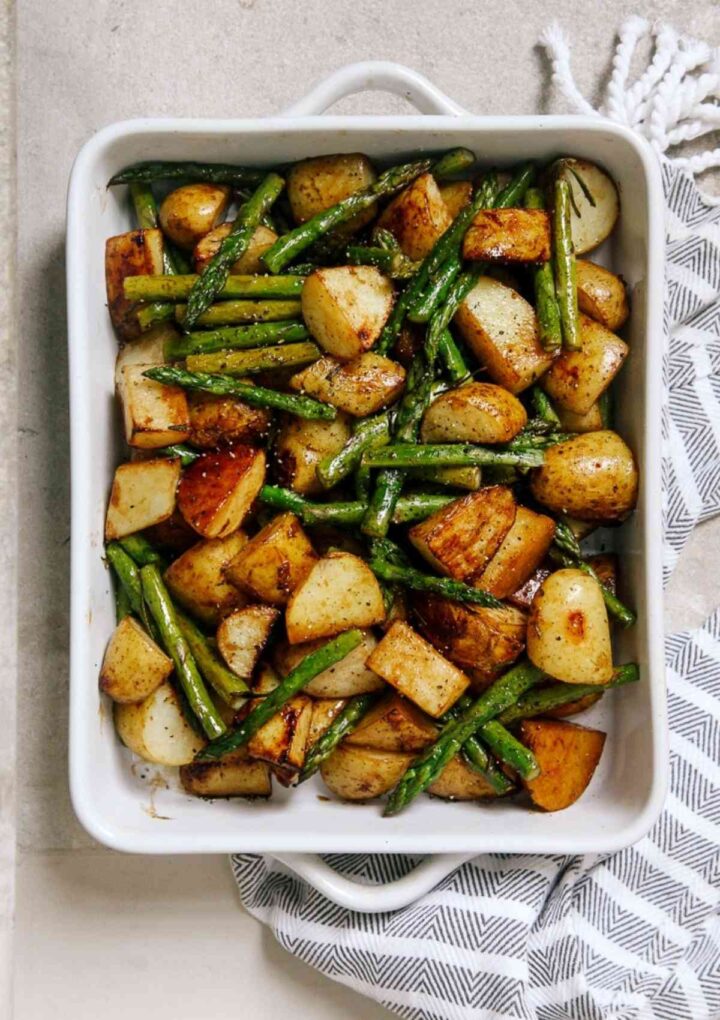
E. Simple Herb-Roasted Potatoes
- Toss small fingerling potatoes with olive oil, rosemary, and sea salt.
- Roast until crispy for the perfect vegetarian side dish.
Each dish celebrates the natural flavor of your homegrown potatoes—proof that the freshest ingredients make the most delicious meals.
11. The Joy of Growing and Cooking Your Own Food
Starting a potato garden is more than just a gardening project—it’s a lifestyle choice that connects you to the cycle of growth and nourishment. Every time you harvest your own potatoes and cook them into a homemade vegetarian meal, you experience the fulfillment of true farm-to-table living.
This process teaches patience, sustainability, and gratitude. It reminds us that the best meals aren’t rushed or packaged—they’re grown, tended, and shared with care.

Conclusion: Plant, Grow, and Savor
From the moment you plant your first seed potato to the day you sit down to enjoy a steaming bowl of creamy mashed potatoes, you’ll discover that growing your own food is one of life’s most rewarding experiences.
A potato garden doesn’t require a large space—just a bit of sunlight, rich soil, and steady attention. And in return, it provides not only a bountiful harvest but also the joy of creating homemade vegetarian meals that are healthier, fresher, and more satisfying than ever.
So grab your gardening gloves, dig into the soil, and start your potato-growing adventure today. Your backyard could soon be the source of your next nourishing, delicious vegetarian feast.