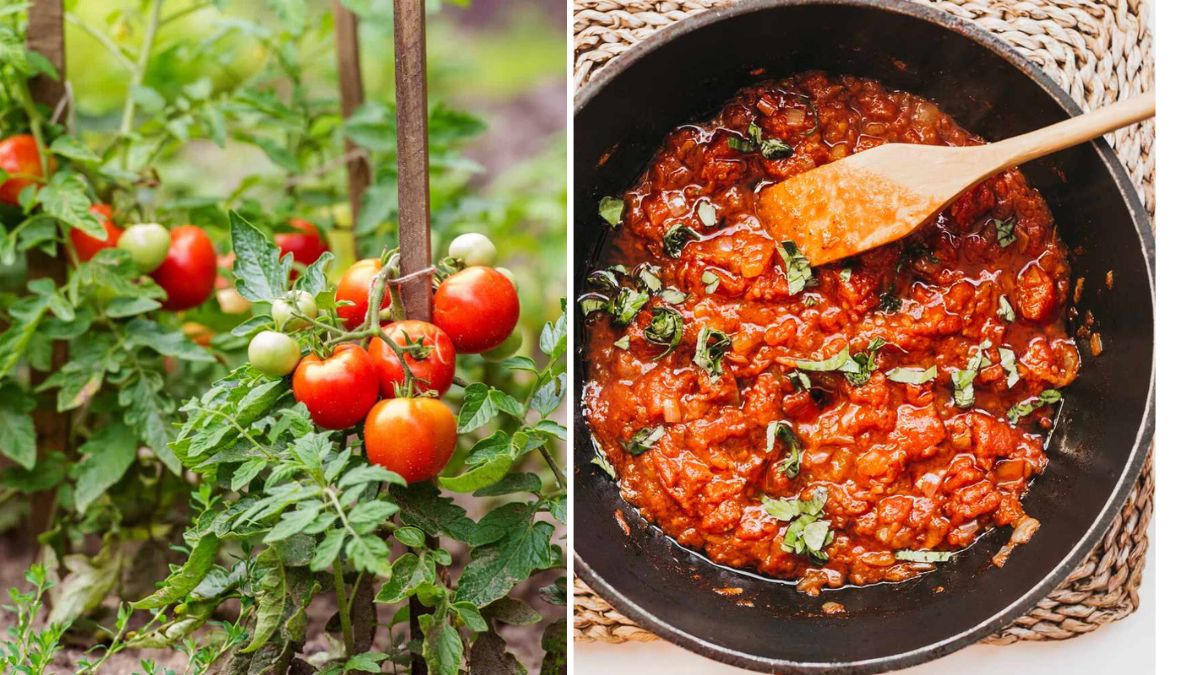
There’s something truly satisfying about preparing a bowl of pasta topped with a rich, homemade tomato sauce made from tomatoes you grew yourself. Beyond the unbeatable freshness and flavor, growing your own tomatoes offers a sense of accomplishment and a connection to your food that store-bought produce simply can’t replicate. Whether you’re an experienced gardener or a beginner eager to start, cultivating tomatoes for your favorite vegetarian pasta sauce can be one of the most rewarding food-growing adventures you’ll embark on.
In this detailed guide, we’ll walk through everything you need to know—from choosing the right tomato varieties to nurturing your plants, harvesting at peak ripeness, and transforming your homegrown bounty into a flavorful, hearty vegetarian pasta sauce.
Why Grow Your Own Tomatoes?
Store-bought tomatoes are convenient, but they rarely match the flavor of vine-ripened, homegrown ones. Commercially grown tomatoes are often picked before they’re fully ripe to survive shipping and storage, resulting in bland flavor and reduced nutritional value.
When you grow your own, you’re in control. You can allow tomatoes to ripen naturally in the sun, developing deep sweetness and tang—key elements for a great pasta sauce. Plus, homegrown tomatoes are richer in antioxidants like lycopene and vitamin C, adding a health boost to your meals.
And beyond nutrition, there’s a simple joy in harvesting something you’ve nurtured from seed to sauce.
Choosing the Right Tomato Varieties for Pasta Sauce
Not all tomatoes are created equal—especially when it comes to sauce-making. The best sauce tomatoes are meaty, low in water content, and packed with natural sweetness and umami flavor.
Here are some top picks for sauce-making:
- Roma (Plum) Tomatoes: These are classic sauce tomatoes. They’re firm, low in seeds, and cook down beautifully into a thick, rich sauce.
- San Marzano: Prized by Italian chefs, San Marzano tomatoes have a perfect balance of sweetness and acidity. They’re ideal for authentic pasta sauces.
- Amish Paste: Known for their dense flesh and deep tomato flavor, these are excellent for slow-cooked sauces.
- Big Mama or Viva Italia: Hybrid varieties bred specifically for sauce-making, offering high yields and consistent flavor.
You can also mix varieties—Roma for structure, San Marzano for sweetness, and a cherry tomato variety for extra depth and brightness.
Preparing the Soil: The Foundation of Flavor
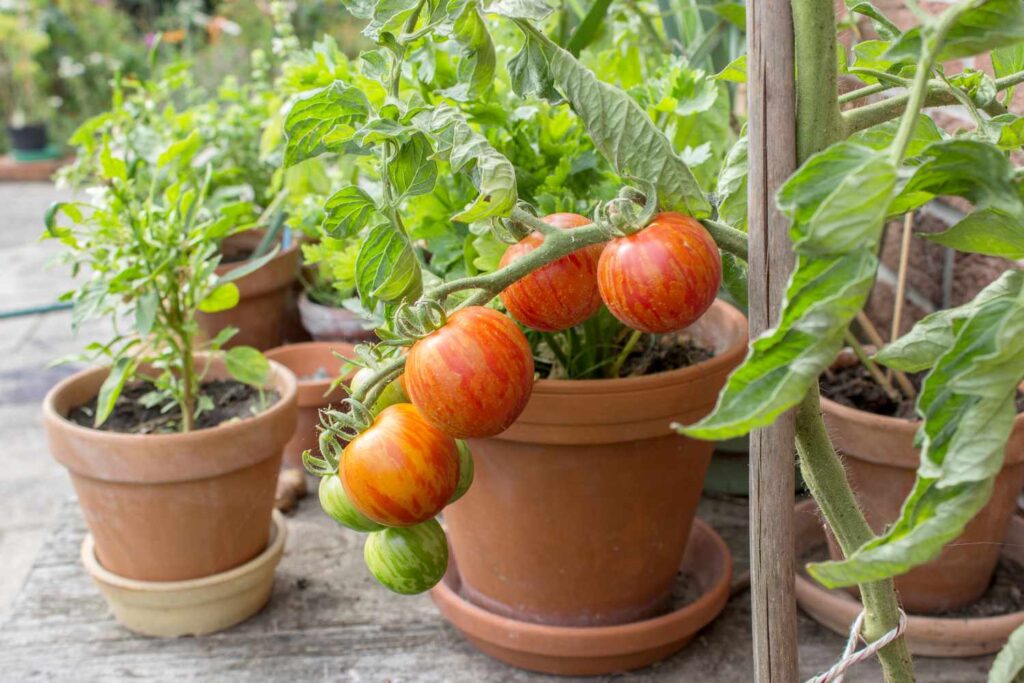
Tomatoes thrive in well-drained, nutrient-rich soil. Before planting, take the time to prepare the perfect foundation for your crop.
- Soil Type: Aim for loamy soil rich in organic matter. Tomatoes prefer slightly acidic to neutral soil (pH 6.0–7.0).
- Compost and Organic Matter: Mix compost, aged manure, or leaf mold into the top 8–10 inches of soil to improve fertility and texture.
- Sunlight: Choose a sunny location—tomatoes need at least 6–8 hours of full sunlight daily for optimal growth and sweetness.
If you’re planting in containers, use high-quality potting mix with added perlite or coco coir for drainage and aeration.
Planting Your Tomatoes: Timing and Technique
Timing is key. Tomatoes are warm-weather plants, so wait until the danger of frost has passed and the soil temperature reaches at least 60°F (15°C).
- Seed Starting: Start seeds indoors 6–8 weeks before your region’s last frost date. Transplant seedlings outdoors when they’re 6–10 inches tall.
- Transplanting Tip: When planting, bury two-thirds of the plant stem. Tomatoes can develop roots along the buried stem, making them stronger and more resilient.
- Spacing: Space plants 18–24 inches apart for proper airflow and growth.
Caring for Your Tomato Plants
Healthy tomato plants produce abundant, flavorful fruit. Consistent care is essential throughout the growing season.
1. Watering Wisely
Tomatoes need regular watering—around 1–1.5 inches per week—but consistency is crucial. Uneven watering can cause fruit cracking or blossom end rot.
- Water deeply at the base to encourage strong root development.
- Avoid overhead watering to prevent fungal diseases.
2. Mulching
Apply a 2–3 inch layer of organic mulch (straw, compost, or shredded leaves) around the base. It retains soil moisture, regulates temperature, and reduces weed competition.
3. Feeding
Feed your tomatoes every 3–4 weeks using a balanced organic fertilizer or compost tea. Once flowering begins, switch to a fertilizer with more phosphorus and potassium (the middle and last numbers on fertilizer labels) to encourage fruiting.
4. Pruning and Staking
- Prune suckers (small shoots between the main stem and branches) to direct energy toward fruit production.
- Use stakes, cages, or trellises to support vines and prevent fruit from touching the ground.
5. Pest and Disease Management
Watch out for common tomato pests like aphids, hornworms, and whiteflies. Use organic pest control options such as neem oil or insecticidal soap. For fungal issues like blight or mildew, ensure good air circulation and avoid wetting leaves.
Harvesting at Peak Flavor
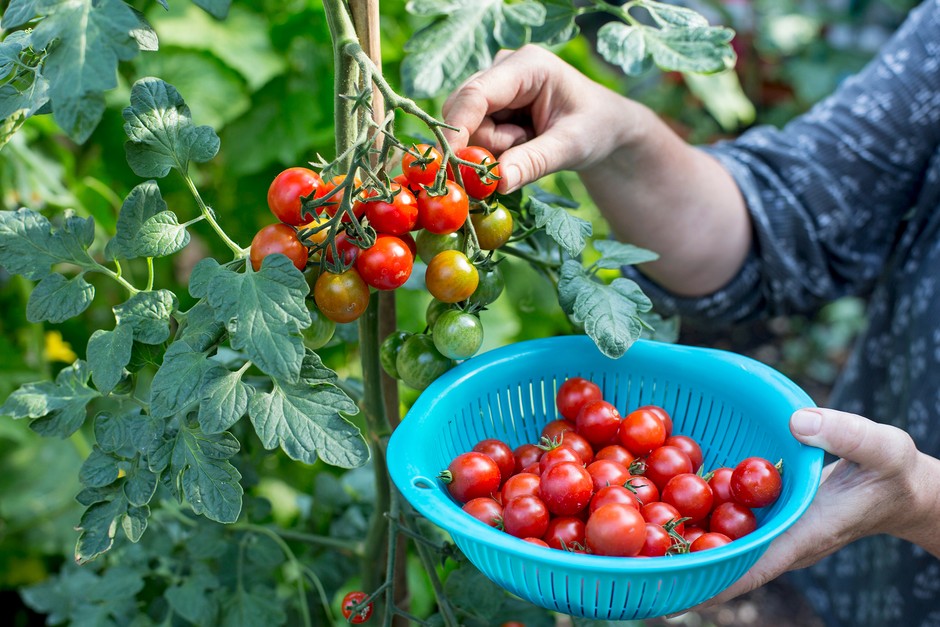
Tomatoes destined for sauce should be fully ripe. A perfectly ripe tomato will feel firm but slightly soft to the touch and will easily detach from the vine with a gentle twist.
- Don’t refrigerate fresh tomatoes—cold temperatures dull their flavor and texture.
- If you have a large harvest, you can freeze or can them for later use. To freeze, blanch tomatoes, remove skins, and store in airtight bags.
Turning Your Tomatoes into Vegetarian Pasta Sauce
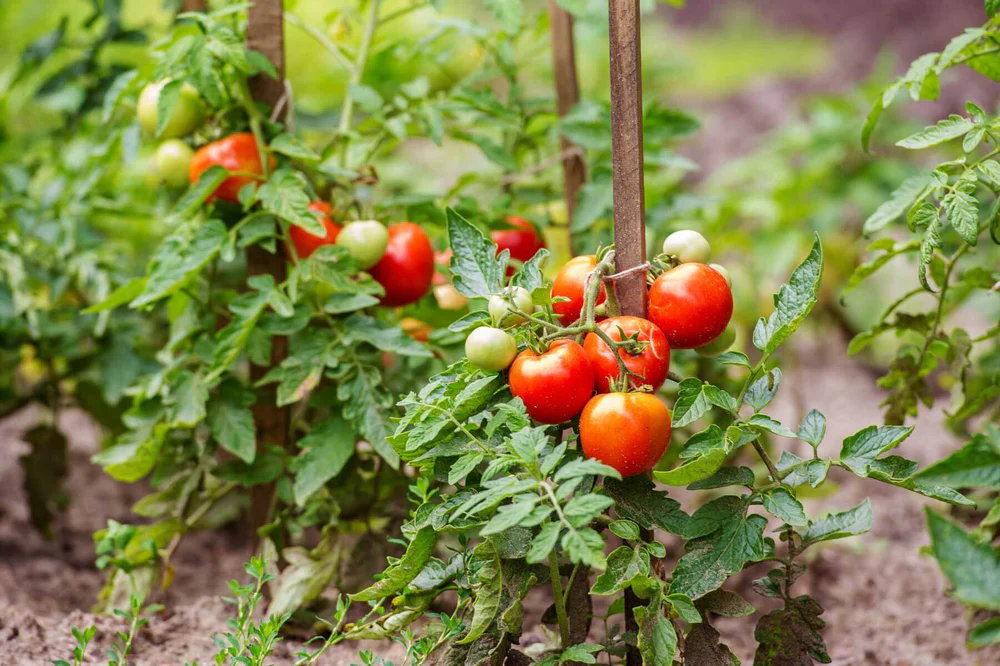
Now comes the best part—transforming your fresh harvest into a mouthwatering sauce that elevates any pasta dish.
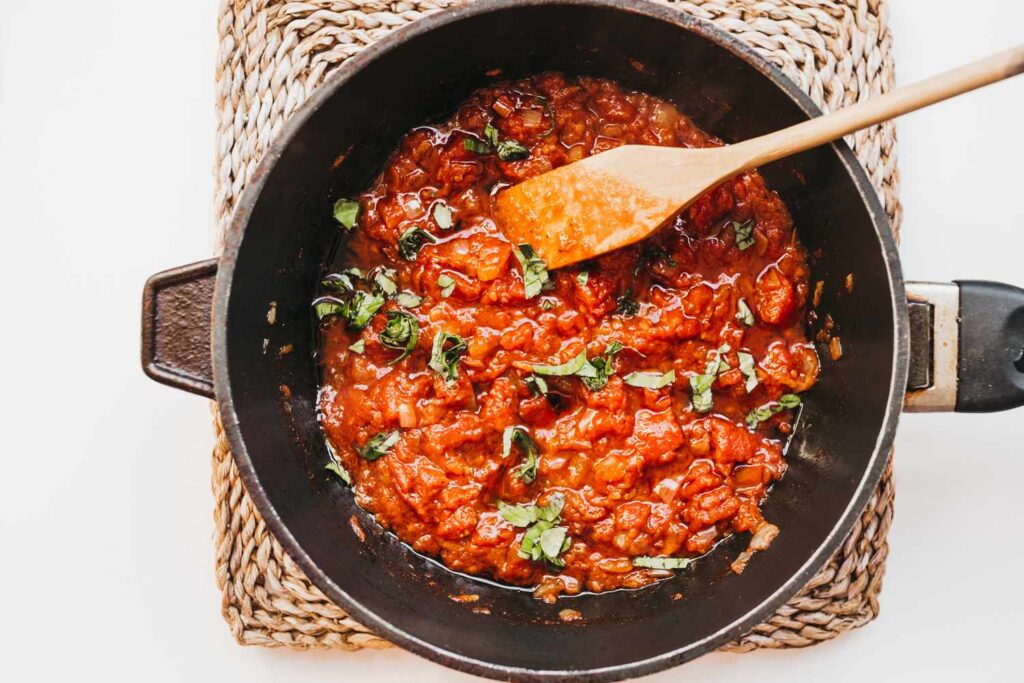
Basic Fresh Tomato Sauce Recipe
(Yields about 4 cups)
Ingredients:
- 2–3 lbs ripe tomatoes (Roma, San Marzano, or mixed)
- 2 tbsp olive oil
- 4 cloves garlic, minced
- 1 small onion, finely chopped
- 1 tsp salt
- ½ tsp sugar (optional, to balance acidity)
- 1 tsp dried basil or 4–5 fresh leaves
- 1 tsp oregano
- Freshly ground black pepper to taste
Instructions:
- Prepare the tomatoes: Score the skin with a knife and blanch in boiling water for 30 seconds. Transfer to ice water, peel, and remove seeds if desired.
- Sauté aromatics: Heat olive oil in a pan, add onion and garlic, and cook until translucent.
- Add tomatoes: Crush them by hand or with a spoon, then add to the pan.
- Simmer: Cook on low heat for 30–40 minutes, stirring occasionally until the sauce thickens.
- Season: Add salt, pepper, and herbs. Adjust to taste.
You can blend the sauce for a smooth texture or leave it chunky for a rustic feel.
Enhancement Ideas for Vegetarian Sauce
- Add roasted red peppers or sun-dried tomatoes for extra depth.
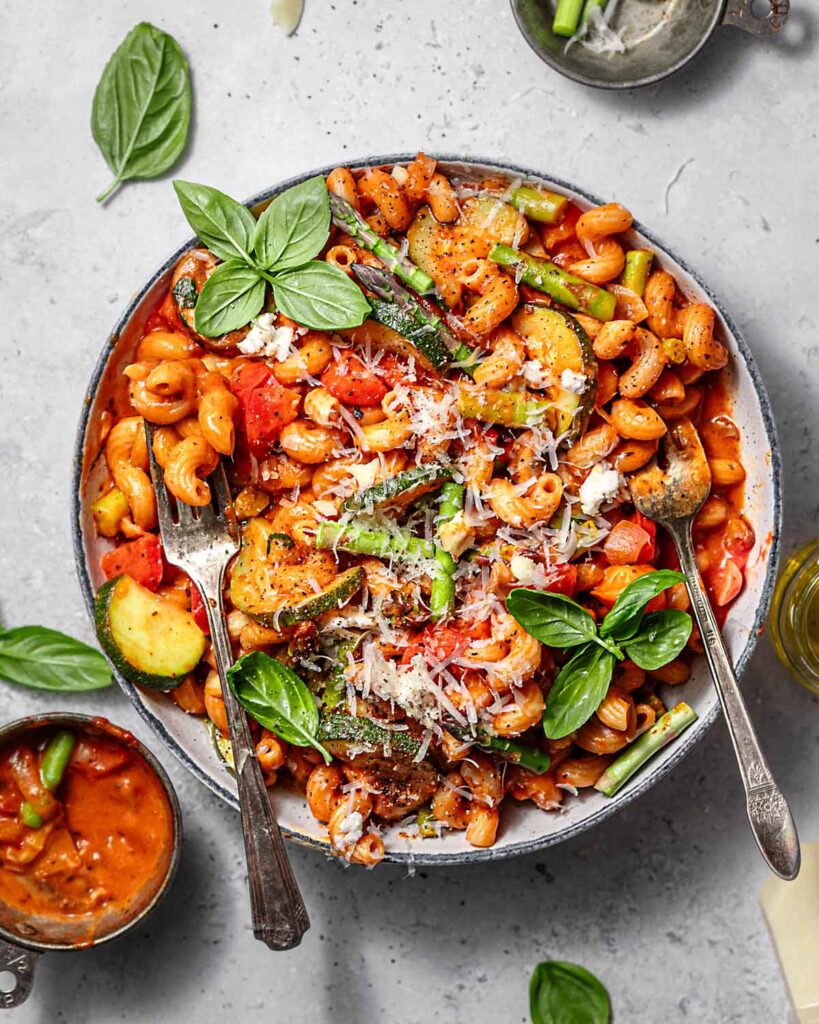
- Mix in sautéed mushrooms, zucchini, or eggplant for a hearty vegetarian twist.
- Finish with a drizzle of olive oil or a sprinkle of Parmesan-style vegan cheese for richness.
Preserving the Harvest
If your plants yield more tomatoes than you can use at once, you can preserve your sauce for future meals.
- Freezing: Cool the sauce completely and store in freezer-safe containers for up to 6 months.
- Canning: Sterilize jars, fill with hot sauce, and process in a boiling water bath for 35–40 minutes to ensure shelf stability.
This way, you can enjoy your summer harvest even on the coldest winter evenings.
The Sustainable and Emotional Rewards
Growing your own tomatoes isn’t just about flavor—it’s also about sustainability. You reduce your carbon footprint by eliminating packaging and long-distance transportation. Your garden waste becomes compost, completing a natural cycle of growth and nourishment.
And on a personal level, there’s a unique satisfaction in knowing your delicious vegetarian pasta sauce was nurtured from seed to plate by your own hands. Each bite carries the warmth of sunshine, care, and time—a flavor no store can replicate.
Final Thoughts
Creating your own vegetarian pasta sauce from homegrown tomatoes is more than a culinary project—it’s a celebration of patience, care, and nature’s bounty. With the right tomato varieties, good soil, and attentive care, your garden can become a source of pure, homemade flavor.
So this season, grab your seeds, roll up your sleeves, and let your garden inspire your kitchen. Because when it comes to pasta sauce, nothing tastes better than the freshness of your own homegrown tomatoes.